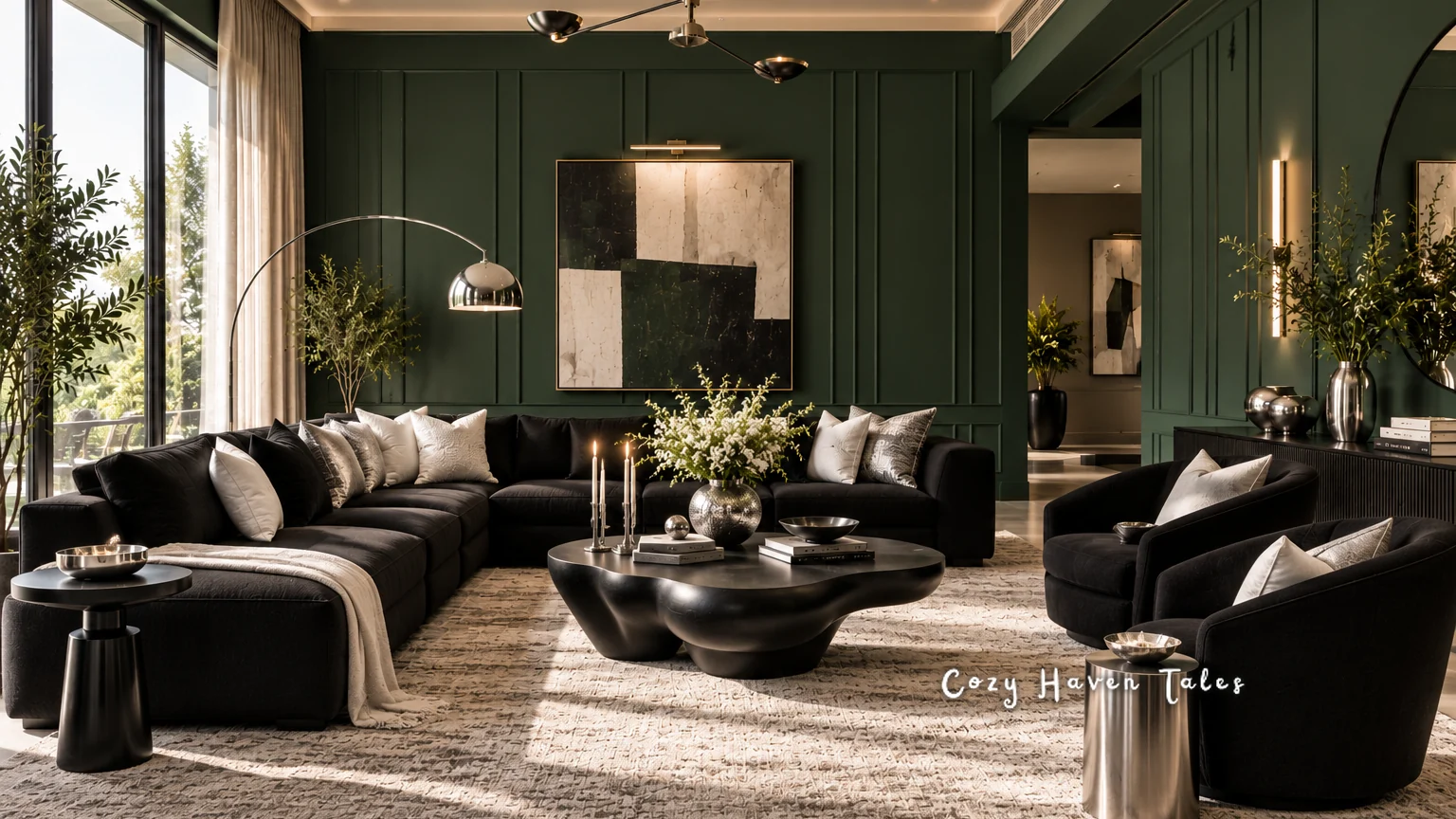
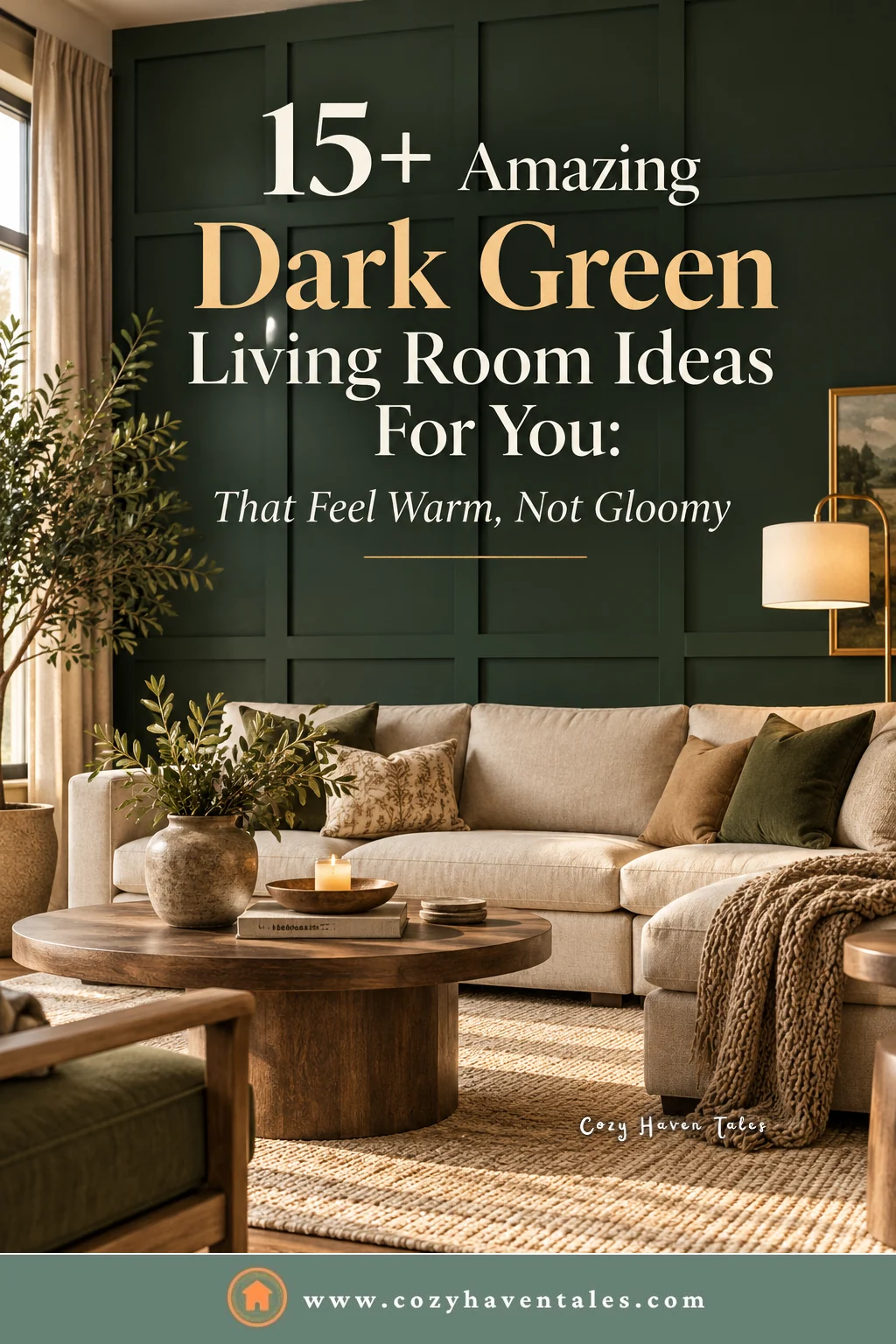
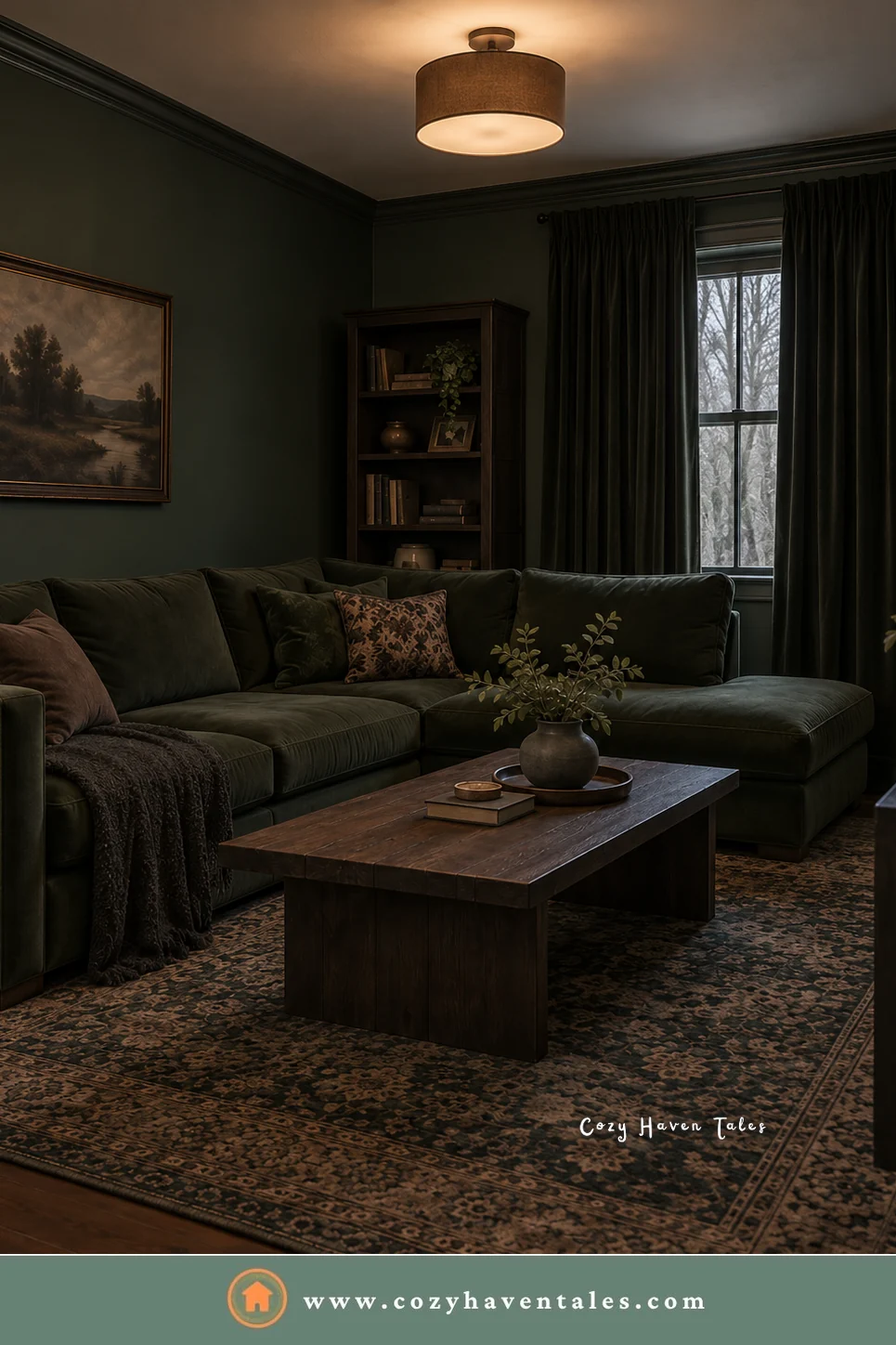
Dark green works well in a living room when it’s balanced with warm materials, enough lamp light, and lighter textiles. Use it on all four walls for a cozy, enveloping room, on one wall or built-ins for a focal point, or on a sofa, curtains, or rug if you don’t want to paint. Pair it with warm wood, brass, cream, tan, and rust, and light the room with several lamps at different heights instead of one ceiling fixture.
Green has been building for a few years, and Benjamin Moore’s choice of a deep green, Webster Green, as its 2027 Color of the Year, confirms it’s not going anywhere soon. But “dark green living room” means very different things in different homes. Below are 15 ideas, grouped by how much commitment they need, with what makes each one work.
Why Dark Green Works So Well in a Living Room
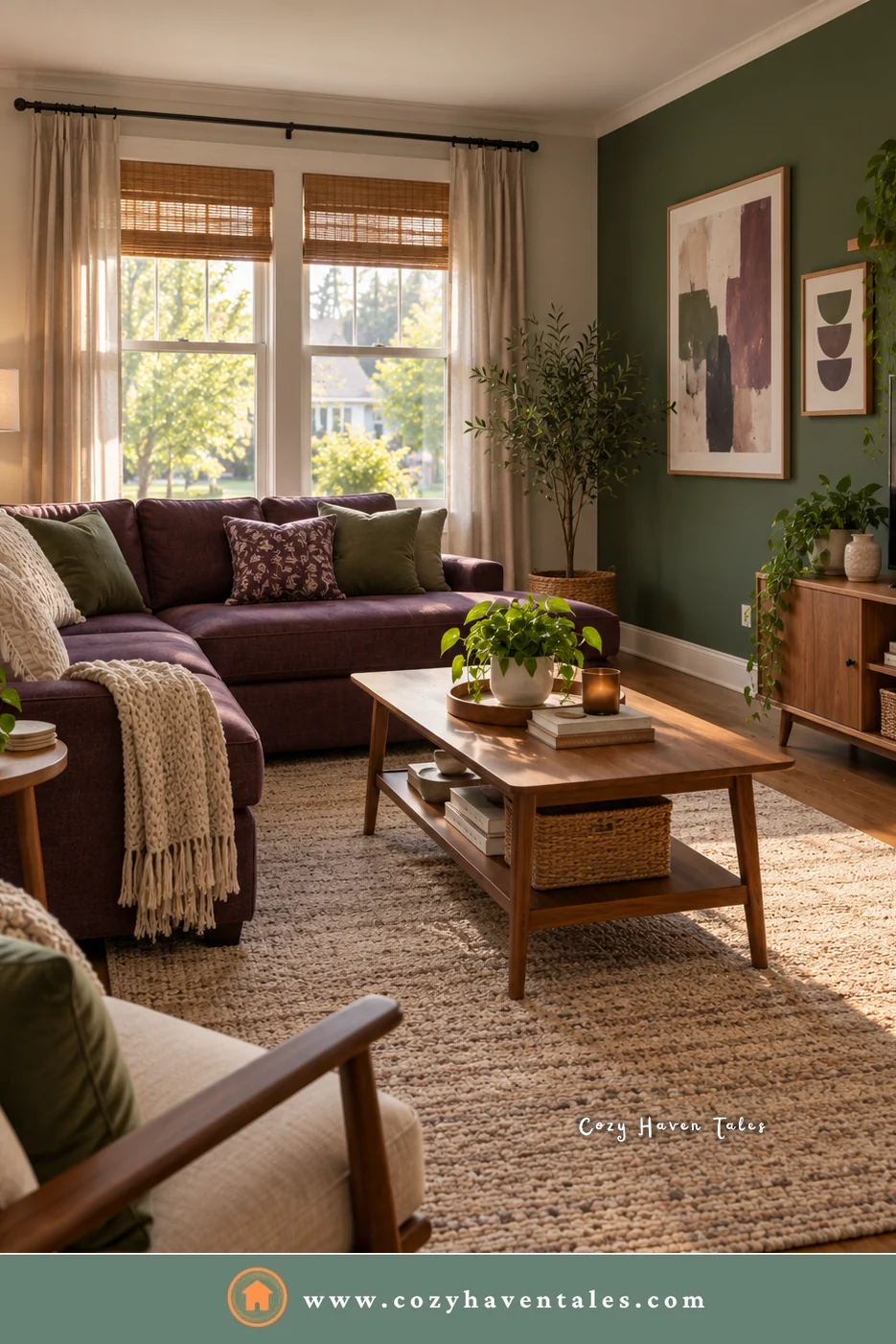
Green is easy to live with because we’re used to seeing it in nature, next to wood, stone, and sky. A dark green wall reads a bit like a forest at dusk. It’s deep, but it doesn’t feel as heavy as black or navy can.
It also does something useful in a living room: it makes the room feel more enclosed and settled in the evening, when you use the room most. Furniture and art stand out against it. Wood looks warmer. Brass glows.
The challenge is that dark colors are honest. They show you quickly if the lighting is poor or the room has too little contrast.
I learned this lesson with a different color. I once styled a navy bedroom that looked fine but not inviting, and it only came together once warm layers were added. Dark green behaves the same way. The paint is only half of the room.
Before You Paint Your Living Room Dark Green
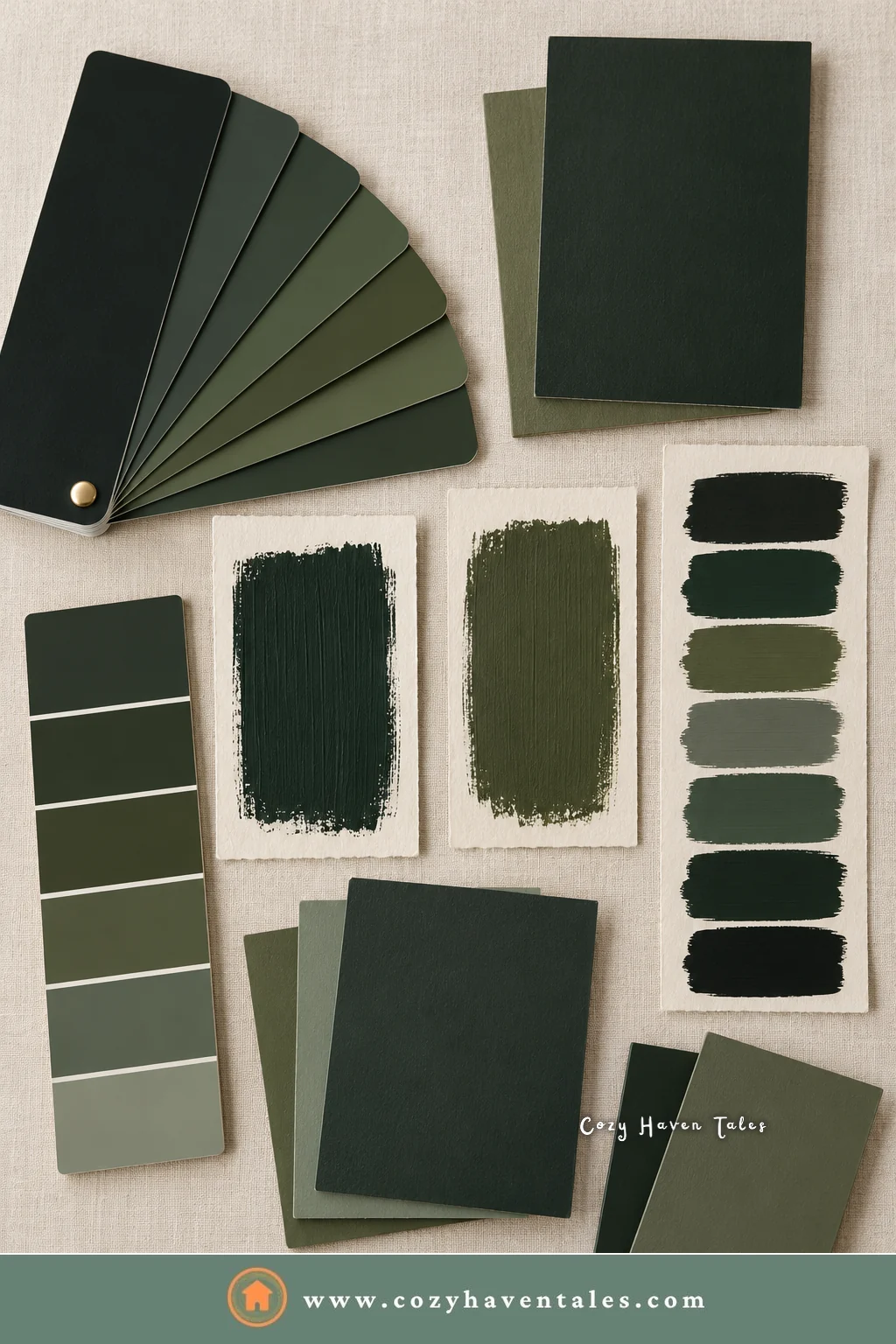
1. Which way the room faces. North-facing rooms get cooler, softer light, and dark green will look deeper and cooler there. South- and west-facing rooms get warm light that brings out the richness of the color. Neither is wrong, but in a north-facing room choose a green with a little warmth, and plan for more lamps.
2. How you use the room. If the living room is mostly used in the evening, a dark color is easy. If it’s your main daytime room and it’s already dim, consider dark green on furniture or a single wall first.
3. What’s staying. Look at your floors, sofa, and largest rug. Warm wood floors and cream or tan upholstery are ideal. Cool gray floors and a gray sofa can work, but you’ll need warm accents (wood, brass, rust) to balance them.
Cozy Haven Tales Pro Tip: Paint a large sample board, at least 2 feet square, and move it around the room for two days. Look at it in morning light, at midday, and with your lamps on at night. Dark greens shift more than you expect. If you’re considering Webster Green, Benjamin Moore’s color page (linked at the end of this post) has its details and coordinating colors.
Related read: Think Blue Isn’t Cozy? Here’s How to Make It the Warmest Color, the same warming tricks work for deep green.
Dark Green Living Room Walls
1. Color-drench the whole room
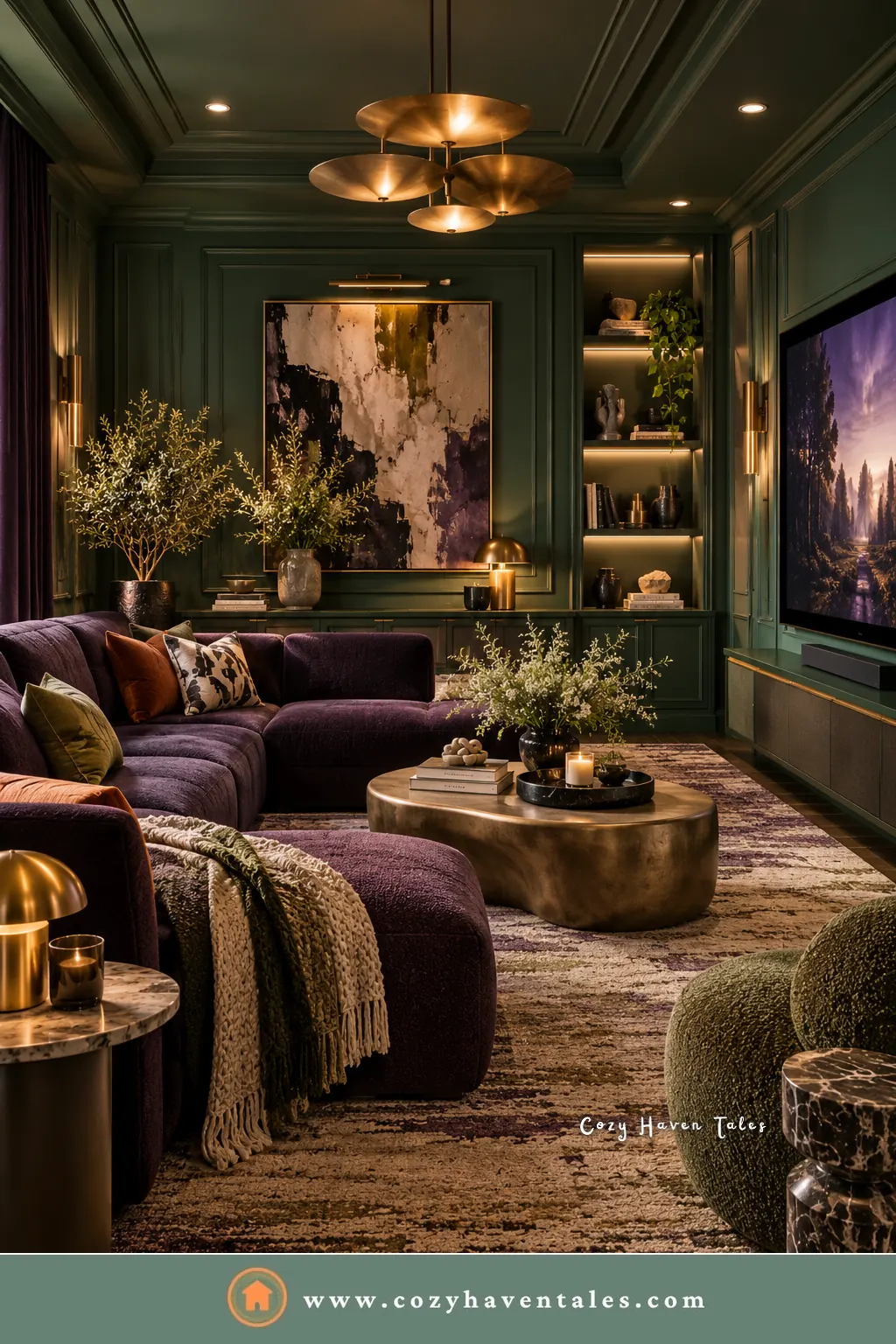
Color drenching is where a dark green living room really shows what it can do. Paint the walls, trim, and even the ceiling the same deep green, and the corners soften. The whole space feels wrapped, like a library on a winter evening. Green is the forgiving color for this. A navy or black drench can feel heavy. Green still reads as natural, so the room feels enveloping rather than closed in.
With green everywhere, let the rest bring warmth: a camel or blush sofa, walnut or oak furniture, and brass lamps. Use matte on the walls and satin on the trim, so the molding still catches a little light. It works best with a ceiling of about 8 feet or more and plenty of lamps.
2. One wall behind the sofa
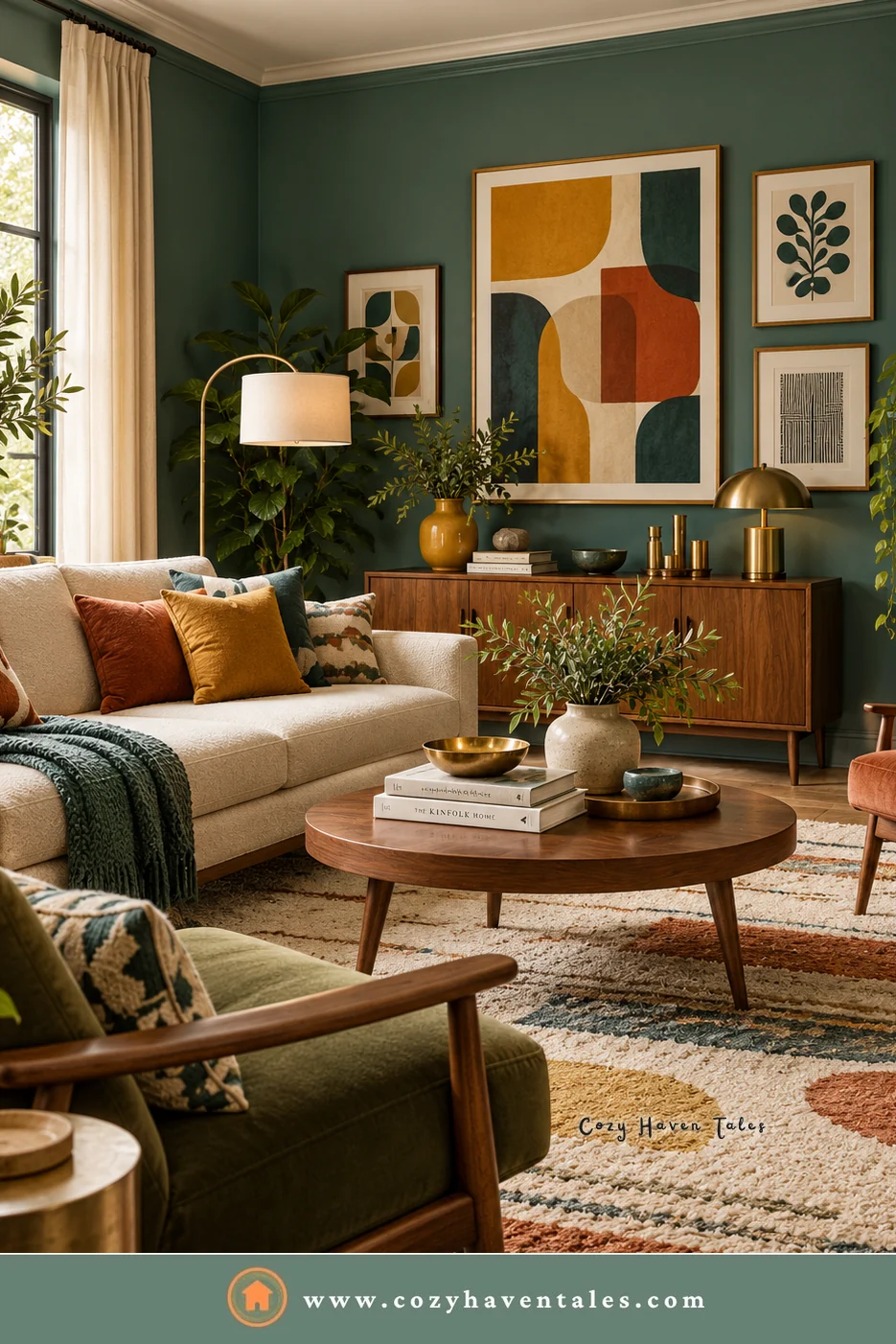
A dark green wall behind the sofa gives you the mood of a green room in a fraction of the space. The deep color makes that wall feel closer and turns the seating area into the heart of the room. The other walls stay light and airy. Art looks better on it too. Gold frames, botanical prints, and anything with white in it seem to glow against forest green. I’ve shared more ways to style the wall behind a sofa if you want to add art or shelves.
Think about the sofa in front of it. A tan or cognac leather sofa against dark green is one of the most reliable pairings there is. A cream or oatmeal sofa gives a crisper contrast. I’d skip a charcoal sofa here, because it will melt into the wall.
3. Paneling or wainscoting in green
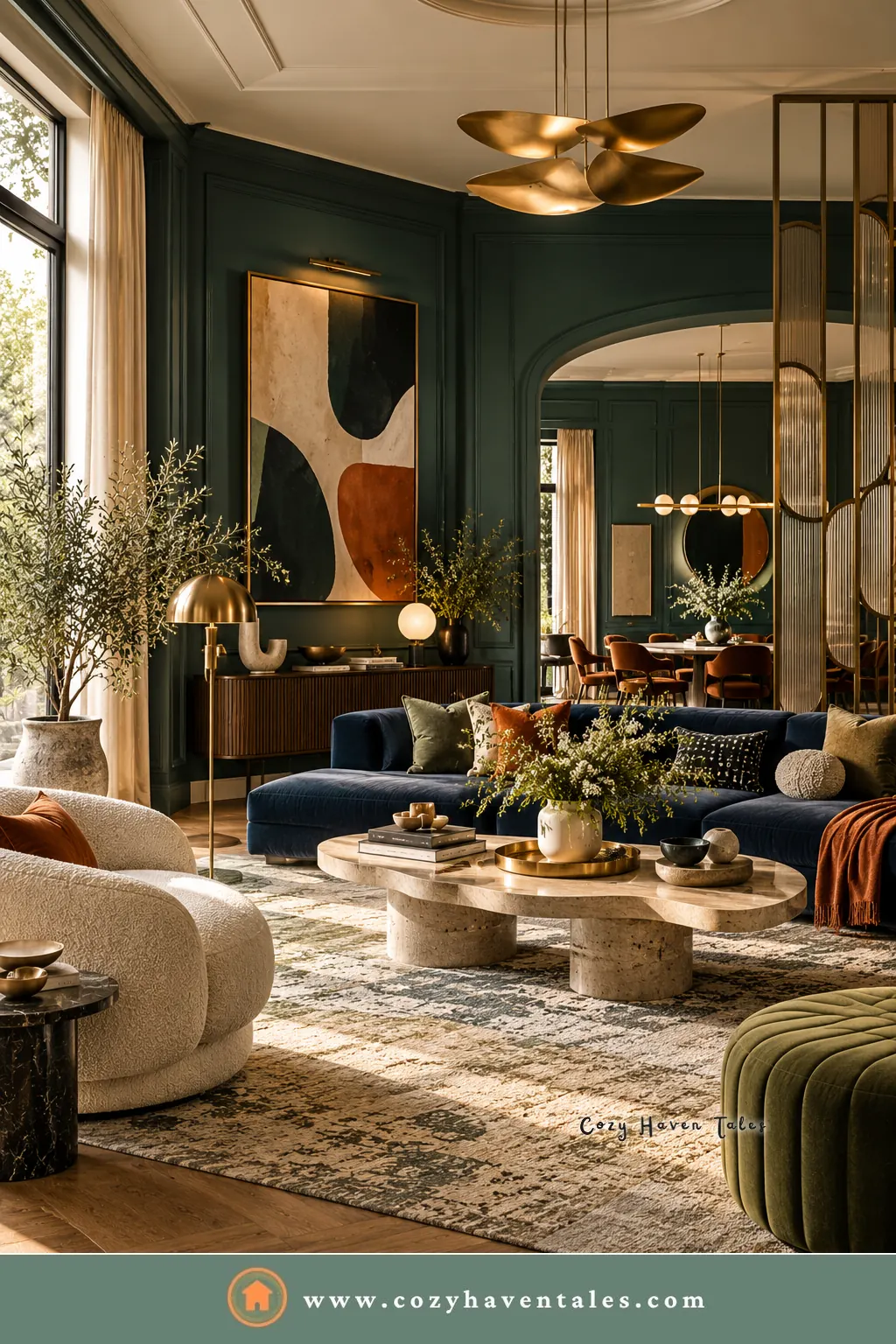
Dark green has a long history on paneling, from English libraries to old country houses. That’s why it brings an instant sense of age and craft. On the lower half of the wall, you get the depth of the color right where the furniture sits. A lighter shade above, like soft cream or pale sage, keeps the top of the room bright.
It’s a lovely way to make a plain builder-grade room look older and more considered. Simple molding kits make it a weekend job. Paint the panels and molding in the same green, in satin. Then let a sconce or picture light pick out the shadow of each panel.
4. A limewash or textured finish
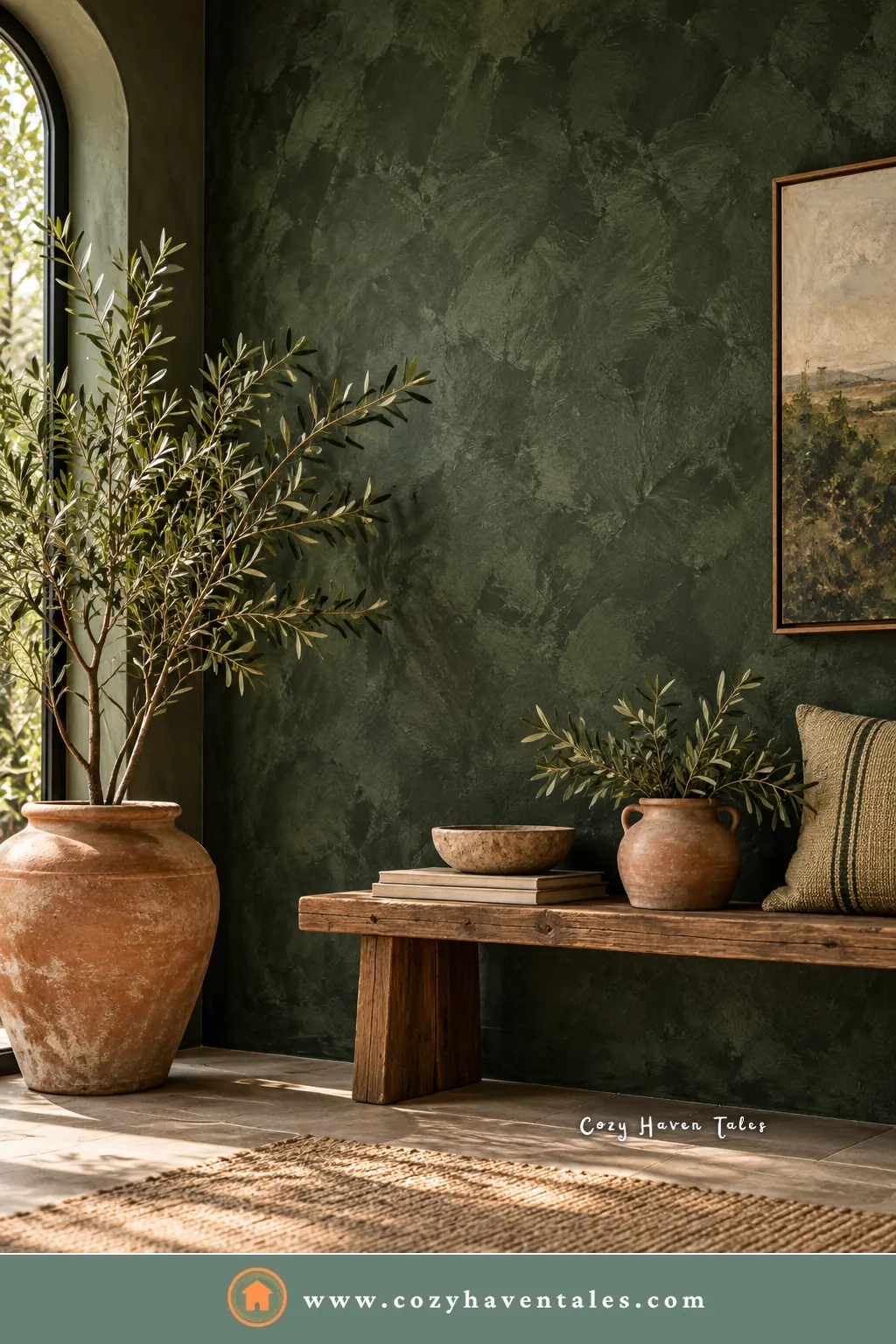
Flat dark green paint can feel solid and serious. Limewash changes that. The color goes on in soft, cloudy layers, so the wall shifts between deep forest and lighter moss. You keep the depth of dark green with a gentler, aged feel, like old plaster in a Mediterranean farmhouse.
It pairs naturally with earthy materials: linen slipcovers, terracotta pots, rattan, and rough-sawn wood. A dark green limewash with a little gray or olive in it looks the most natural. Expect it to look slightly uneven, because that movement is the whole charm.
5. Dark green with a light ceiling
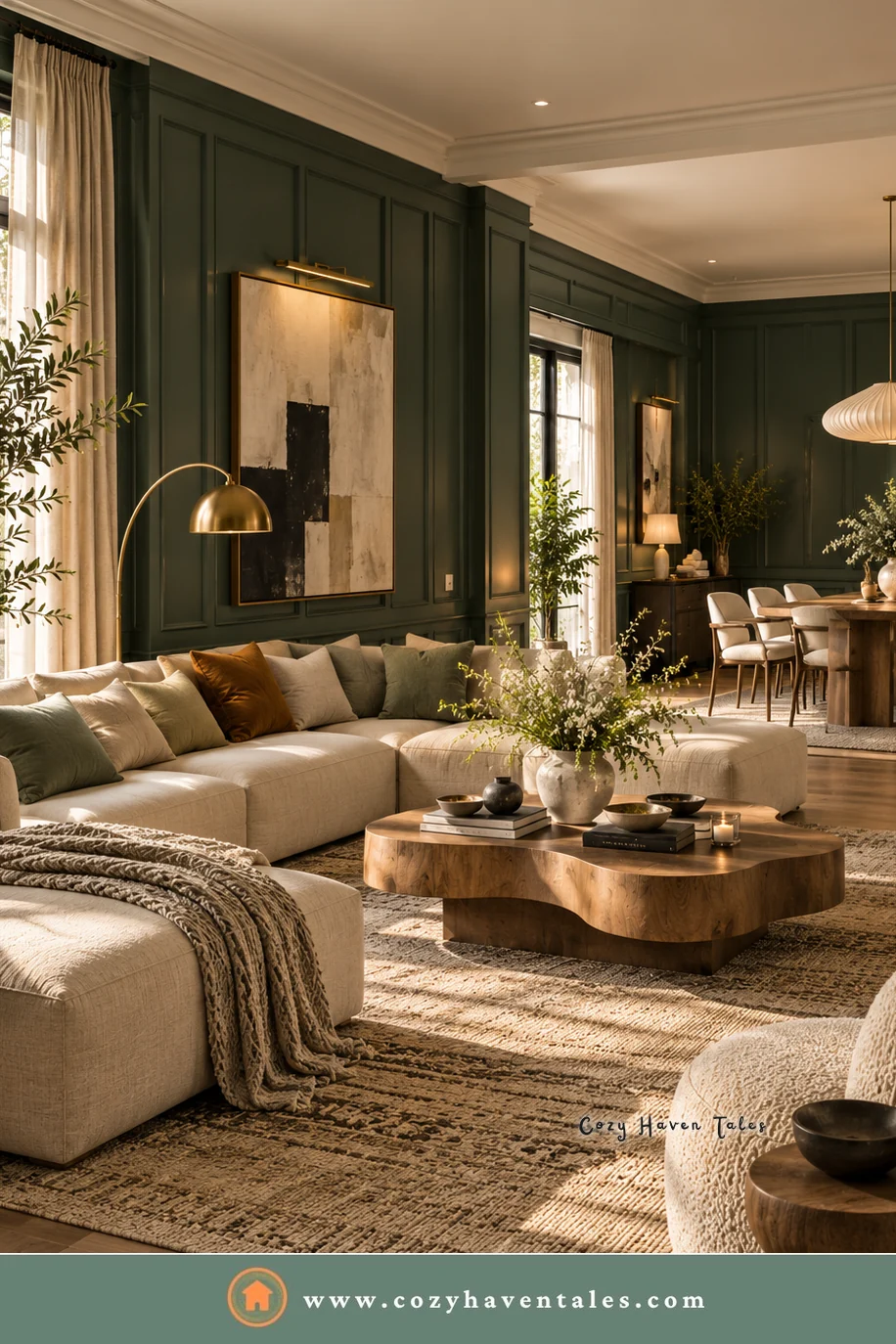
If you love dark green but worry about the room feeling closed in, keep the ceiling light. The green walls still give you that rich, cocooning feel at eye level. A soft white ceiling bounces lamp light back down and stops the room feeling like a box. It’s the most forgiving way to use a very dark green with an average ceiling height.
Choose a creamy white rather than a stark blue-white, so the step from green to white feels soft. Repeat that same cream in the sofa or curtains, and the room will feel balanced from top to bottom.
Dark Green Living Room Furniture and Built-Ins
6. A dark green velvet sofa
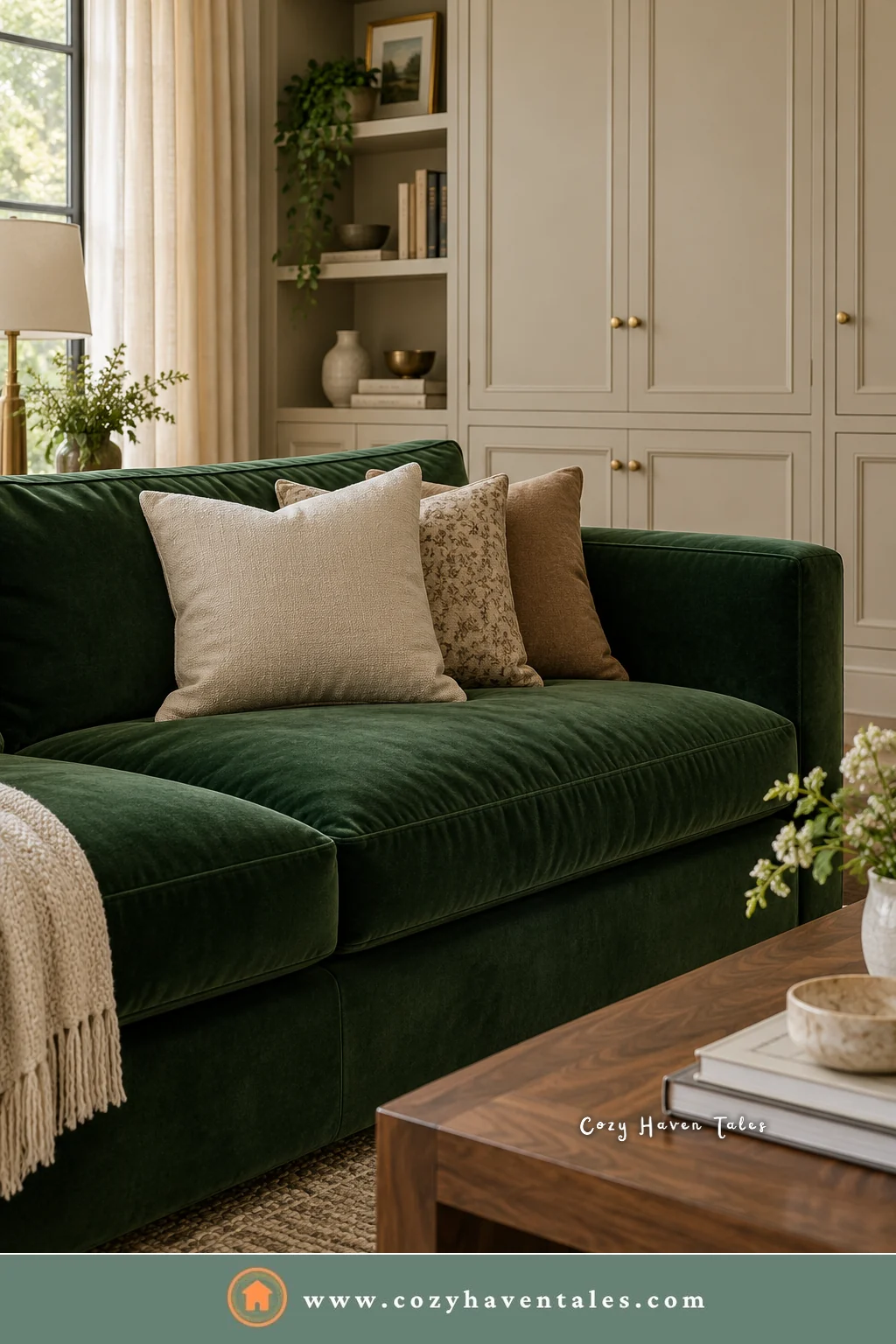
Velvet is where dark green looks its most luxurious. The pile catches the light. So a forest green sofa looks almost black in the shadows and jewel-bright where the lamp hits it. It gives a neutral room an instant focal point and a slightly vintage, glamorous feel, without painting a single wall.
Dark green upholstery is also kinder to everyday life than a pale sofa. Small marks don’t show the way they do on cream. Dress it with rust, mustard, blush, or cream pillows, and it can look different every season. If you have pets, choose a performance velvet, since velvet does show pet hair.
7. Painted built-ins or bookshelves
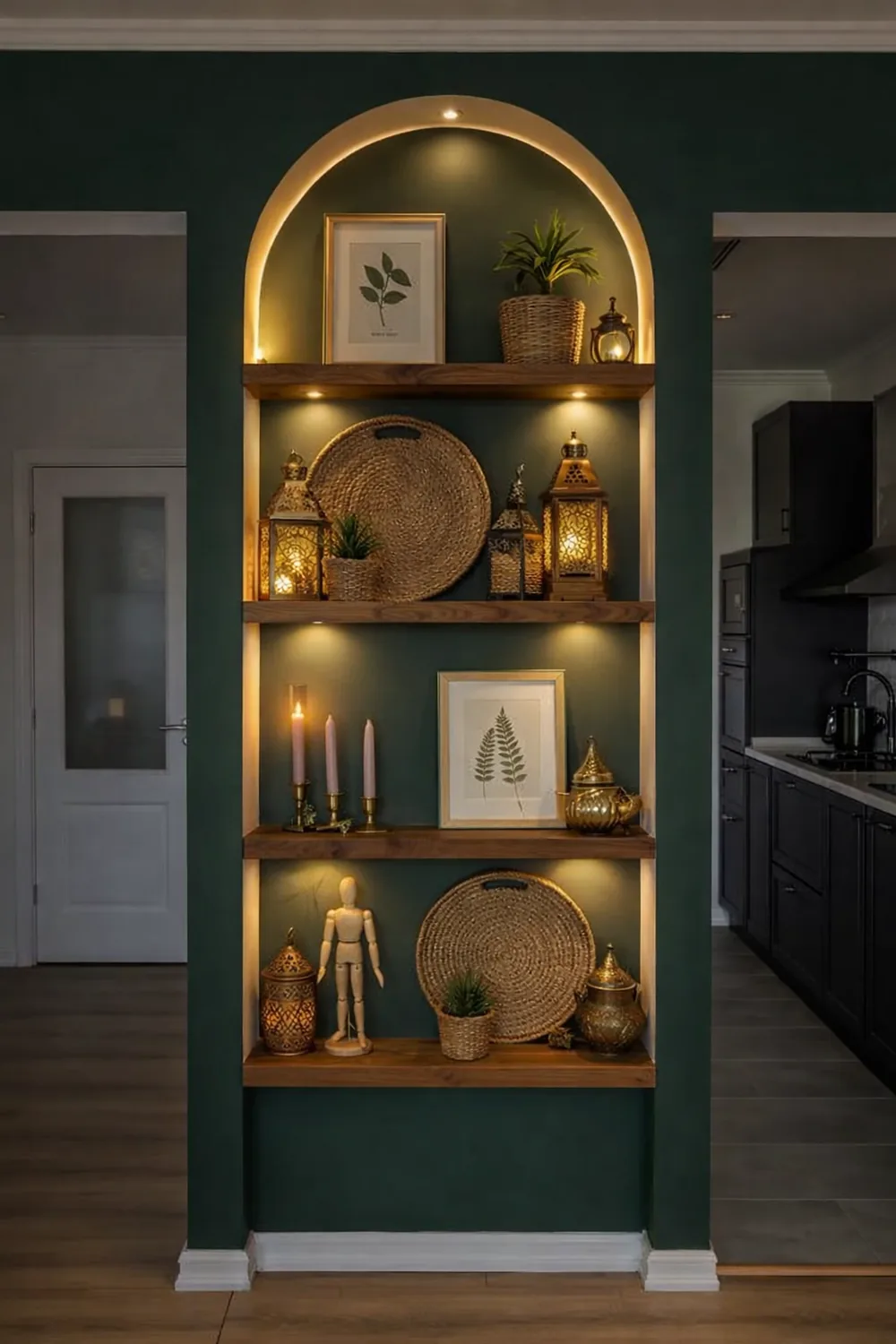
Painting built-ins dark green makes them look custom, even when they’re simple shelves. The deep color recedes, so the shelves almost disappear and whatever sits on them steps forward. Books, white ceramics, brass objects, and trailing plants all look more collected against forest green than against white.
If a full built-in feels like a lot, paint just the back panel of open shelves. You still get the rich backdrop for very little paint. Natural oak shelves against a green back are a beautiful combination. A small shelf light makes the green glow at night.
Cozy Haven Tales Pro Tip: Use a satin or semi-gloss finish on shelves and cabinets. It wipes clean, resists scuffs from books and objects, and gives a slight sheen that looks more finished than matte.
8. One green armchair
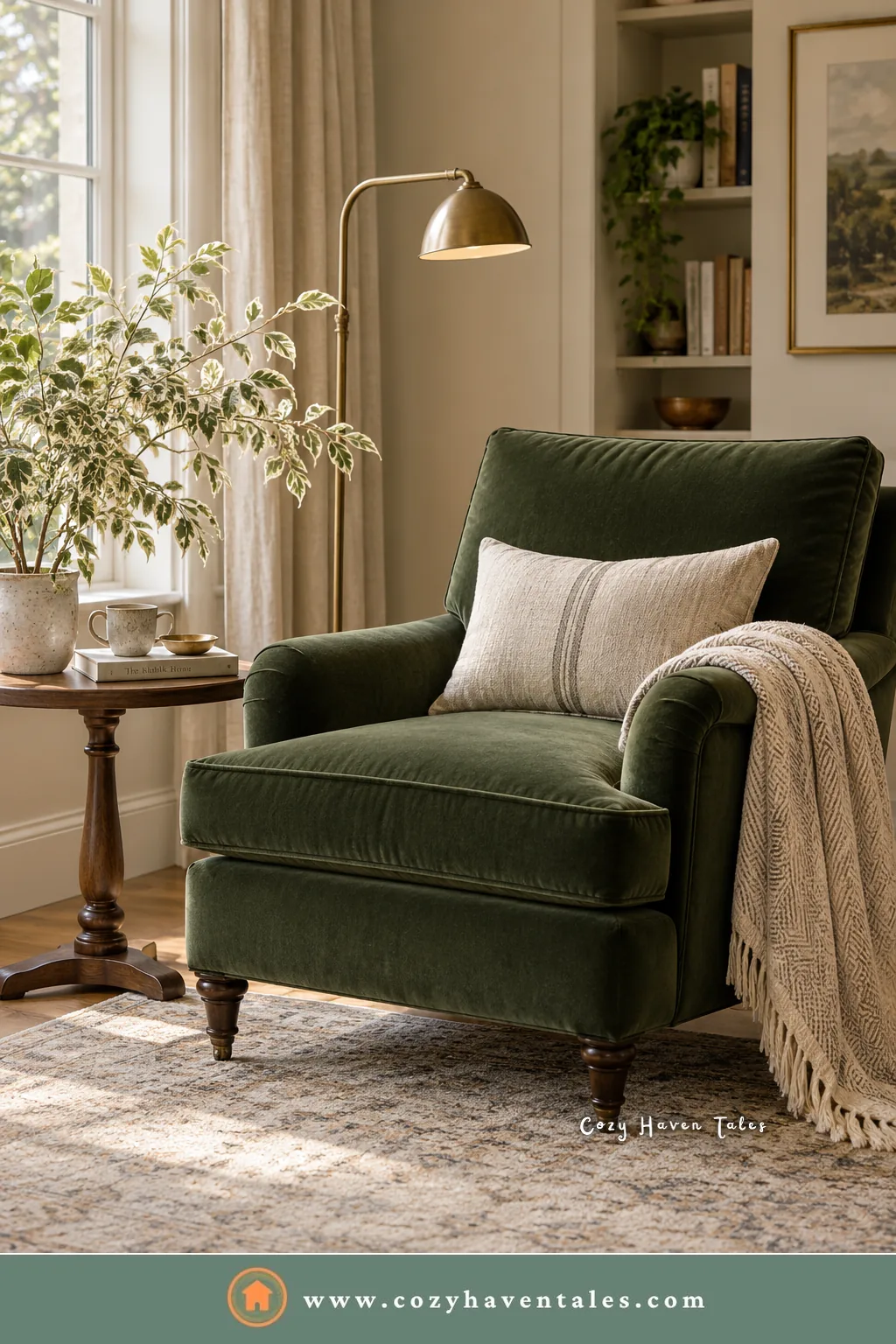
One dark green armchair is the gentlest way to try the color. In a light room, it becomes a deep, grounding accent that draws the eye to one corner, usually the reading spot. A green chair has a classic, slightly bookish feel, especially in velvet or a leather-look fabric.
Make it a little scene: a brass floor lamp, a small walnut side table, and a throw in rust or camel. Then bring the green back once across the room, in a pillow or plant pot, so the chair feels connected.
9. A green-painted coffee table or cabinet
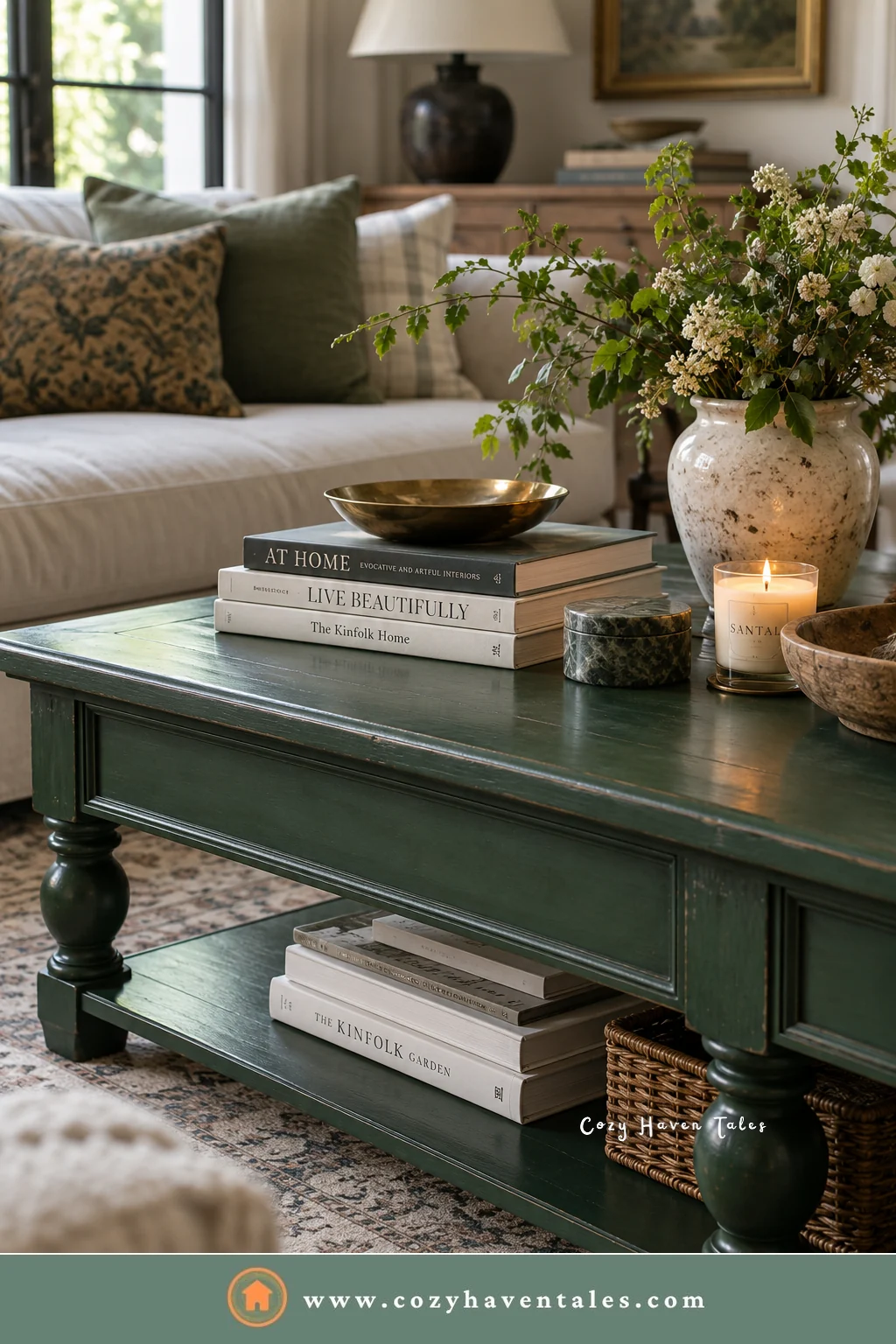
Paint an old cabinet or coffee table dark green, and it feels like a vintage find, even if it came from a thrift store last week. The deep color hides small dents and uneven grain, and brass hardware on dark green looks rich and a little old-world. It’s also a great option if you rent and can’t paint the walls.
Pick a piece with simple lines so the color does the talking. Against warm white walls and a light oak floor, a forest green sideboard becomes the room’s statement piece. A pair of white or terracotta lamps on top finishes the look.
10. A green fireplace surround
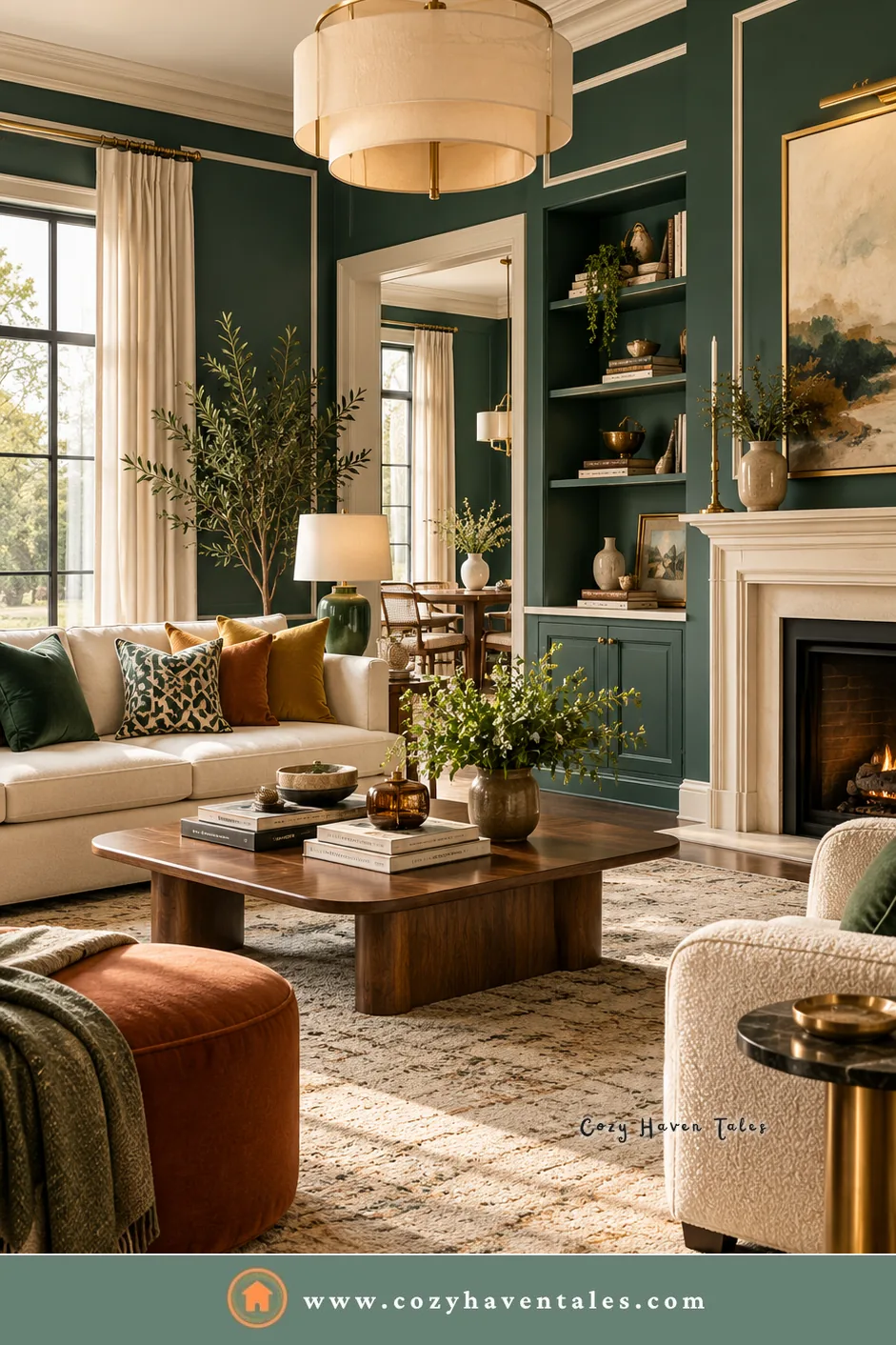
The fireplace is already the natural focal point, and dark green makes it feel even more like the heart of the room. A deep green surround adds weight and drama. It looks especially warm with a fire or candles glowing in front of it, which is exactly when you’ll be sitting there.
Painting just the wall around the fireplace works too, as a contained version of a green room. Pair it with a marble or cream hearth and a few brass pieces on the mantel. Keep the other walls light. If you’re deciding what should lead the room, see what can be a focal point in a living room. Use heat-resistant paint near the firebox, and check your fireplace’s guidelines.
Dark Green Living Room Accents in Smaller Doses
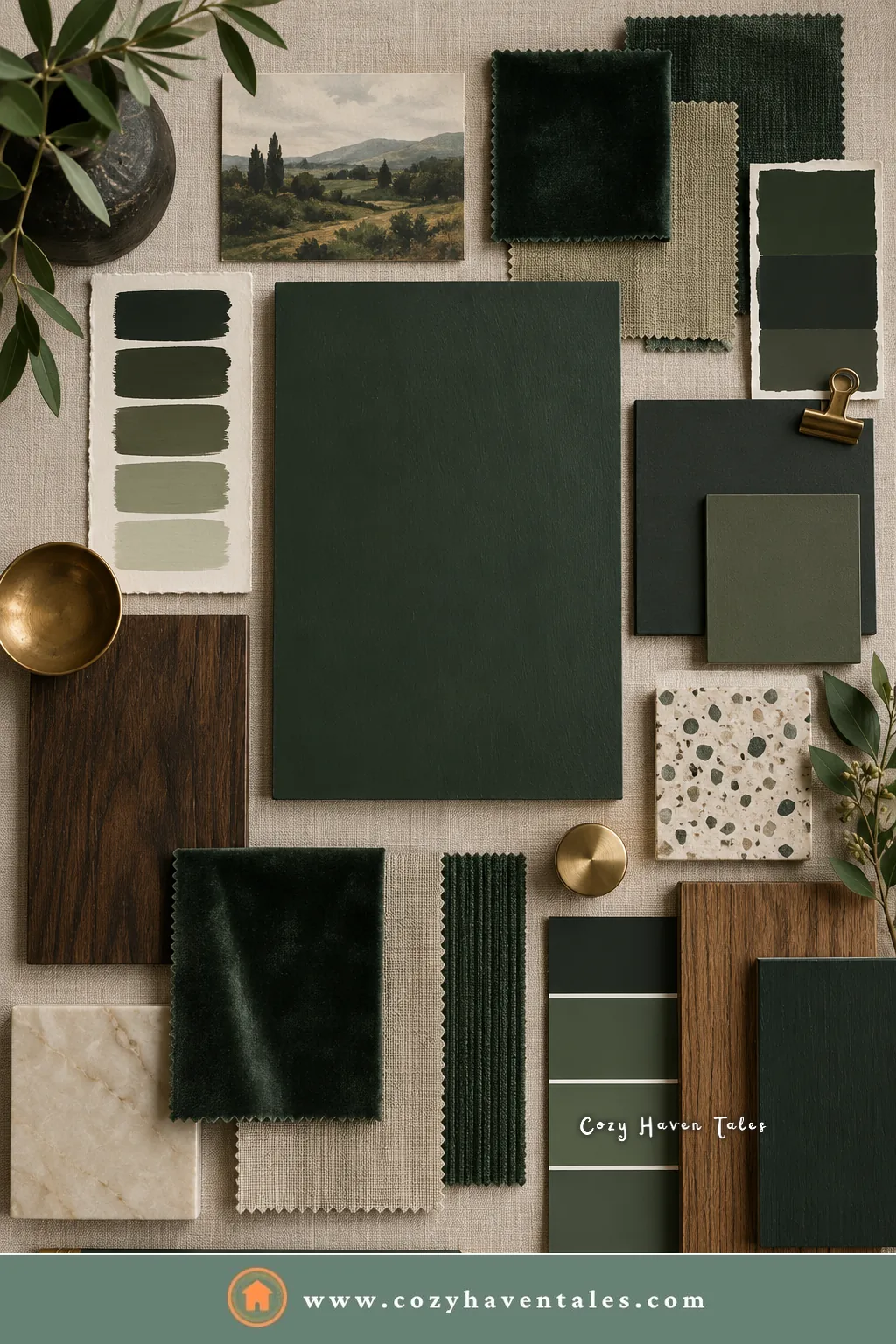
Not ready to commit? These ideas bring in dark green in ways that are easy to change.
11. Dark green curtains
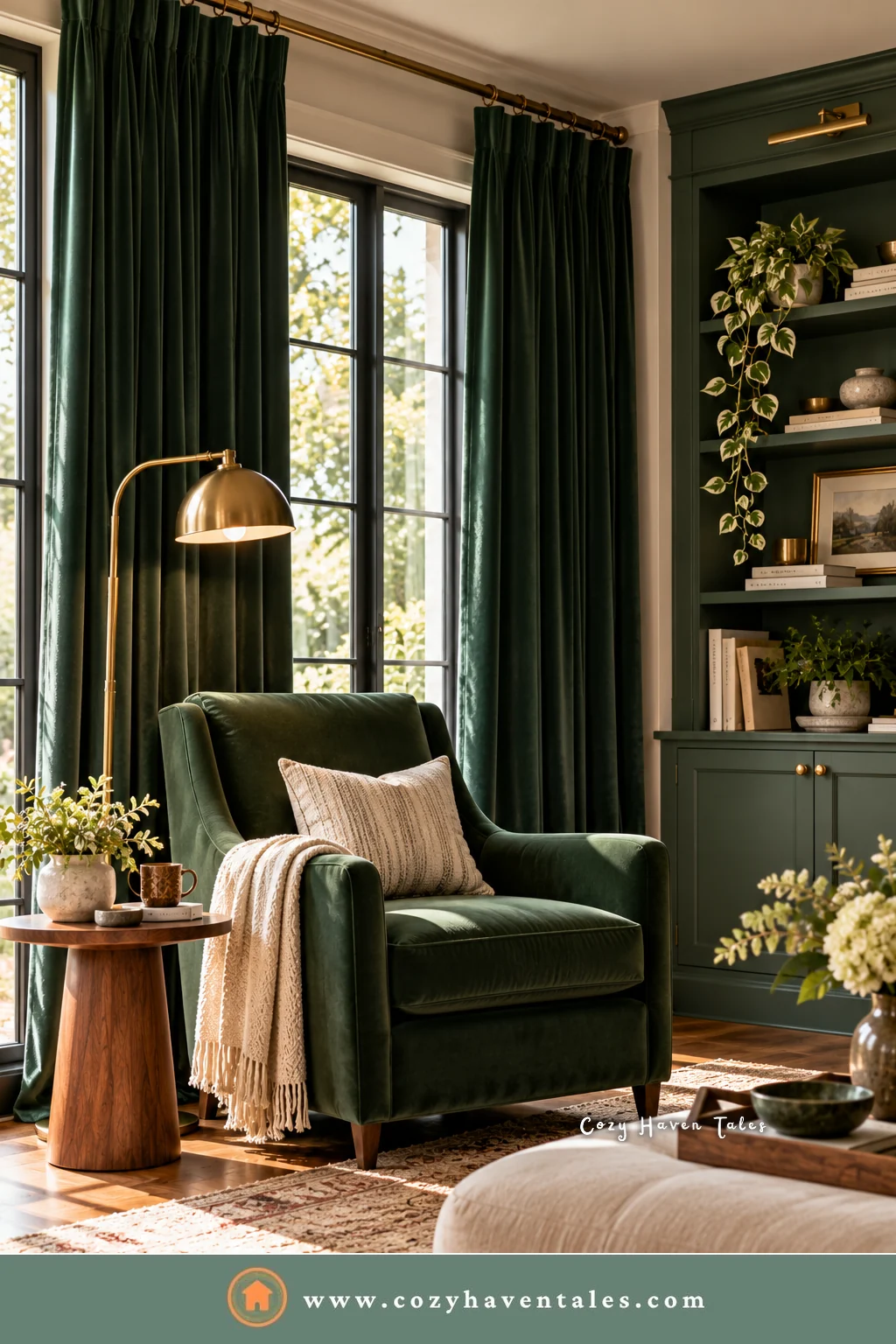
Dark green curtains bring a moody, cozy feel to a living room, especially in the evening when they’re drawn. Heavier velvet or lined linen in a deep green also blocks bright light better than pale fabrics. That helps in a sunny room or one where you watch TV. And if you love dark green but don’t want to repaint, curtains bring in a lot of the color at once.
For a softer look, layer dark green curtains with sheers or a second panel in sage or a lighter green. The mix of deep and soft greens gives the window real depth. Against cream walls they frame the view beautifully. Against a dark green wall, choose curtains a shade lighter so they don’t disappear. My guide on how to choose curtains covers fabric, length, and fullness.
12. A rug with dark green in it
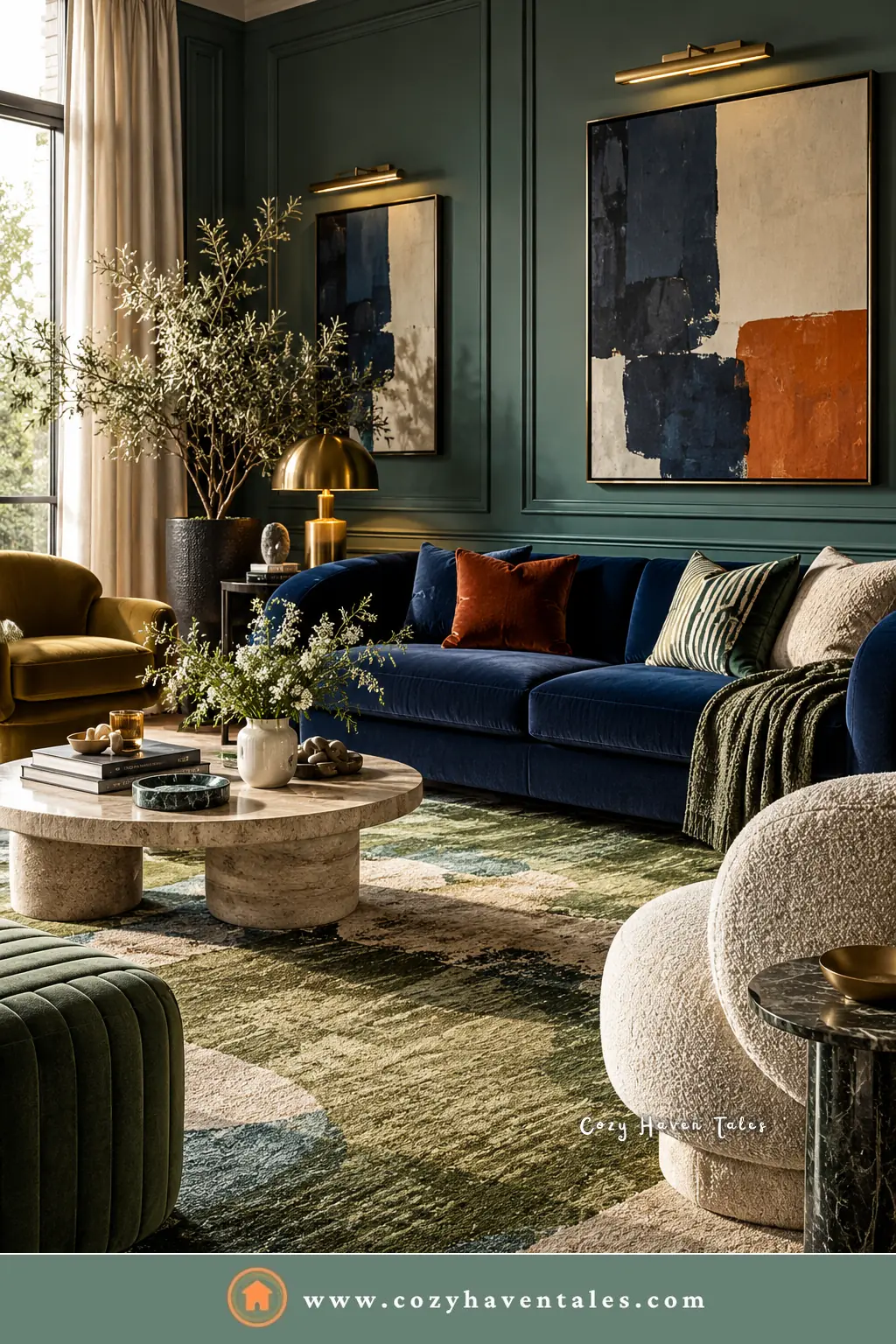
Even a little deep forest green in a rug brings a rich, earthy, slightly vintage feel to a room. Green often sits next to rust, ivory, and indigo in traditional Persian and Turkish style rugs. So a green rug makes a room feel collected rather than brand new. And because the green is on the floor, it grounds the room without making it feel dark.
It’s also an easy color to live with. Dark green pairs beautifully with cream, beige, warm gray, and other neutral sofa colors. You rarely need to change the furniture you already have. Pull one of the rug’s other colors, like the rust, into a pillow, and the seating area looks put together.
13. Green pillows and throws
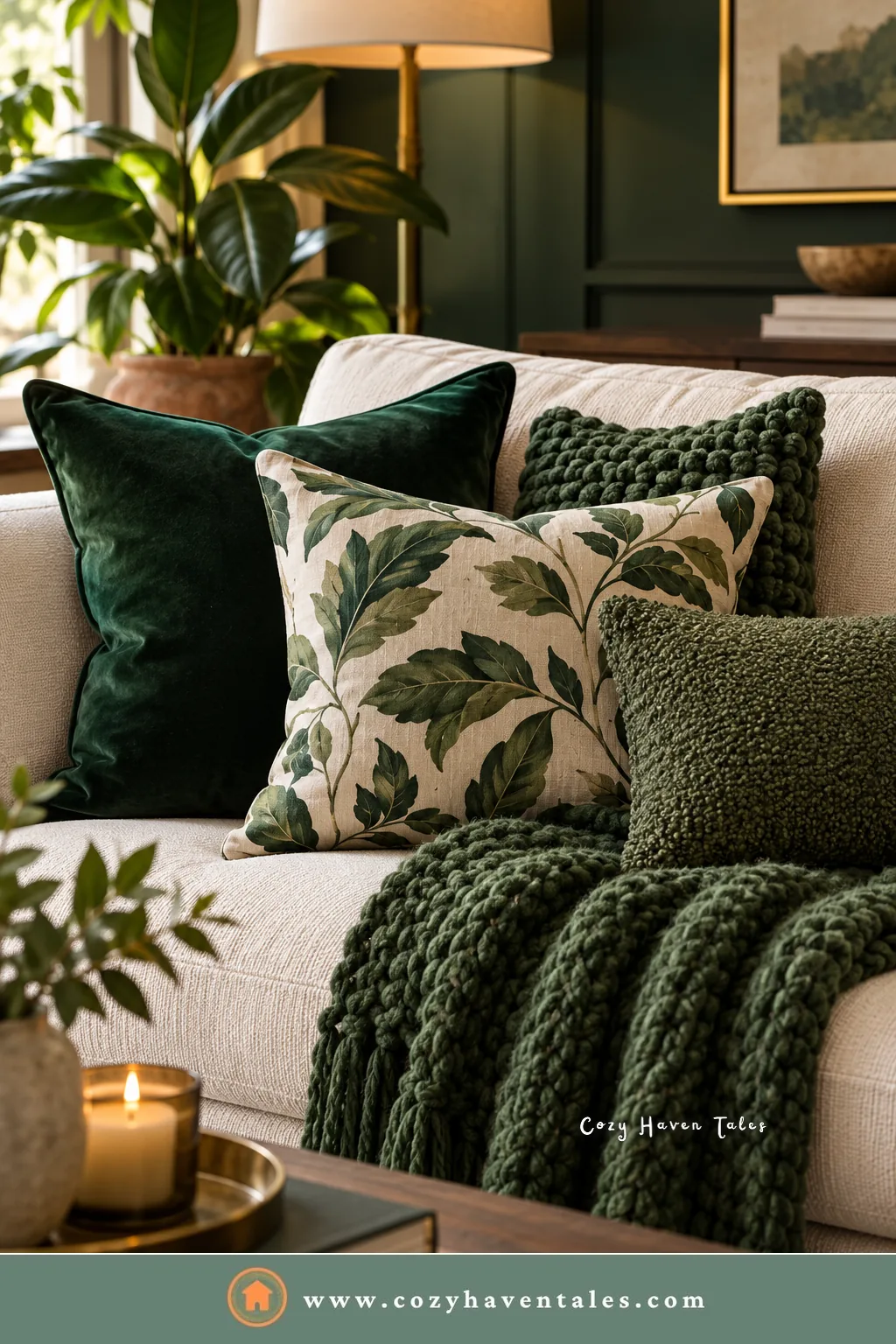
Dark green pillows are the easiest way to find out how you feel about the color. A few deep green velvet or linen pillows on a cream, beige, or gray sofa add instant depth. The dark color also makes the lighter sofa look crisper. A chunky forest green throw does the same thing in winter.
Mix textures within the green: velvet, boucle, and a green-and-cream print look far richer than three identical pillows. It works the other way round too, with a green sofa dressed in lighter pillows. If you still love the green after a season, that’s your sign to try a bigger step, like curtains or a chair.
14. Art with deep green in it
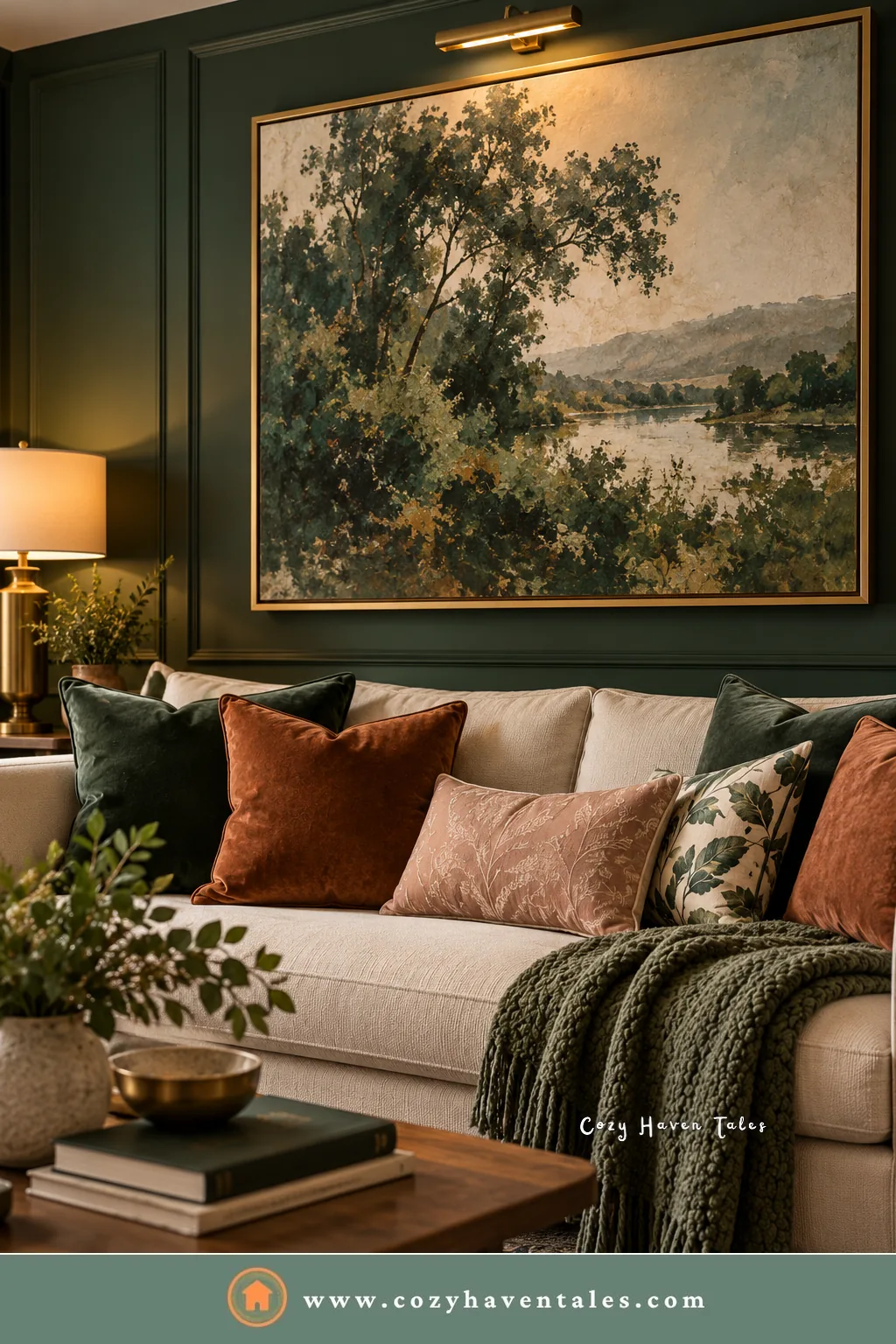
Art with deep green in it brings the color in without touching paint or furniture. Botanical prints, landscapes, and abstracts in forest or emerald tones add a calm, natural note to a neutral wall. Deep greens in art always look more grown-up than bright ones.
Choose a piece where the green sits next to colors you already own, like rust, blush, or navy. Then the art links the room together. A gold or warm wood frame flatters dark green much more than a thin black one.
15. Big plants against a light wall
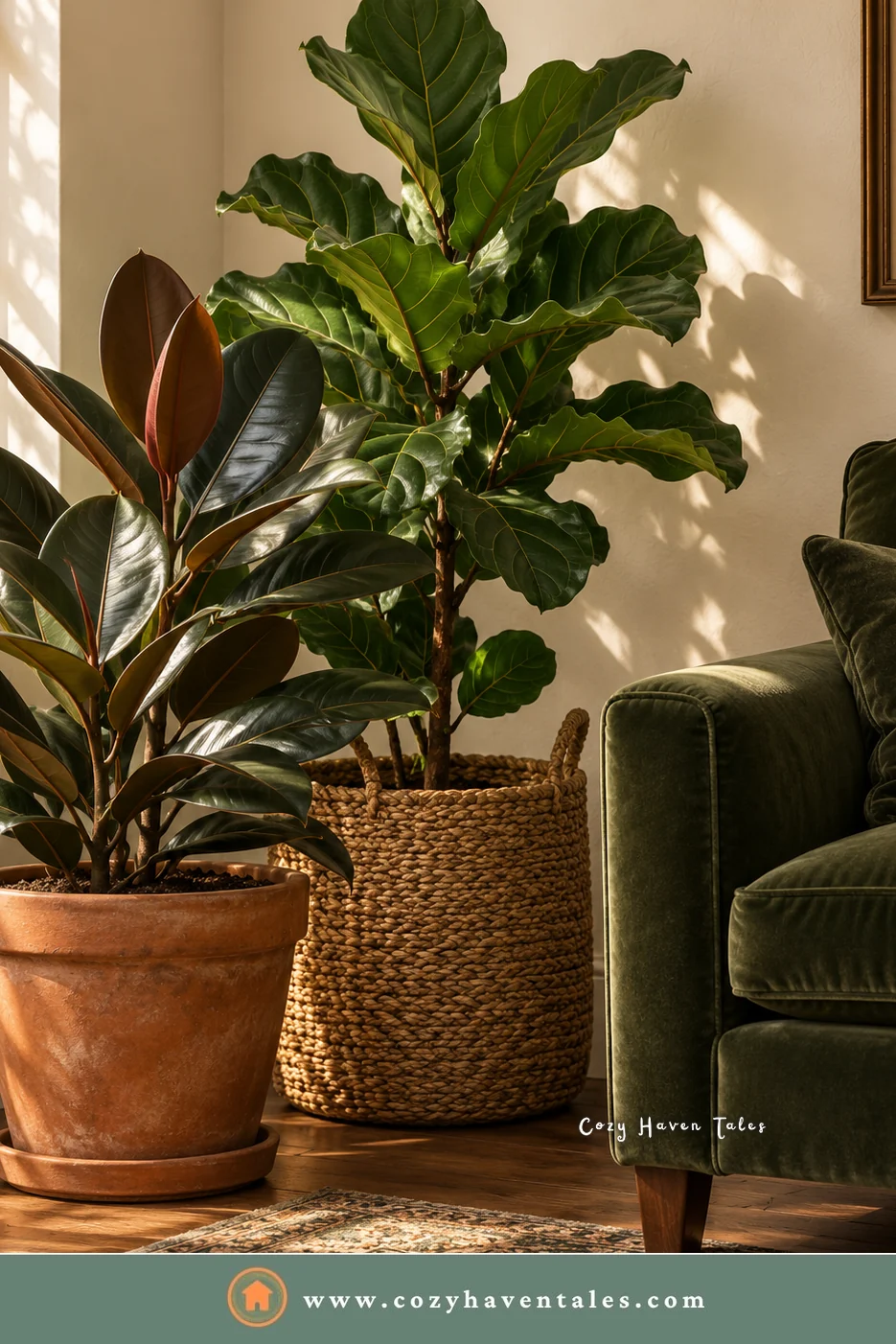
Big plants are dark green that’s alive. A rubber plant, a fiddle leaf fig, or a large palm brings the color in with texture and movement. Plants soften a room in a way paint can’t. Against a light wall, the dark leaves stand out like sculpture.
They also tie a dark green living room together if you’re using the color elsewhere. A plant beside a green velvet chair or under green art connects everything. Terracotta, woven, or matte black pots look best with dark leaves. If your room is low on light, a ZZ plant or snake plant gives the same deep green with less fuss.
You might also like: 24 Living Room Paint Color Ideas
How to Light a Dark Green Living Room
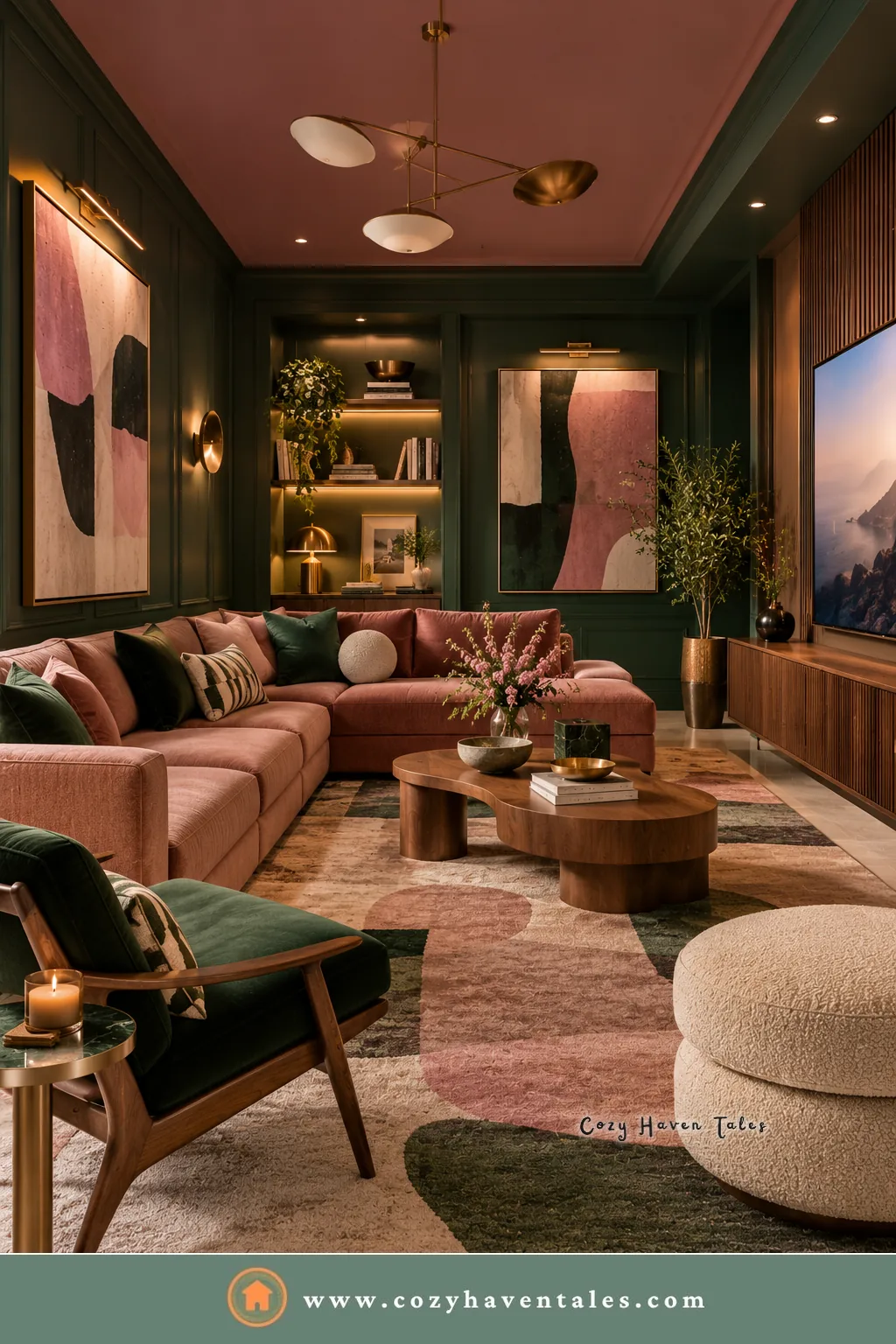
Lighting is where most dark rooms go wrong. A dark green room with only an overhead light looks flat and a little sad. The same room with four or five lamps looks rich and warm.
- Use at least three or four light sources at different heights: a floor lamp, two table lamps, and a wall sconce or picture light.
- Choose warm bulbs, around 2700K. Cool white light makes green look gray and cold.
- Light the walls, not just the floor. Picture lights and sconces wash the green with light and show off its depth.
- Add dimmers if you can. Dark colors look their best at a softer level of light in the evening.
For a full guide to planning layers of light, see my post on layered lighting for the home.
Dark Green Living Room Mistakes That Feel Gloomy
- Too little contrast. Dark green walls with a dark sofa, a dark rug, and dark wood furniture make everything disappear. Add cream, tan, or warm white in textiles to separate the layers.
- Cool companions. Chrome, cool gray, and bright white push dark green toward cold. Warm metals and woods pull it back.
- Glossy walls. High-sheen paint on dark walls shows every bump and roller mark. Keep walls matte or eggshell.
- One overhead light. See the lighting section above. This is the most common problem.
- Too many greens at once. One deep green plus a softer sage or olive can work. Three or four different greens in one room usually look accidental.
Dark Green Living Room FAQs
It may make the room feel more enclosed, but not necessarily smaller. Dark walls blur the corners, which can make a small room feel cozy rather than cramped. Good lighting and lighter textiles are what keep it comfortable.
Cream, tan, camel, cognac leather, and rust all work well. You’ll find several of these pairings in my tan sofa living room ideas. A gray sofa can work too if you add warm accents.
Warm whites, cream, tan, rust, mustard, blush pink, burgundy, and natural wood. For specific paint pairings, see the Webster Green guide linked at the top of this post.
Yes, if you choose a green with a little warmth, add plenty of lamp light, and lean on cream, wood, and brass. It will look deeper than in a sunny room, which many people like.
A dark green living room isn’t about the paint alone. It’s the warm wood, the soft lamp, and the cream throw on the sofa that make it feel like home.
Helpful Resources
- Webster Green HC-130 color page on Benjamin Moore’s site, for current details and coordinating colors.
- Best dark green paint colors from A Blissful Nest, if you want to compare more shades before you sample.