
Quick Summary: Rattan furniture can last 10 to 20 years or more when it’s properly maintained. The best way to maintain rattan furniture is to dust it weekly, clean it monthly with mild soap and water, protect it from excess moisture and direct sunlight, condition natural rattan twice a year, and repair loose weaving before it spreads. Natural rattan asks for a little more attention than synthetic rattan — especially in humid climates and outdoor spaces — but the routine is quick, inexpensive, and forgiving. Kept up, it protects not just how long your rattan lasts, but its colour, its strength, and that lovely woven texture that drew you to it in the first place.

Now, the enjoyable part — how to actually do all that without it ever feeling like a chore.
Rattan has a way of making a room feel lighter. Its woven texture catches sunlight, softens hard architecture, and brings a quiet, lived-in warmth that few materials manage. In nineteen years of styling homes, I’ve watched rattan move in and out of fashion and then settle into something permanent — and it still runs through the latest home decor trends because people simply love how it feels. But I’ve also watched beautiful pieces turn brittle, grey, or saggy long before their time, almost always because they were cared for like ordinary wood. They aren’t wood. Rattan is a living plant fibre — part of why it’s such a staple of sustainable, eco-friendly interiors — and it rewards a slightly different routine.

This guide walks through everything I share with clients who’ve just brought a rattan chair, headboard, or full set into their home: how to clean it without harming the weave, how to keep it supple so it never cracks, how to handle mould and outdoor exposure, and how to fix the small problems before they become expensive ones. Wherever the right answer depends on which kind of rattan you own, I’ll say so clearly — because that single distinction is where most care advice goes wrong.
First, A Quick Vocabulary Check: Rattan vs. Wicker vs. Cane vs. Bamboo

These words get tangled together constantly, and knowing the difference changes how you care for a piece.
Rattan is a material — the long, solid stem of a climbing palm (the Calamus genus) that grows in tropical forests. It’s flexible when heated and rigid when set, which is why it bends into those graceful frames.
Wicker is not a material at all; it’s a weaving technique. You can weave wicker from natural rattan, but also from synthetic resin, seagrass, or paper fibre. So “wicker furniture” tells you how it was made, not what it’s made of.
Cane is the thin outer bark of the rattan palm, peeled and used for the woven seat panels you see on bistro chairs and headboards.
Bamboo is a hollow grass — stiffer and more segmented than rattan, and not interchangeable with it, though the two often share a room beautifully.
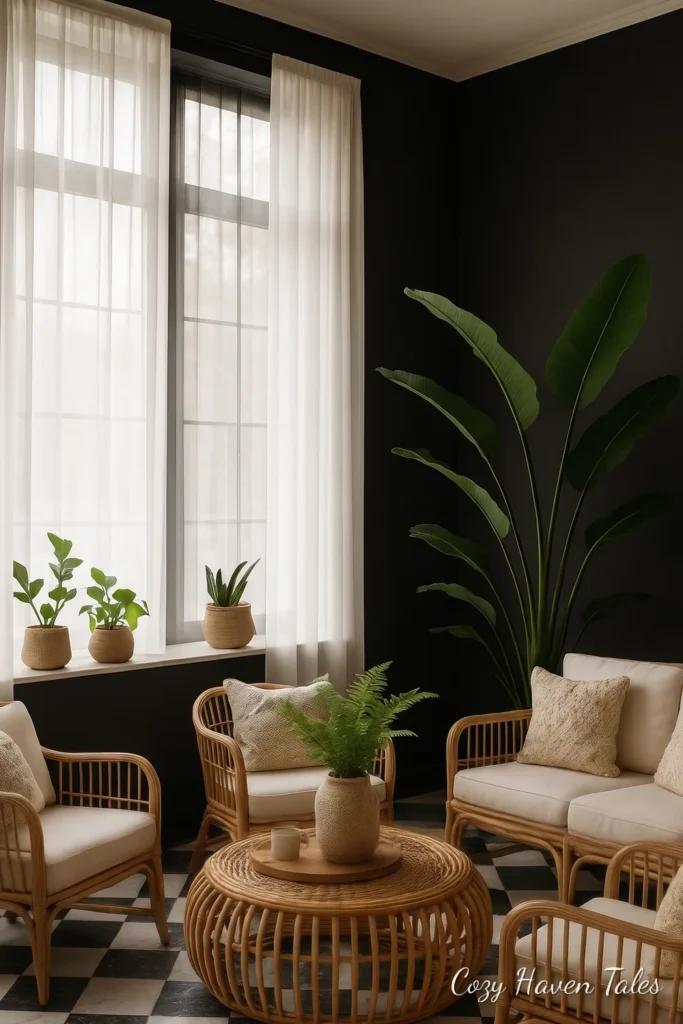
For care purposes, the question that matters most is simpler: is your piece natural rattan or synthetic (resin) rattan? Hold that thought — it drives almost every decision below.
Quick-Reference Care Summary
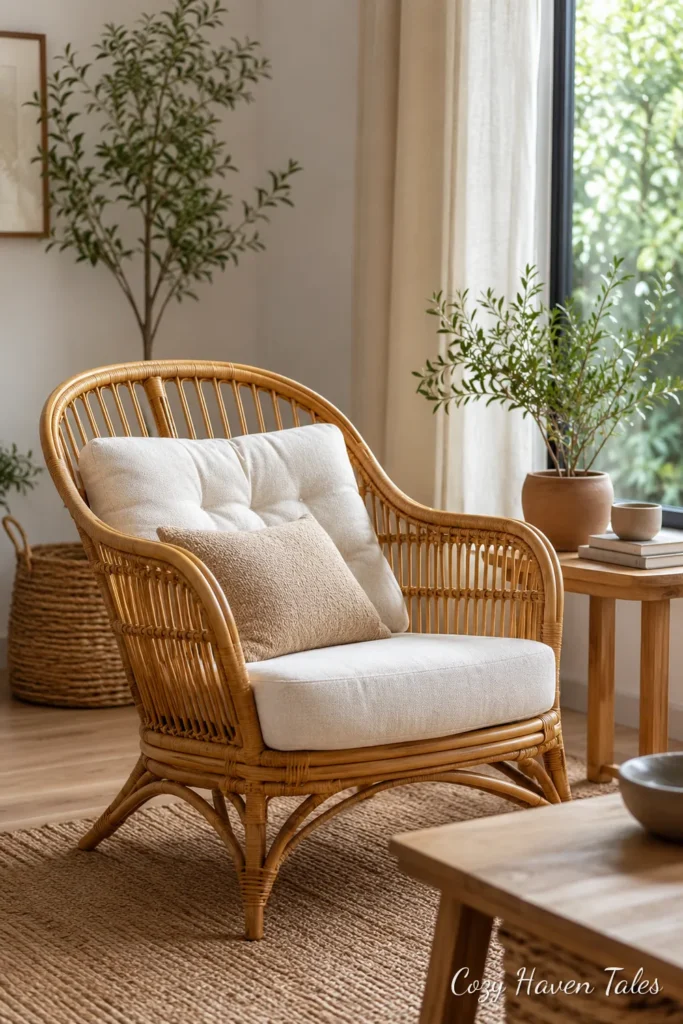
If you remember nothing else, remember this table.
| Task | How Often | What To Do |
|---|---|---|
| Light dusting | Weekly | Soft brush or vacuum with brush attachment |
| Damp wipe-down | Monthly | Warm water + a little mild dish soap, barely damp cloth |
| Condition / oil (natural only) | Twice a year | Boiled linseed oil or a dedicated rattan conditioner |
| Full inspection | Yearly | Check for split fibres, sagging, mould, loose strands |
| Deep clean | Yearly or as needed | Gentle wash, full dry in airflow |
Know Your Rattan: Natural vs. Synthetic
Almost every cleaning mistake I’ve seen traces back to treating these two as the same thing. They behave very differently with water, sun, and cleaning agents.

| Natural Rattan | Synthetic (Resin) Rattan | |
|---|---|---|
| Made from | Palm stem fibre | Polyethylene (PE) resin over a metal/aluminium frame |
| Water tolerance | Low — dislikes soaking and damp | High — water-resistant by design |
| Best home | Indoors or fully covered patio | Indoors or outdoors |
| Direct sun | Fades and dries out | More fade-resistant, but cheap grades still degrade |
| Safe to use bleach? | No — never on natural fibre | Yes, well diluted |
| Needs oiling? | Yes, to stay supple | No |
| Typical lifespan | 10–20+ years indoors with care | 5–15 years depending on resin quality and sun |
A surprise for many people: a good natural rattan piece kept indoors will often outlast a cheap synthetic one left in the sun. Synthetic isn’t automatically more durable — it’s just more forgiving of moisture.

Caring for Different Rattan Pieces

“Rattan furniture” is a big umbrella, and it’s worth saying out loud: this is not just about a sofa set. Rattan turns up as beds and headboards, coffee and side tables, poufs and ottomans, dining chairs, cabinets and sideboards, daybeds, and the sculptural peacock and accent chairs that anchor so many Japandi and minimalist rooms. A woven coffee table lives a completely different daily life from a headboard, so the smart habits shift a little from piece to piece even though the fundamentals stay the same.
| Piece | What it’s up against | What it needs most |
|---|---|---|
| Sofas & armchairs | Sagging seats, body oils, crumbs deep in the weave | Spread weight across cushions, vacuum the weave often, condition the frame occasionally |
| Beds & headboards | Dust in the weave, mould where it meets the wall | Leave a small gap from the wall for airflow; vacuum the weave; keep room humidity moderate |
| Coffee & side tables | Water rings, heat marks, spills sitting on the top | Use coasters and a glass or sealed top; wipe spills the moment they happen |
| Dining chairs | Daily weight, food and drink splashes | Spot-clean promptly; check the joints regularly for wobble |
| Poufs & ottomans | Heavy repeated weight, sagging | Don’t use them as a step stool; spread the load; re-tighten loosening fibres early |
| Cabinets & sideboards | Dust on woven door panels, damp building up inside | Wipe the panels, keep contents dry, let air move through |
| Peacock & accent chairs | Ornamental, prone to uneven sun-fade on display | Rotate and shade them; dust the decorative weave gently |
Whether rattan anchors your whole living room setup or shows up as a single statement accent chair, matching the care to the piece is what keeps it looking its best.
What You’ll Need

A simple kit covers nearly everything:
- A soft-bristled brush (an old, clean paintbrush or soft toothbrush is perfect for the weave)
- A vacuum with a brush or upholstery attachment
- Two bowls — one for cleaning solution, one for clean rinse water
- Mild dish soap
- Microfibre cloths
- A hairdryer set to cool, or a fan, for drying crevices
- For natural rattan: boiled linseed oil or a rattan conditioner
- For mould: white vinegar (natural) or household bleach (synthetic only)
How to Clean and Maintain Rattan Furniture, Step by Step
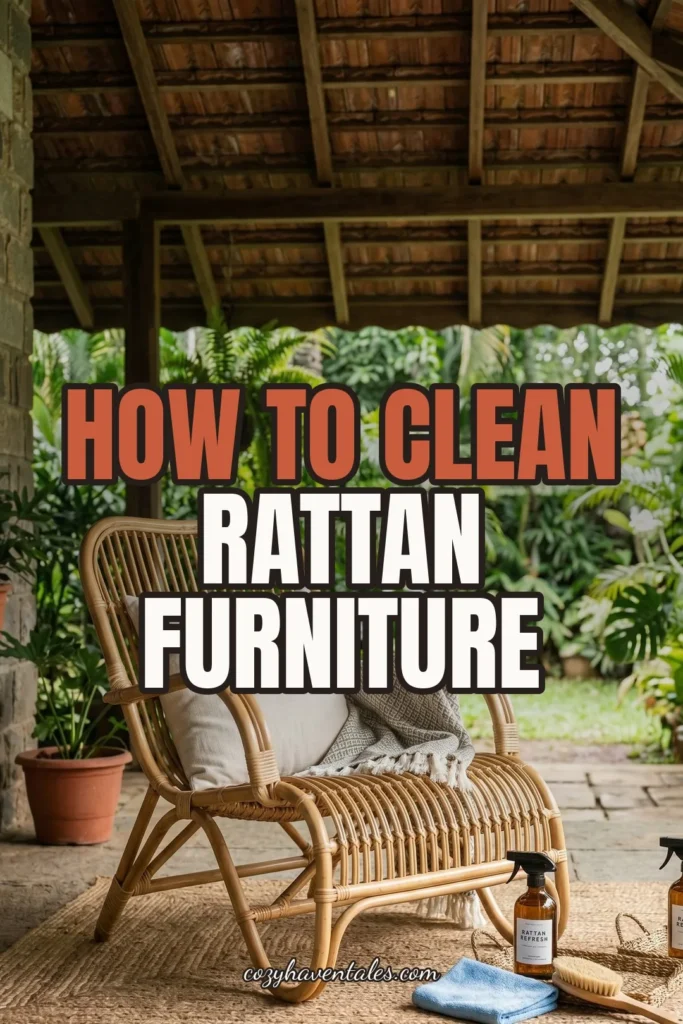
Rattan’s woven gaps are exactly where dust, crumbs, and grime love to settle, so gentle regular cleaning beats occasional heavy scrubbing every time.
The routine clean:
- Lift off cushions and set them aside to handle separately.
- Dry-dust first. Work a soft brush along the weave to loosen debris, then vacuum it away with the brush attachment. For stubborn build-up packed into the crevices, a cool hairdryer or a puff of compressed air clears it without touching the fibre.
- Mix a mild solution — warm water with just a few drops of dish soap. You want it barely sudsy, not a bubble bath.
- Wipe, don’t soak. Dampen a microfibre cloth, wring it until it’s almost dry, and wipe along the weave. Rinse the cloth often in your second bowl of clean water. The cardinal rule with natural rattan: keep moisture to a minimum.
- Dry it properly and completely. Blot the wetter areas with a dry cloth, then let air circulate — a fan or cool hairdryer speeds up the hidden spots in the weave. Never leave natural rattan damp; trapped moisture is what invites mould and warping.

Indoors vs. outdoors: Indoor pieces mostly need that light weekly dust and a monthly wipe. Outdoor or sunroom pieces collect far more grit, so they need cleaning more often. If you have synthetic outdoor furniture, you can be more generous with water — a gentle rinse with a hose on low pressure is fine. Never do that to natural rattan, and never aim a pressure washer at either; the force frays the weave.
For spills and stains: Act fast. Lift solids gently with the edge of a spoon rather than rubbing, which only drives the mess deeper into the fibres. Then blot — never scrub — with a barely-damp cloth and let it dry.
How to Clean Mould off Rattan Furniture
Mould shows up as dark or fuzzy spots and usually means the piece has been somewhere damp. It’s fixable, but the method depends entirely on the material — this is the most important place to get the distinction right.
On natural rattan, never use bleach. It’s too harsh for the fibre and can leave it weak and discoloured. Instead:
- Take the piece outdoors if you can, and wear gloves and a mask — you don’t want to breathe spores.
- Mix equal parts white vinegar and water in a spray bottle.
- Mist the affected areas lightly and let it sit for around 10–15 minutes.
- Work the spots gently with a soft brush, then wipe with a clean, barely-damp cloth.
- Dry it thoroughly, ideally in fresh air and indirect sun, until there’s no trace of moisture left.
On synthetic rattan, the fibre can take more: a dilute bleach solution of roughly one cup of bleach to a gallon of water works well. Apply with a cloth, scrub gently, rinse with clean water, and dry fully. Keep that bleach mix well away from any natural rattan nearby.
If mould keeps returning, the real problem is the environment, not the furniture — move the piece somewhere drier and improve airflow.
How to Oil Rattan Furniture (and Stop It Cracking)
Here’s the part most owners skip, and it’s the one that actually keeps natural rattan alive. The fibre contains natural oils that keep it flexible. Over the years — especially in centrally heated or air-conditioned homes, which are surprisingly drying — those oils deplete, the fibre goes brittle, and it starts to crack and splinter. Conditioning replaces what’s lost.

The best oil for rattan furniture is boiled linseed oil — it penetrates the fibre and restores flexibility from the inside. Twice a year, wipe a thin coat of boiled linseed oil or a purpose-made rattan conditioner over natural rattan with a soft cloth, getting into the weave, and buff off the excess. It restores suppleness and a soft natural sheen.
A few hard-won cautions:
- Don’t use kitchen oils like olive or vegetable oil. They turn rancid, go sticky, and can smell.
- Skip raw tung oil for routine indoor care — it takes an age to cure. Boiled linseed oil or a proper conditioner is far more practical.
- Don’t over-apply. A light coat absorbed into the fibre is the goal; a thick layer just sits on the surface and attracts dust.
- Synthetic rattan doesn’t need any of this — there’s nothing to feed.
If you prefer a different finish, a thin coat of clear furniture wax or beeswax also protects and adds shine, though I lean toward a matte conditioner, so the piece keeps its honest, natural look rather than going glossy.
Protecting Rattan from Sun, Humidity, and Climate

Two invisible forces age rattan faster than any spill: light and the wrong humidity.
Sunlight bleaches natural fibre and dries it brittle. Keep pieces out of long, direct exposure, and if a sunny spot is unavoidable, soften it with sheer or heavier curtains and blinds. A designer trick: rotate the piece every so often so any fading happens evenly rather than leaving one bleached side.
Humidity cuts both ways. Too damp, and the fibre swells and grows mould; too dry, and it cracks. Aim for a comfortable middle — roughly 40–60% relative humidity, which happens to be pleasant for people too. A humidifier or dehumidifier earns its keep here if your climate runs to extremes. Keep rattan away from radiators, heating vents, and air-conditioning blasts, all of which dry it out from up close, and steer clear of naturally damp spots like basements or right beside an open window in the rainy season.
Outdoor & Garden Rattan Furniture: How to Clean and Maintain Rattan Furniture
Synthetic rattan was built for the outdoors and only needs regular cleaning and a cover when it’s not in use. Natural rattan is a different story — left outside uncovered, it won’t last. Sun fades it, rain and damp rot it, and cold snaps make the fibres snap.
If you genuinely want to use natural rattan outdoors or in an exposed sunroom, weatherproof it first, and reapply over time because any factory finish wears off:
- Sealing route: apply a coat of paint or stain made for wicker if you want to change or refresh the colour, then seal with two coats of a clear varnish or lacquer suited to natural rattan, letting each coat dry fully. Plan to renew this every few years.
- Oil route: if you’d rather not paint, an oil finish adds water resistance, though it won’t stand up to heavy, driving rain — think light protection, not a raincoat.
- For cushions and upholstery, a fabric protector spray helps, and the simplest habit of all is bringing cushions indoors when they’re not in use.
The honest truth I give clients: the surest way to keep natural rattan beautiful is to keep it under a roof. Treat outdoor use as a calculated trade-off.
How to Restore Rattan Furniture: Troubleshooting and Repairs
Caught early, most rattan problems are a quick fix. This table covers what I’m asked about most.
| Problem | Likely Cause | What To Do |
|---|---|---|
| Sagging seat | Long-term weight, dried fibres | Mist the underside lightly with water and let it dry taut; redistribute weight with cushions; avoid standing on it |
| Cracking / brittleness | Lost natural oils, dry air, sun | Condition with linseed oil; move away from heat sources and direct sun |
| Loose or unravelling strand | Weave working free | Re-tuck and secure with a dab of clear-drying wood glue; clamp until set |
| Squeaking joints | Friction at frame joins | A little paste wax or beeswax on the contact points |
| Yellowing / greying | Age, sun, grime | Gentle clean; light conditioning can revive tone, though sun-fade is largely permanent |
| Splintered cane panel | Impact or extreme dryness | Small splits: glue and clamp. Large damage: professional re-caning |
A simple anti-damage habit: never drag rattan across the floor — the strain pops fibres at the joints. Lift it instead, with even pressure on both sides, and slip felt pads or rubber caps under cane legs to protect both the furniture and your floor.
When a frame is badly broken or a whole cane panel has gone, it’s worth pricing a professional restorer before replacing. Quality rattan is genuinely worth saving, and re-caning often costs a fraction of a new piece.
Five Mistakes That Quietly Age Rattan
Most rattan doesn’t fail dramatically — it gets loved a little carelessly over years. These are the slips I see most often, and all of them are easy to avoid.
Drowning it in water. Rattan and standing water are not friends. Soaking natural fibre to “really clean it” is the fastest way to warp it and invite mould. Barely-damp always beats wet.
Reaching for the strong stuff. Bleach, ammonia, and harsh all-purpose sprays strip finishes and discolour natural rattan. Mild soap handles ninety percent of cleaning; save anything stronger for synthetic, and even then dilute it.
Letting dust live in the weave. Skip the weekly brush and dust packs into the crevices, sets with humidity, and turns into grime that’s genuinely hard to lift later. A two-minute habit prevents an hour-long job.
Parking it in the sun. A sunny window feels like the perfect spot until the fibre dries, fades, and starts to crack. If the light is lovely, shade it — don’t sacrifice the furniture to it.
Ignoring the small stuff. A single loose strand or a faint wobble is a five-minute fix today and a restoration bill next year. Catch problems while they’re still small.
How to Paint and Refinish Rattan Furniture
A rattan piece that’s gone dull or dated doesn’t need replacing. Clean it thoroughly and let it dry, then either revive the natural tone with conditioner or give it a new life with colour. For painting, light, even coats of a spray paint suited to wicker reach the weave far more evenly than a brush ever will — build up two or three thin coats rather than one heavy one, and seal afterward if the piece will see any moisture. A flea-market chair in a fresh, unexpected colour is one of the easiest wins in decorating.
Cushion and Upholstery Care
The frame and the soft goods age differently. Vacuum cushions when you dust the frame, spot-clean spills promptly, and check the care label before any wet cleaning. Outdoors, bring cushions in when they aren’t in use — they’re usually the first thing to suffer from damp and sun, and they’re the cheapest thing to replace, so a little protection goes a long way.
How to Clean and Maintain Rattan Furniture: Your Schedule
Care becomes effortless once it’s on a rhythm. Here’s the cadence I recommend.
| Frequency | Do This |
|---|---|
| Weekly | Dust and vacuum the weave; plump and straighten cushions |
| Monthly | Light damp wipe-down with mild soapy water; spot-treat marks |
| Seasonally | Check sun exposure and humidity; bring outdoor cushions in as weather turns; re-protect outdoor pieces |
| Twice a year | Condition natural rattan with linseed oil or conditioner |
| Yearly | Full inspection — split fibres, sagging, mould, loose strands; deep clean; refresh weatherproofing if used outdoors |
How Long Does Rattan Furniture Last?
With the routine above, indoor natural rattan comfortably lasts ten to twenty years and often far longer — I’ve worked in homes where a well-loved rattan chair has outlived two sofas. Left outdoors and uncared for, natural rattan can deteriorate within a season or two. Synthetic rattan typically runs five to fifteen years, leaning longer when the resin is good quality and it’s shaded from relentless sun. In every case, the variable that matters most isn’t the price tag — it’s whether the piece is kept out of damp, out of harsh sun, and lightly maintained.
Frequently Asked Questions

Synthetic rattan can; it’s made for it, though a cover when unused extends its life. Natural rattan should not live outdoors uncovered — sun, rain, and cold will break it down. A covered porch or sunroom is the most exposure natural rattan should see, and even then it benefits from weatherproofing.
Cracking comes from the fibre drying out. Keep natural rattan away from radiators, vents, and direct sun, maintain moderate household humidity, and condition it with boiled linseed oil twice a year to keep it supple.
Only on synthetic rattan, well diluted, and rinsed off. Never use bleach on natural rattan — it weakens and discolours the fibre. For mould on natural rattan, use a half-and-half white vinegar and water solution instead.
Natural rattan, about twice a year. Synthetic rattan never needs oiling.
Usually long-term weight combined with dried-out fibres. Lightly mist the underside with water and let it dry to tighten it back up, use cushions to spread weight, and never stand on the piece.
A mix of age, sun fade, and built-up grime. A gentle clean and light conditioning can revive the tone, but colour lost to prolonged sun exposure is largely permanent — which is exactly why shading it matters.
No. The force frays and breaks the weave on both natural and synthetic. For synthetic, a gentle hose on low pressure is the most water you should use; for natural, stick to a barely-damp cloth.
Rattan is the material — palm stem. Wicker is the weaving method, which can use rattan or synthetic fibres. So rattan can be woven into wicker, but not all wicker is rattan.
Vinegar-and-water for natural rattan, dilute bleach for synthetic only. Apply, let it sit, brush gently, wipe, and — most importantly — dry the piece completely so the mould can’t return.
Where to Find Rattan Worth Caring For
If you’re investing in a new piece, quality makes everything in this guide easier — well-made rattan resists cracking and lasts far longer. Two makers worth knowing: Palecek, a California maker handcrafting rattan and wicker since 1974, and Sika-Design, a Danish family company crafting rattan since 1942 (with a US store). Buy the best piece you can, care for it well, and it’ll reward you for decades.
A Designer’s Final Word
Rattan isn’t demanding; it’s just specific. Keep it dusted, keep it out of damp and harsh sun, feed the natural fibre a little oil twice a year, and handle it gently, and it will quietly hold its character for decades. The single habit I’d leave you with is the easiest one: a soft brush over the weave once a week. Do that, and most of the bigger problems in this guide never get the chance to start.





2 Comments