A child’s room can collect an impressive amount of stuff during the summer. There may be clothes that no longer fit, forgotten craft projects, broken toys, books under the bed and school supplies left over from the previous year. The weeks before school starts are a practical time for a bedroom reset. However, asking a child to “clean the whole room” may lead to complaints, delays or complete avoidance.
The goal is not to create a picture-perfect bedroom. It is to help your child decide what they still use, make space for the coming school year and develop a few simple organizing habits.
Readers also loved: 7 Red Flags That Explain Why Your Home Never Stays Clean
Here are eight ways to encourage kids to declutter their room without turning the process into a battle.
1. Sort with Four Simple Bins
Start with why, not with the mess. “Let’s make space for your new school books” gets further than “your room is a disaster,” and it puts the child on your side of the project instead of on the defensive.
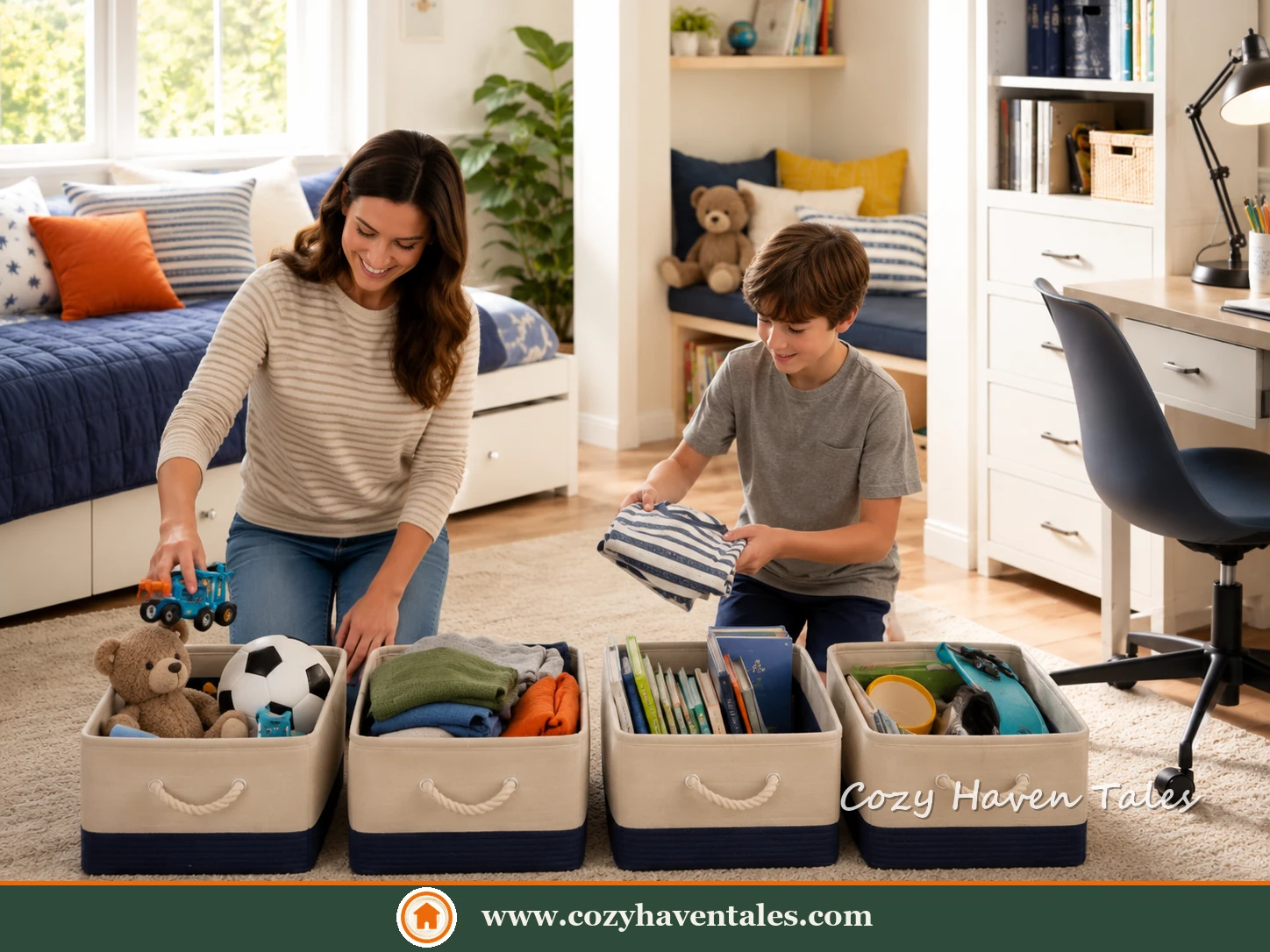
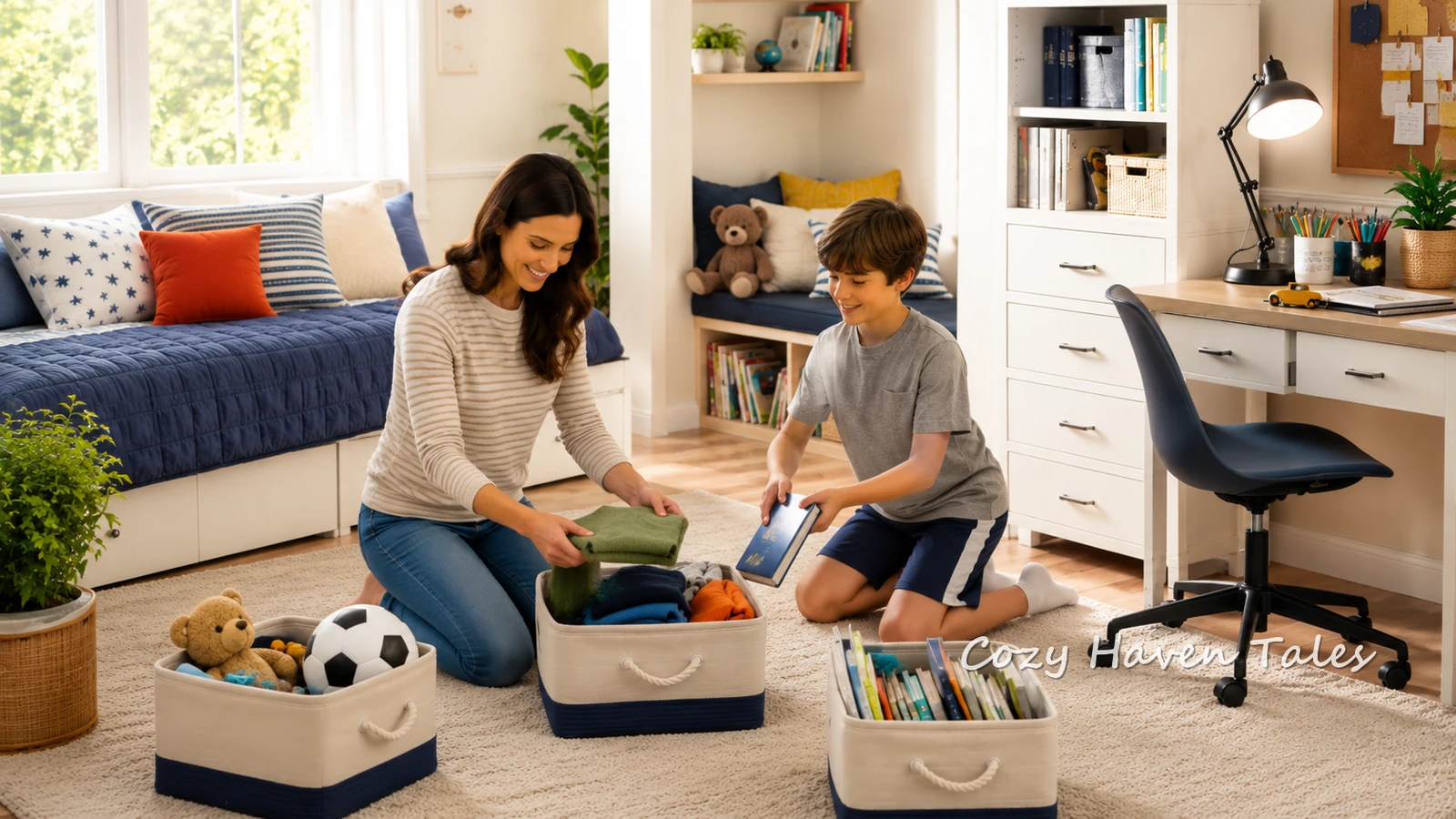
Then set out four bins: keep, donate, move, and decide later. Move catches anything that belongs in another room, not on your child’s decision at all, so it doesn’t slow down the sort. Decide later is for the genuine holdouts: close that one, date it, and store it out of sight for a month. Most of what’s inside is forgotten by the time you open it again. Let your child make the keep-or-donate call on everything else themselves. Kids let go of things far more easily when the decision is theirs.
Cozy Haven Tales Pro Tip: Tell your child where the donate bin is actually going, a school drive, a younger cousin, a library sale, rather than leaving it vague. “You’ve enjoyed this a long time. Someone else might enjoy it now” lands better than any comment about how much they own.
2. Break the Room into Short Timed Rounds
A full room can feel impossible to a child, so work in fifteen-minute rounds instead, one drawer or one shelf at a time.
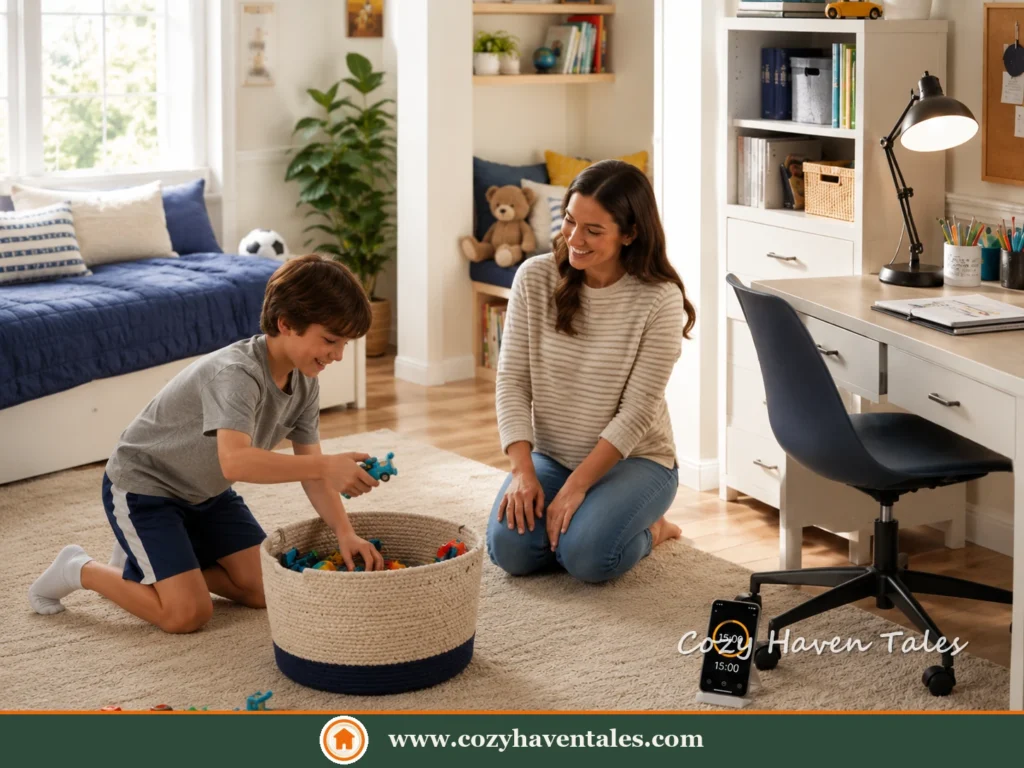
Short bursts keep the task manageable and stop the afternoon from turning into a standoff. Most kids can stay focused for one round without losing interest, and you can always add another later in the day.
3. Let Them Choose What Stays
Ask which toys and books they’ve actually used in the last few months, not which ones they think they should keep. Their honest answers are usually more decisive than yours would be. Handing over that choice teaches a real decision-making skill, and it keeps the sort from turning into something done to them instead of with them.
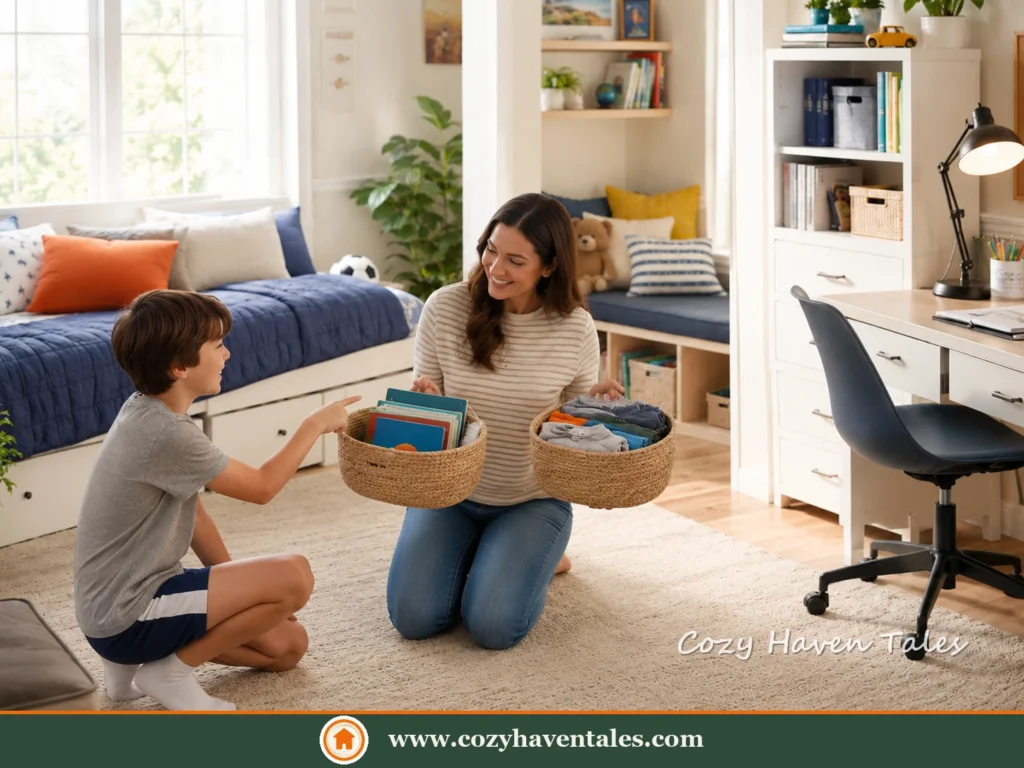
For a younger child, limit this to two or three items at a time. Too many decisions in a row gets tiring fast, and a tired child stops choosing carefully.
4. Set a One In, One Out Rule for School Supplies
As fresh notebooks, pencil cases, and shoes arrive for the new term, have one older item leave the room at the same time.
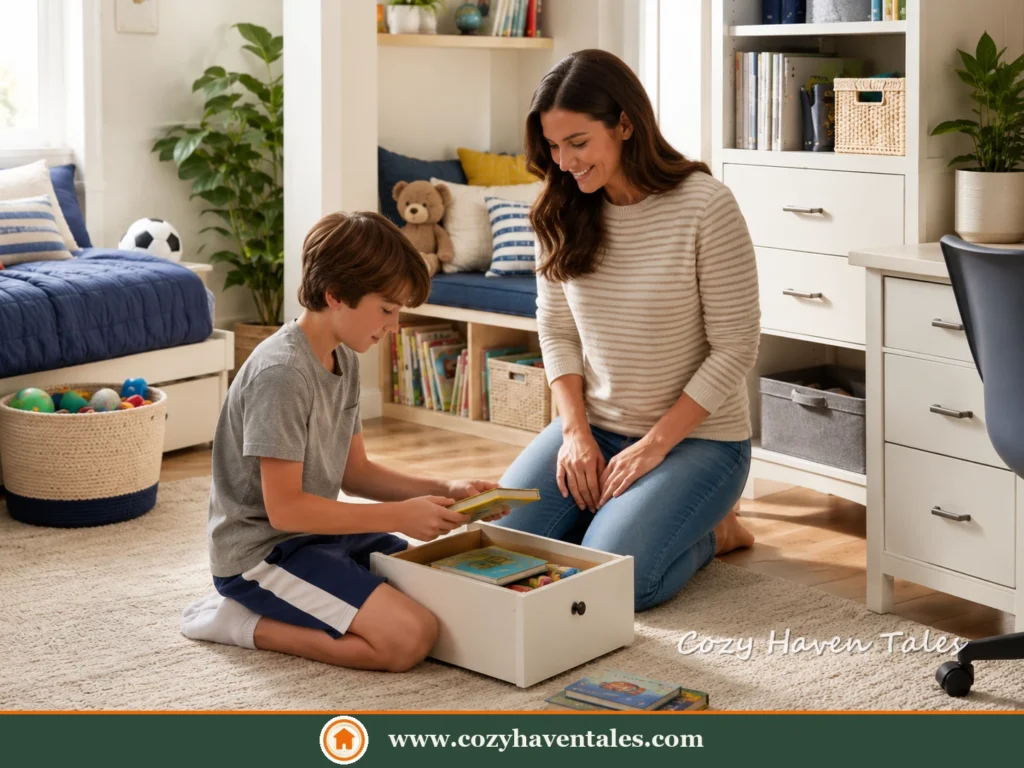
This keeps the supply drawer from quietly doubling every August, and it builds a habit that holds up long after the first week of school.
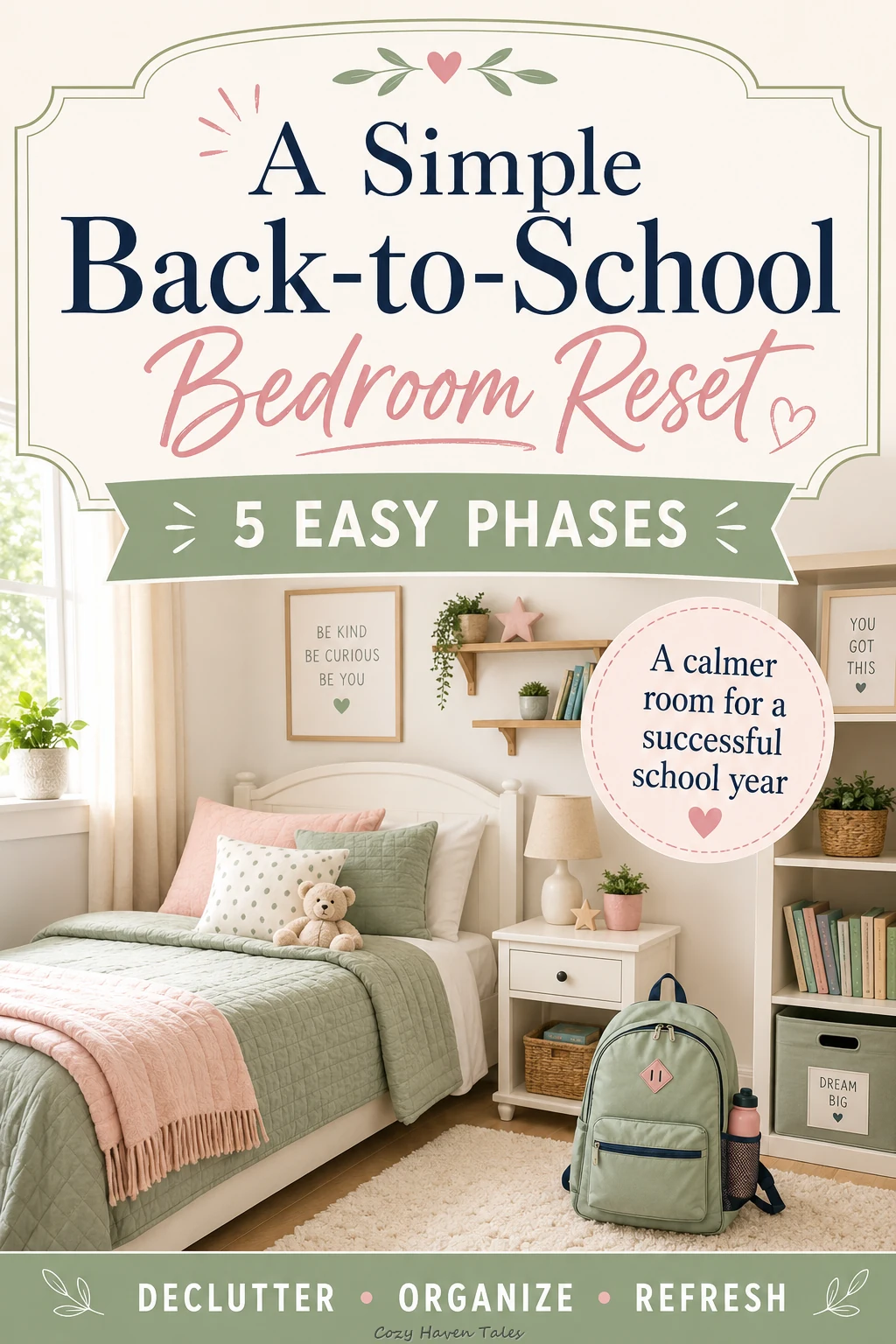
5. Spread It Over Five Short Phases
If your child gets overwhelmed by any of this in one sitting, split it across the week instead of trying to finish it in a weekend: clothes and shoes, then books and papers, then the desk, then everything that belongs to another room, then toys. One short phase a day is enough to make the room feel calmer by the time school starts, and nobody has to sit through a long Saturday of it.
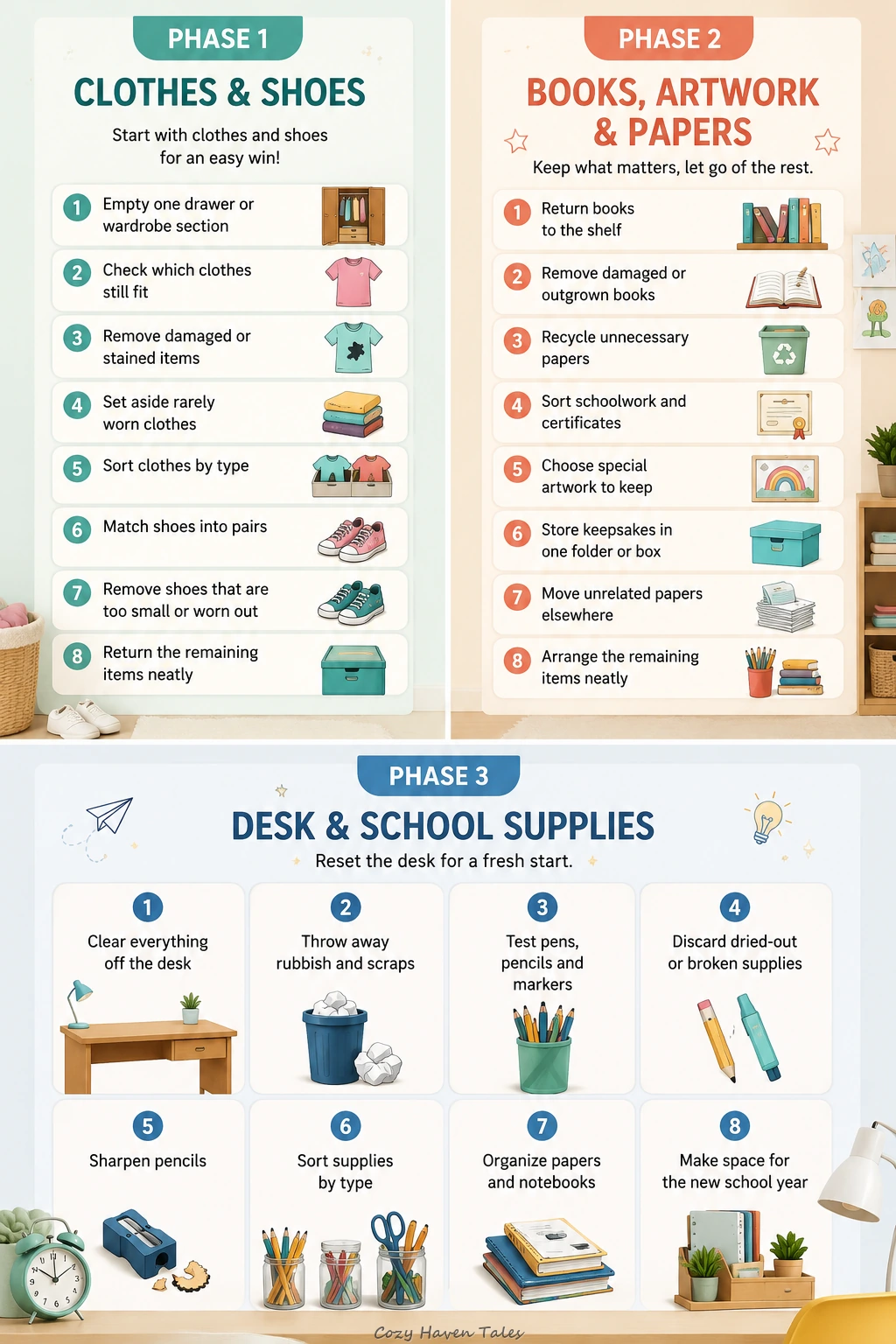
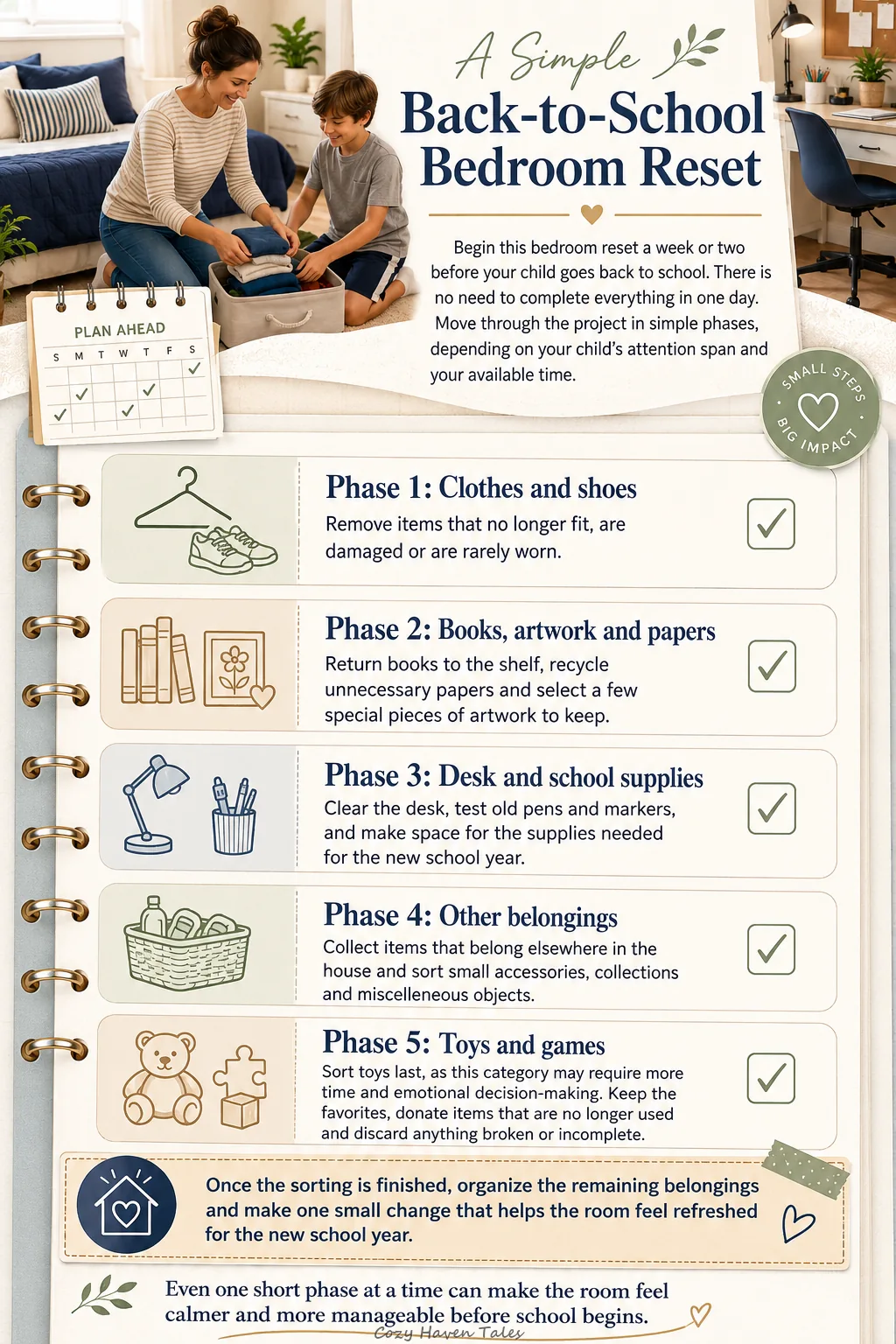
A Simple Back-to-School Bedroom Reset
Begin this bedroom reset a week or two before your child goes back to school. There is no need to complete everything in one day. Move through the project in simple phases, depending on your child’s attention span and your available time.
Phase 1: Clothes and shoes
Remove items that no longer fit, are damaged or are rarely worn.
Phase 2: Books, artwork and papers
Return books to the shelf, recycle unnecessary papers and select a few special pieces of artwork to keep.
Phase 3: Desk and school supplies
Clear the desk, test old pens and markers, and make space for the supplies needed for the new school year.
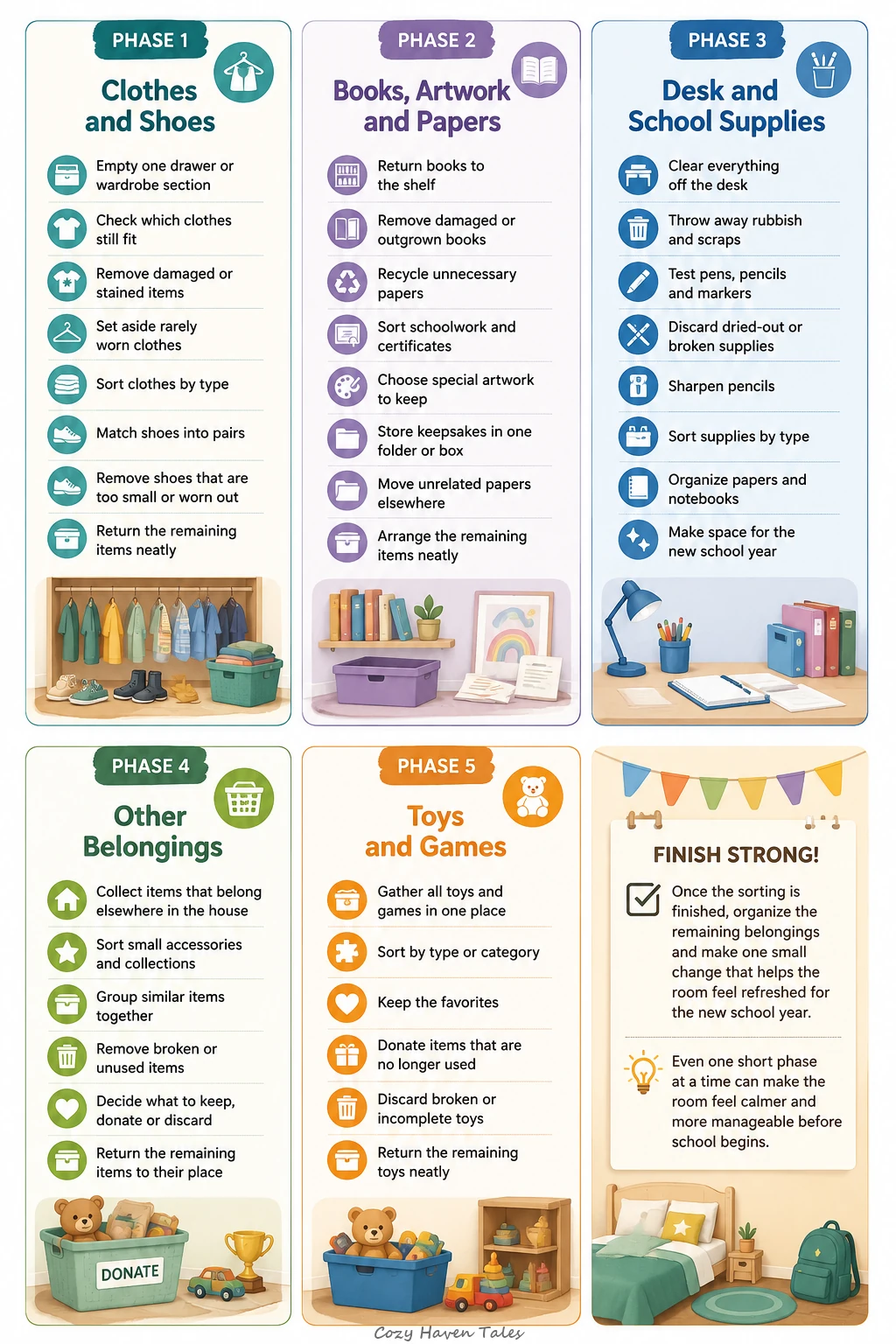
Phase 4: Other belongings
Collect items that belong elsewhere in the house and sort small accessories, collections and miscellaneous objects.
Phase 5: Toys and games
Sort toys last, as this category may require more time and emotional decision-making. Keep the favorites, donate items that are no longer used and discard anything broken or incomplete.
Once the sorting is finished, organize the remaining belongings and make one small change that helps the room feel refreshed for the new school year. Even one short phase at a time can make the room feel calmer and more manageable before school begins.
6. Mark the Finish with a Small Celebration
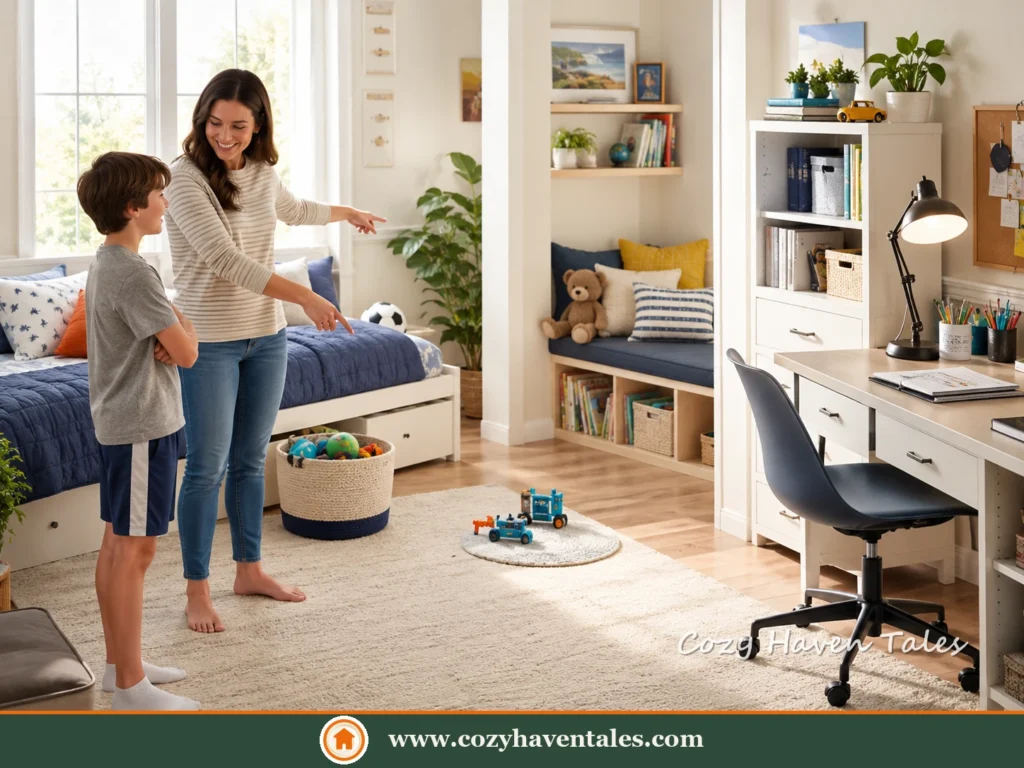
A small reward at the end goes a long way: a trip for new shoes, a favorite dinner, an evening off from chores. It isn’t about buying good behavior. It marks the effort, and the room, as something worth noticing.
7. Give Every Category a Labeled Home
Once the clutter is gone, everything that’s left needs a place to return to. This is the step most families skip, and it’s the one I care about most as a designer, because it decides whether the room stays this way or slides back into chaos within a week.
A tray by the desk for loose school papers, a hook by the door for bags and jackets, one container for chargers and headphones, labeled bins for art supplies and building toys. Match the system to what your child already keeps out, not to a storage catalog. And hold off on buying new organizers until the sort is finished. It’s much easier to choose the right bin once you can see what’s actually left to hold.
Cozy Haven Tales Pro Tip: Use one bin per category, not per toy type. A single “building toys” bin works better than five small ones for blocks, cars, and figures, since kids are far more likely to return items to a bin they can see into at a glance.
8. Set Up Their Study Corner Together
Once the room is clear, let your child help set up a small desk or reading nook for the year ahead, choosing where the pencils, the current book, and the homework folder will live. When kids help design their own space, they tend to keep it that way, and that ownership carries through the school term better than a rule ever could.
Cozy Haven Tales Pro Tip: Keep the desk within reach of natural light where you can, and away from the bed. A study corner that looks too much like a nap spot rarely gets used for homework.
What to Avoid While Decluttering
A few habits tend to undo all of this faster than anything else:
- Comparing the room to a sibling’s or a friend’s.
- Clearing things out while your child is away from home.
- Expecting a young child to finish, or even start, on their own.
- Treating one sentimental item as a battle worth having.
- Calling the whole project done after one long, exhausting session, then wondering why nobody wants to repeat it.
None of this needs to be a discipline problem. A room that’s gotten away from a child usually just needs a plan, not a lecture.
A Calmer Start to the School Year
It isn’t really about a spotless room. It’s about a space your child can walk into after a long first week and feel settled in. Start with the easiest task on this list, not the biggest one, and let the room take shape over a few short sessions instead of one exhausting Saturday. If the rest of the house needs the same kind of reset, my guide on how to declutter a bedroom covers the same approach room by room.