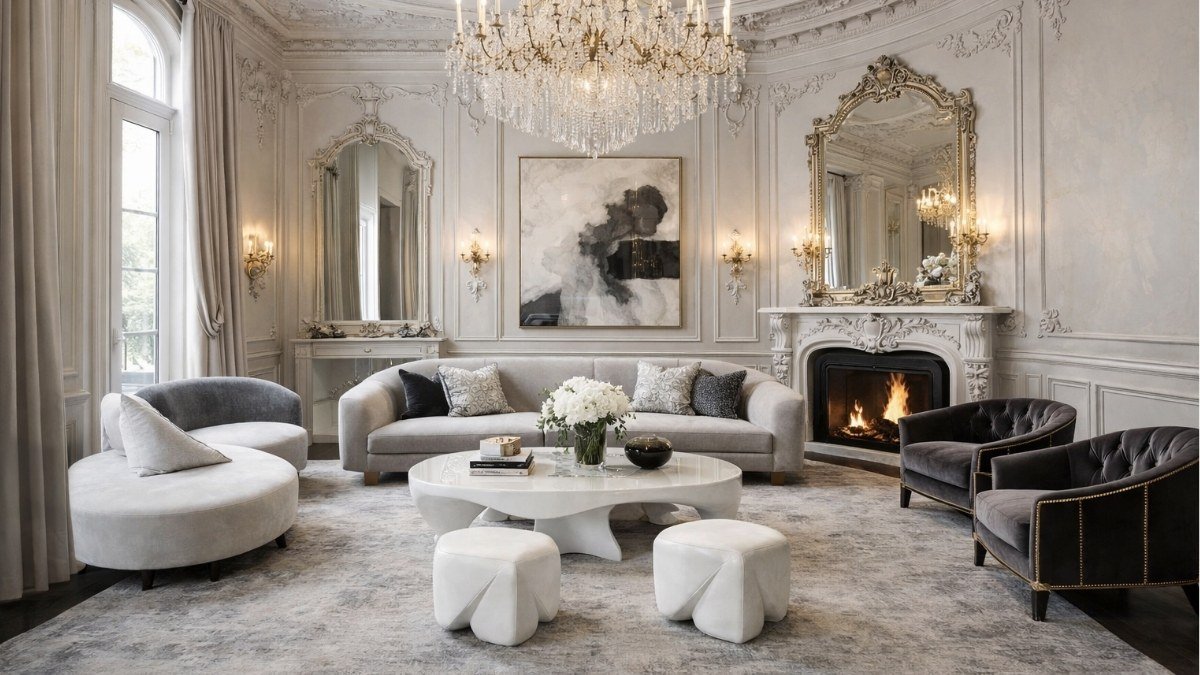
There are countless interior design styles to choose from — modern, minimalist, industrial, farmhouse — each telling a different story. Yet few feel as romantic and graceful as rococo interior design.
With its flowing curves, gilded accents, ornate moldings, and pastel elegance, this style transforms a room into something almost theatrical — but in the softest, most charming way.
Rococo Interior Design Style: Soft Drama, Curves & Pure Elegance
Some interiors whisper.
Rococo interiors glide into a room.
They don’t shout luxury. They swirl it.
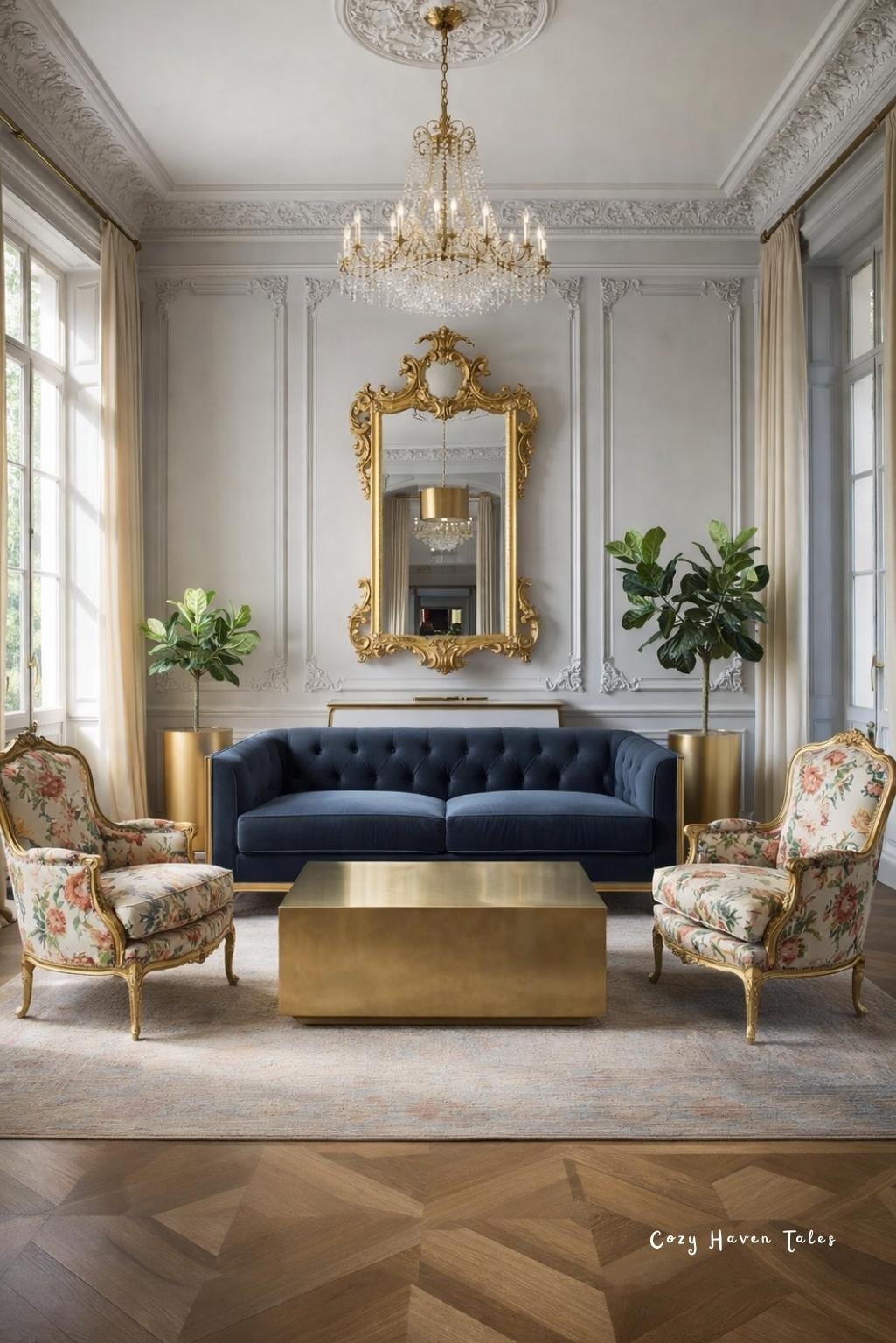
Curves instead of sharp edges. Pastels instead of heavy jewel tones. Gold accents that feel playful rather than powerful.
If Baroque feels grand and dramatic, Rococo feels lighter. Softer. More romantic.
And once you understand it, you start noticing its details everywhere.
If you love exploring timeless European interiors, you might also enjoy:
- Top 10 Tips for Tuscan Style Home Interior Design — warm textures, earthy tones, and old-world charm.
- How to Decorate in a Moroccan Style — rich patterns, layered textures, and global elegance.
- How to Find Your Personal Design Style — a simple guide to discovering what truly feels like home.
What Is Rococo Interior Design Style?
Rococo began in 18th-century France.
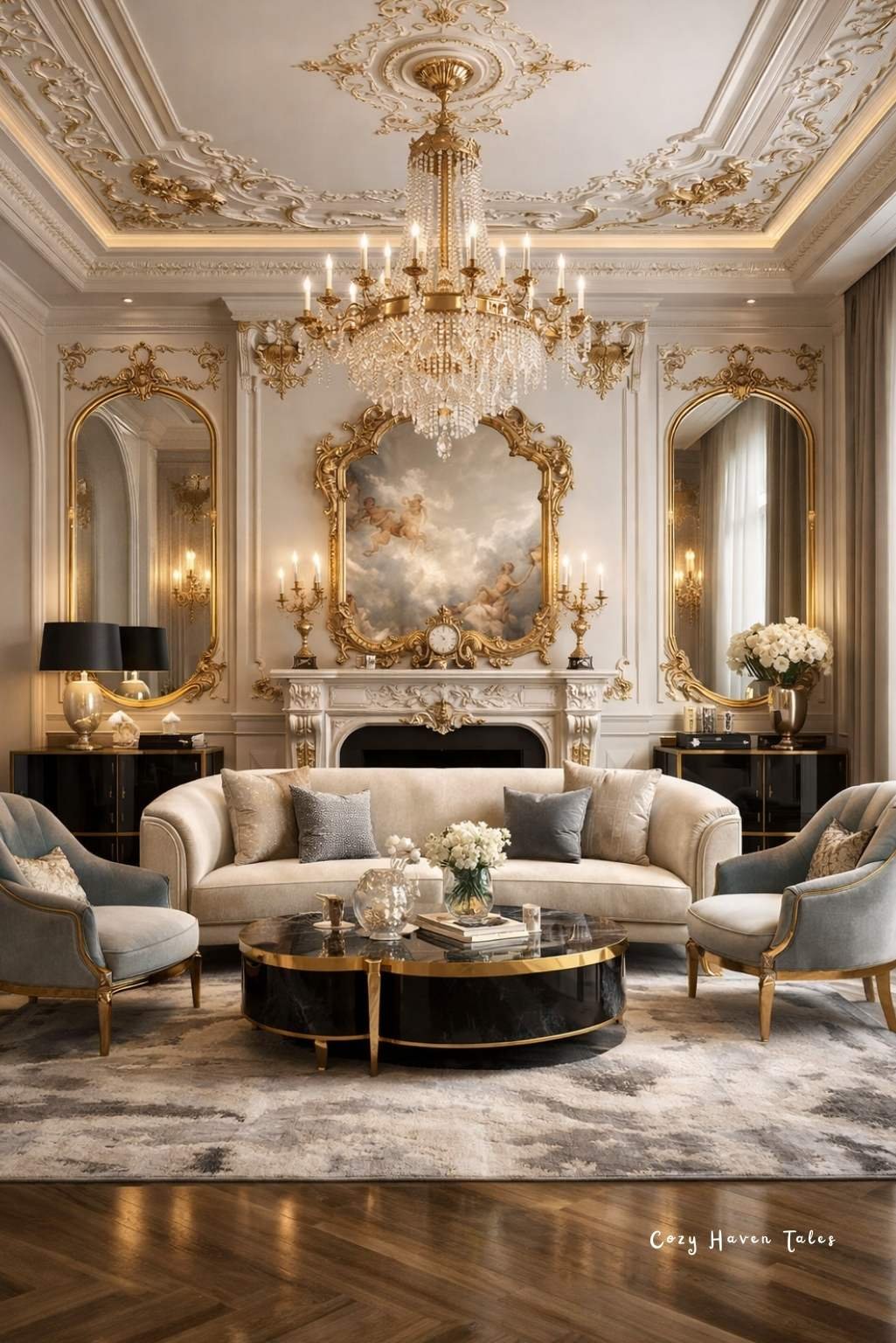
It was a reaction to the heavy, symmetrical, formal Baroque style. Designers wanted something more relaxed. More intimate. More graceful.
So they softened everything.
Walls became lighter. Furniture became curved. Ornamentation became delicate instead of overpowering.
Think:
- Soft pastel walls
- Gilded mirrors
- Floral motifs
- Curving furniture legs
- Asymmetrical details
Rococo interiors feel almost like they’re moving. Nothing is stiff. Nothing is rigid.
The Color Palette: Light, Airy & Romantic
Rococo doesn’t rely on dark drama.
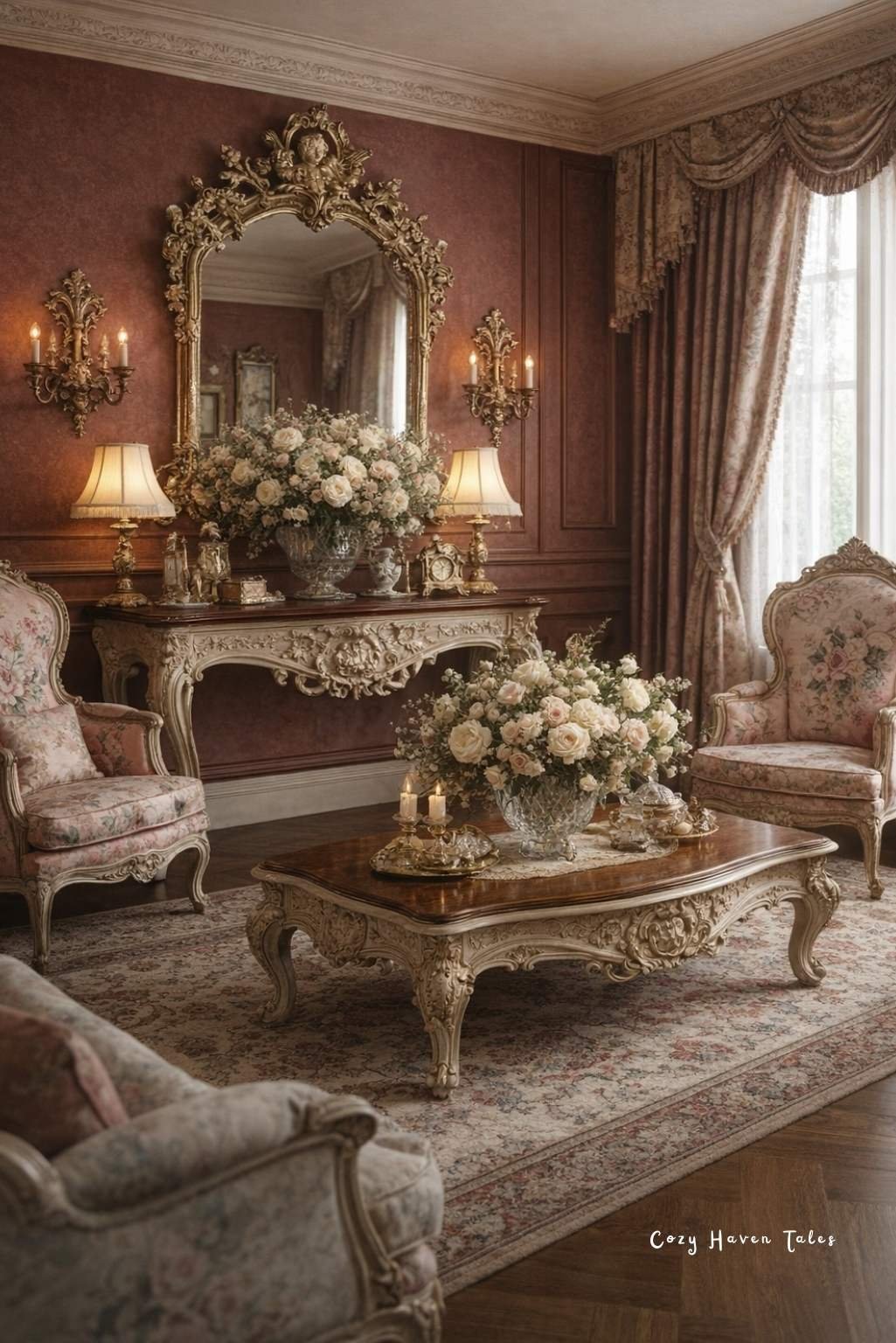
Instead, it embraces:
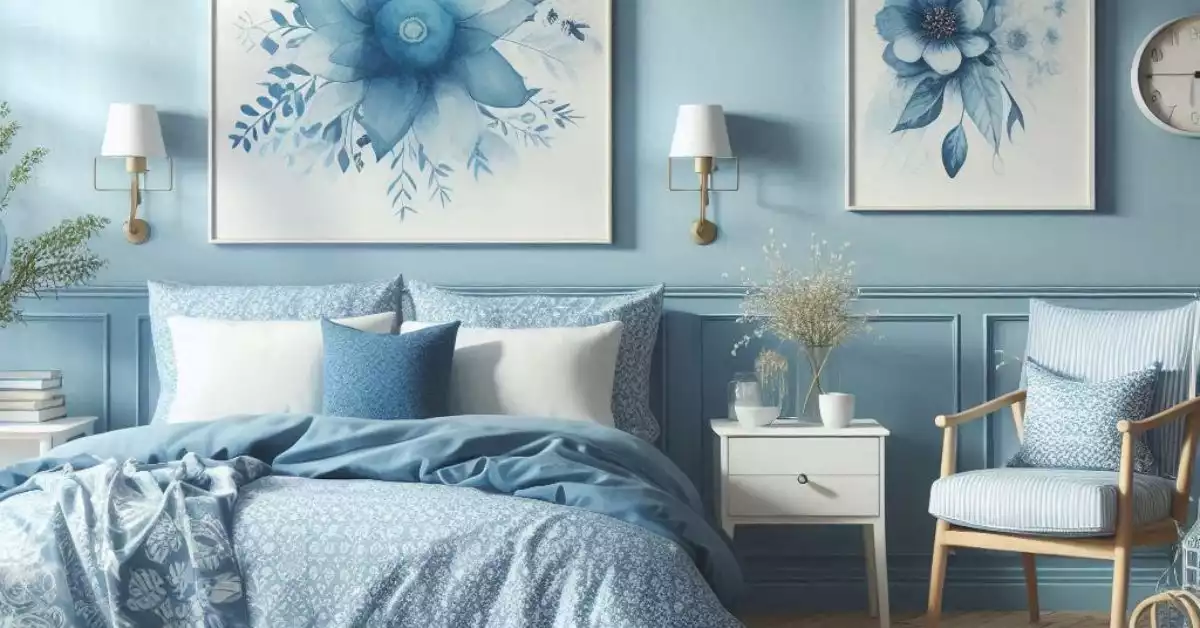
- Powder blue
- Blush pink
- Creamy ivory
- Soft mint
- Pale gold
The overall effect? Dreamy.
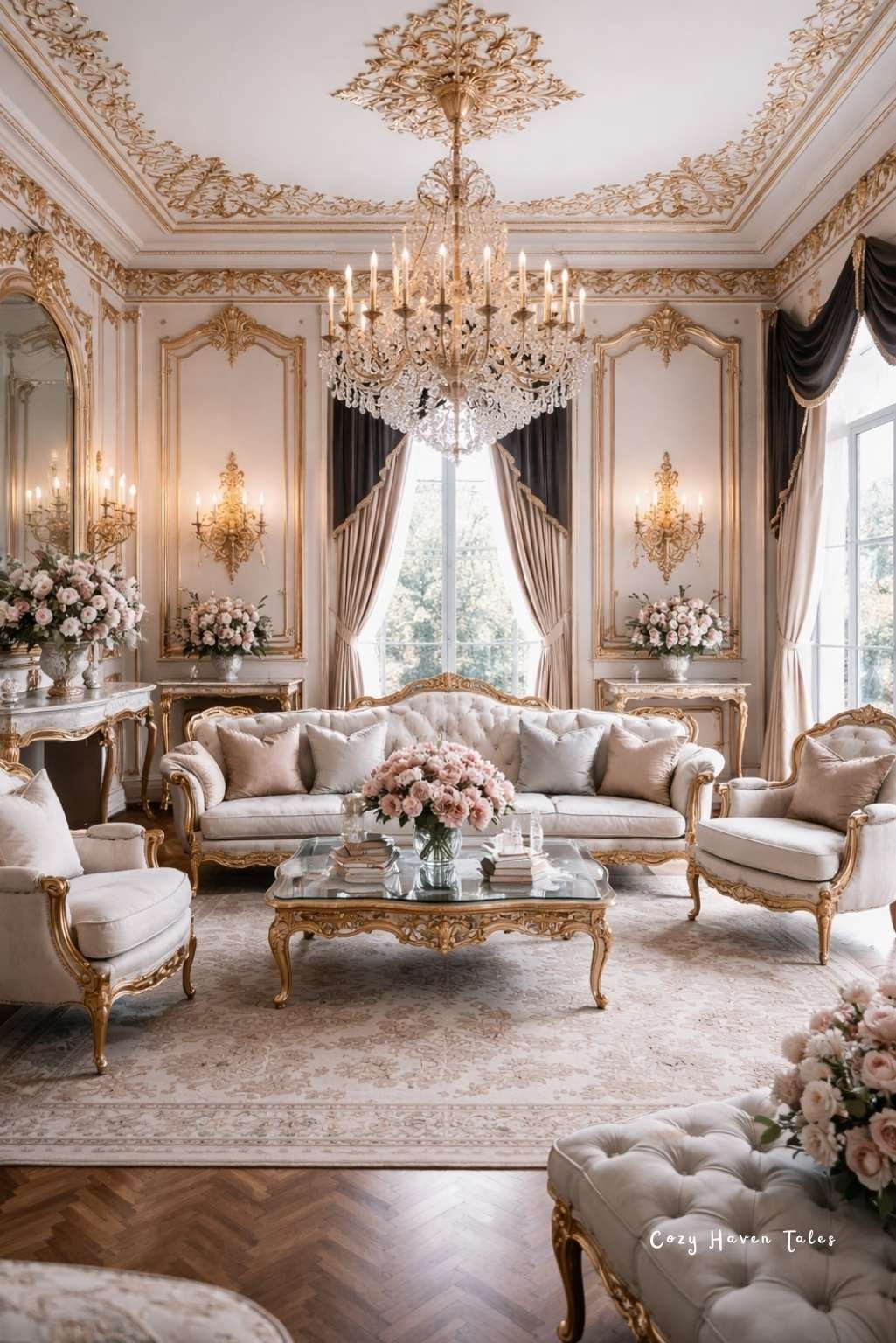
You’ll often see white or cream walls layered with subtle gold detailing. Pastel upholstery. Soft floral patterns.
It feels elegant, but never heavy.
If you love spaces that feel graceful and feminine without being overwhelming, this palette speaks directly to you.
Furniture: Curves Over Corners
Straight lines don’t belong here.
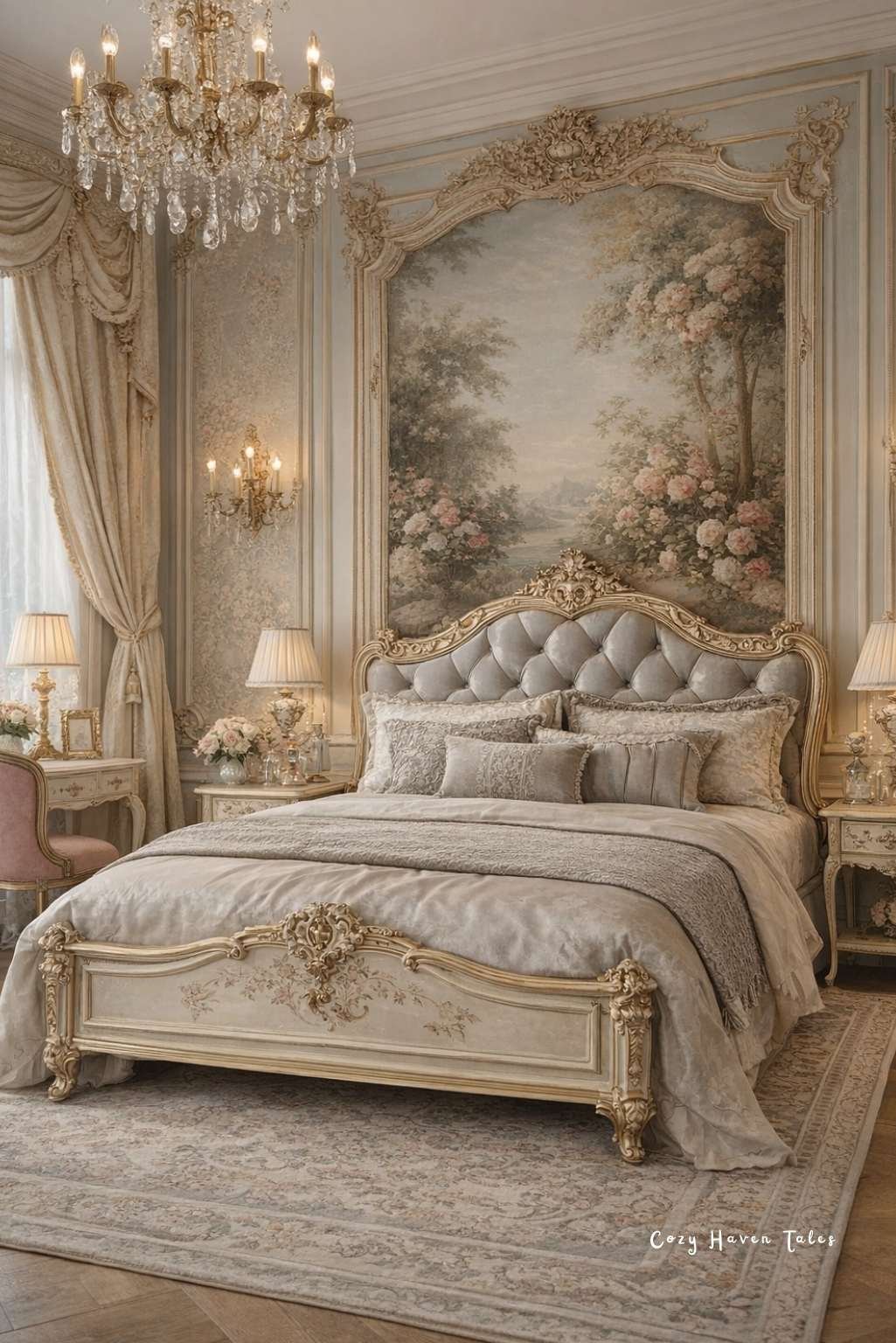
Rococo furniture is known for its:
- Cabriole legs
- Curved backs
- Rounded edges
- Ornate carvings
Chairs look sculpted. Sofas feel almost delicate. Coffee tables have flowing silhouettes.
Even the smallest pieces — like side tables — feature intricate detailing.
Nothing is boxy. Everything feels fluid.
The Magic of Ornamentation
Here’s where Rococo really shines.
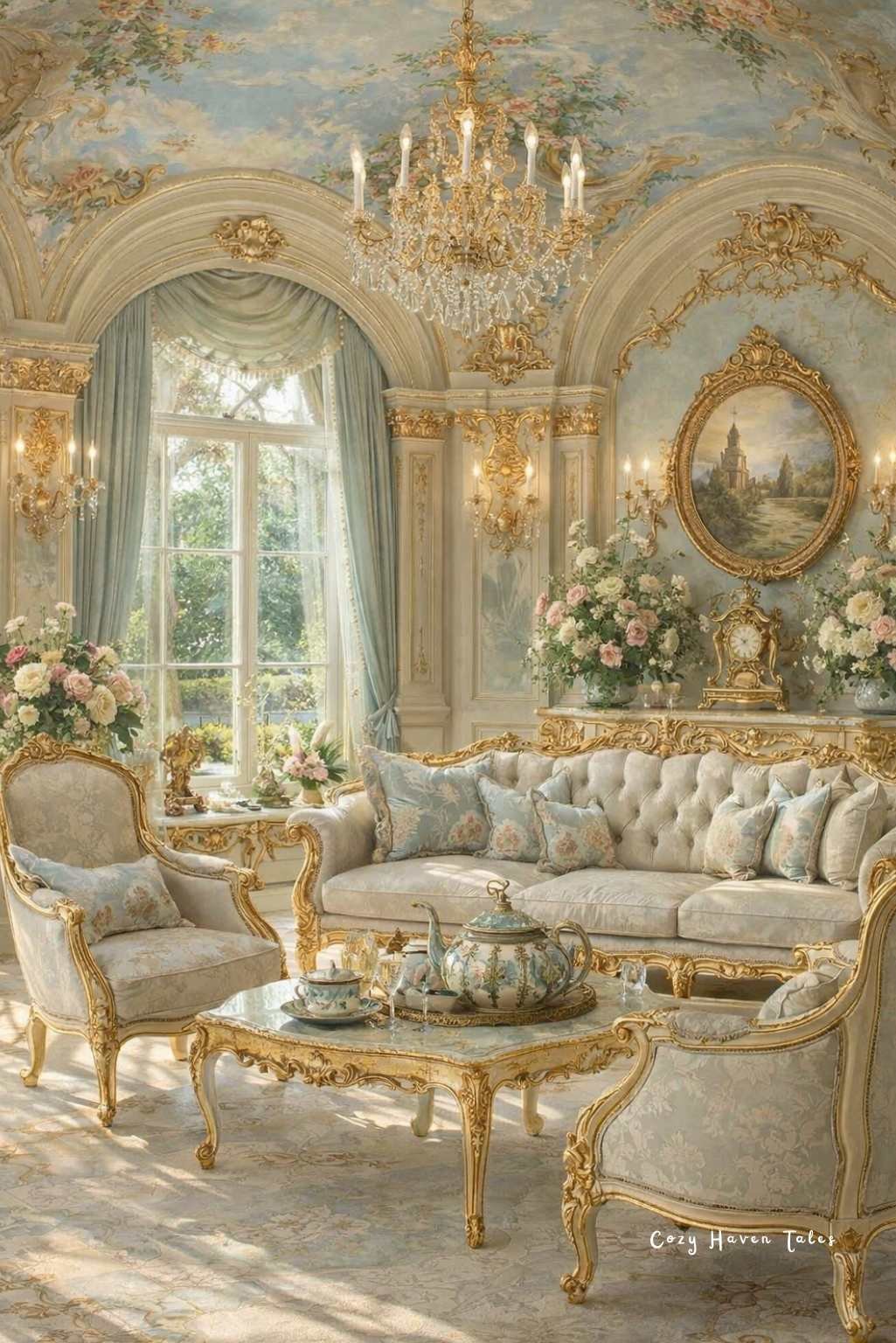
You’ll find:
- Shell motifs
- Floral carvings
- Scrollwork
- Gold leaf accents
- Decorative moldings
But the key difference from Baroque?
It’s lighter.
The detailing feels airy, not intimidating. Decorative — but still soft.
Ceilings often include delicate plaster designs. Mirrors have elaborate frames. Wall panels feature flowing patterns.
It’s decorative art woven into architecture.
Lighting That Glows, Not Glares
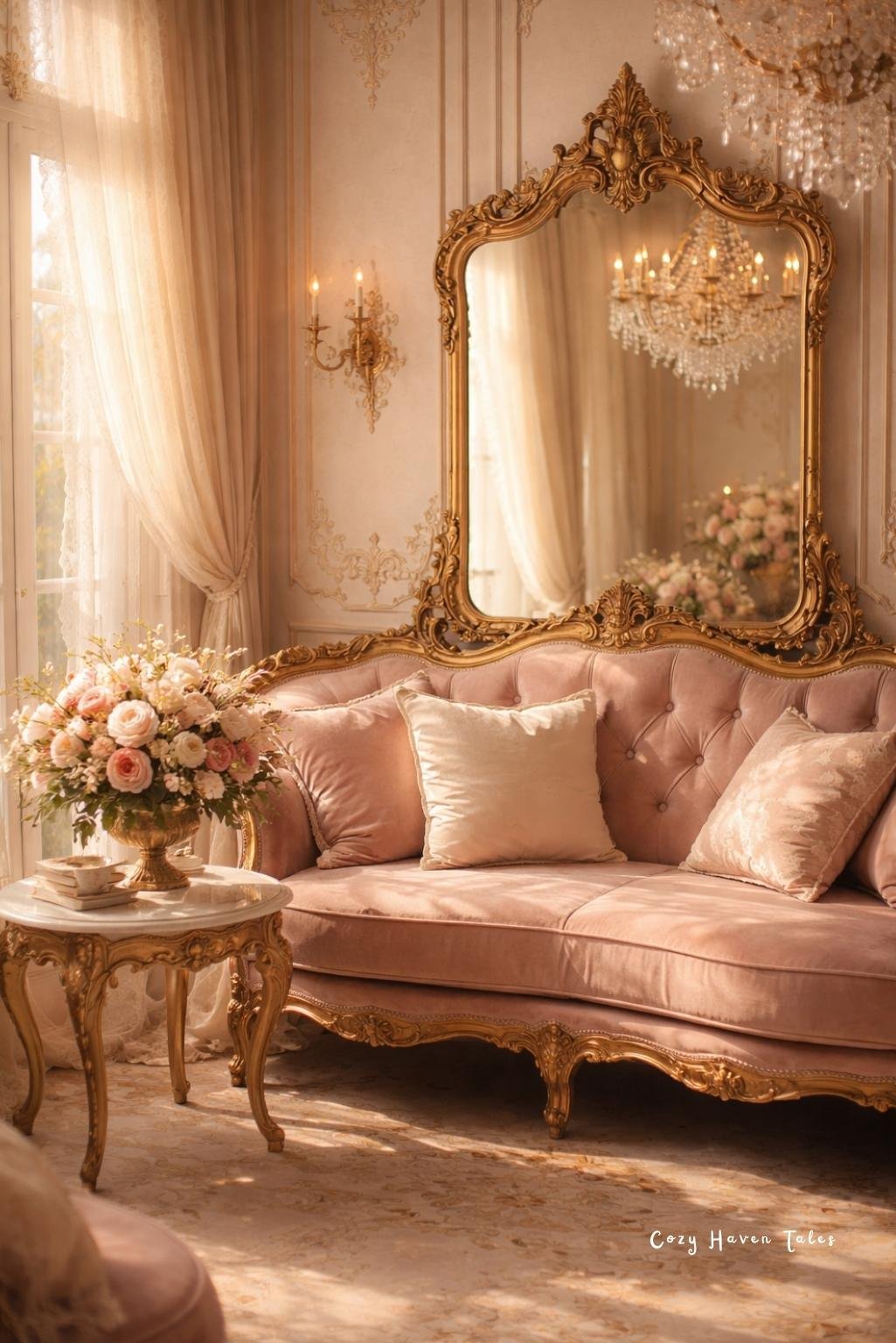
Lighting in Rococo interiors feels romantic.
Crystal chandeliers. Wall sconces with curved arms. Soft candlelight.
Nothing harsh. Nothing industrial.
The glow should feel warm and inviting — like golden hour inside your living room.
Even today, adding a small chandelier or vintage-inspired sconce can instantly bring that Rococo charm into a modern home.
Fabrics & Textures: Soft Layers Everywhere
Texture matters here.
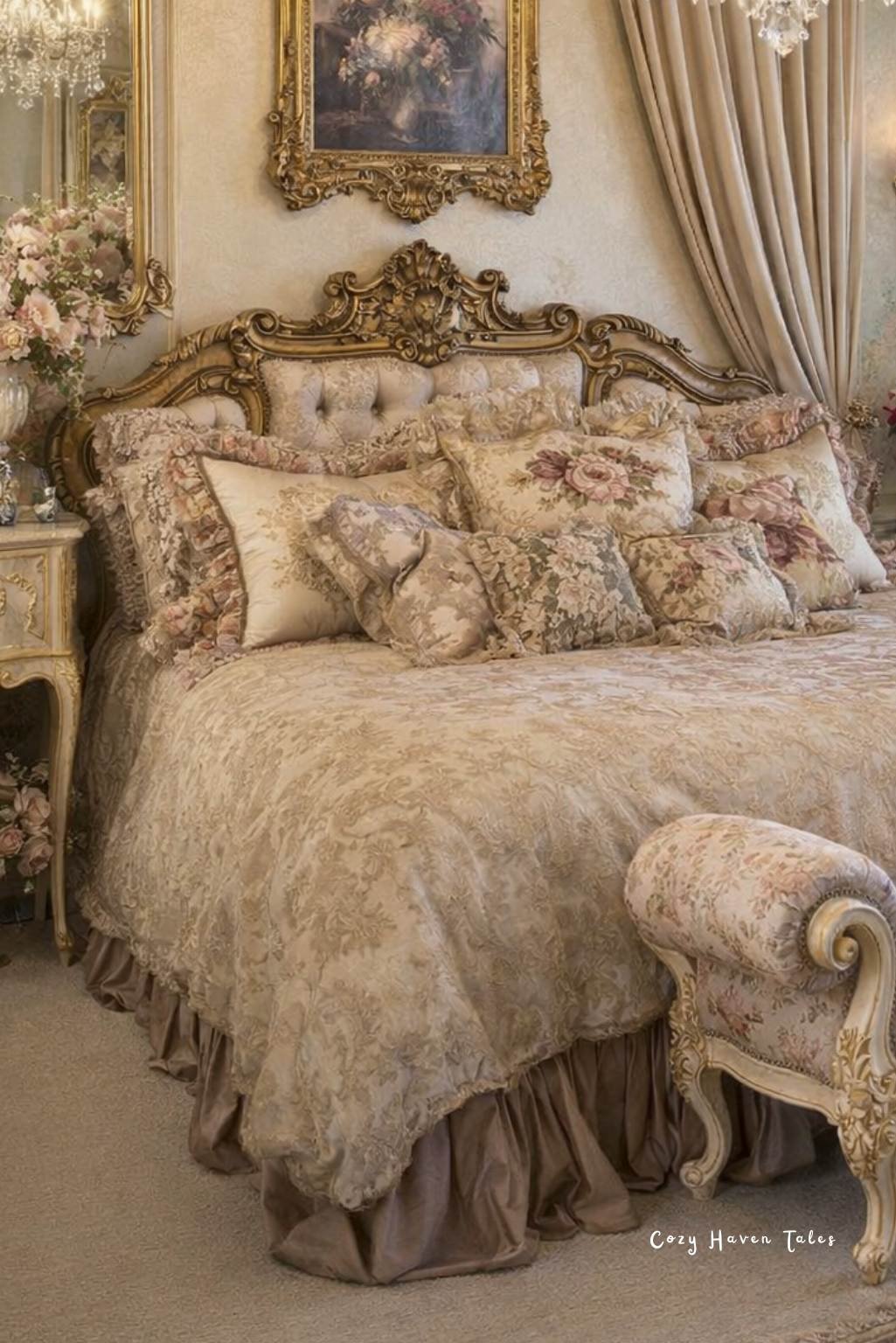
Expect to see:
- Silk
- Velvet
- Brocade
- Damask
- Lace
Upholstery often features floral prints or subtle patterns. Curtains are light and flowing. Cushions feel plush and decorative.
It’s layered. But not cluttered.
The goal is comfort wrapped in elegance.
How to Bring Rococo Into a Modern Home
You don’t need a French palace.
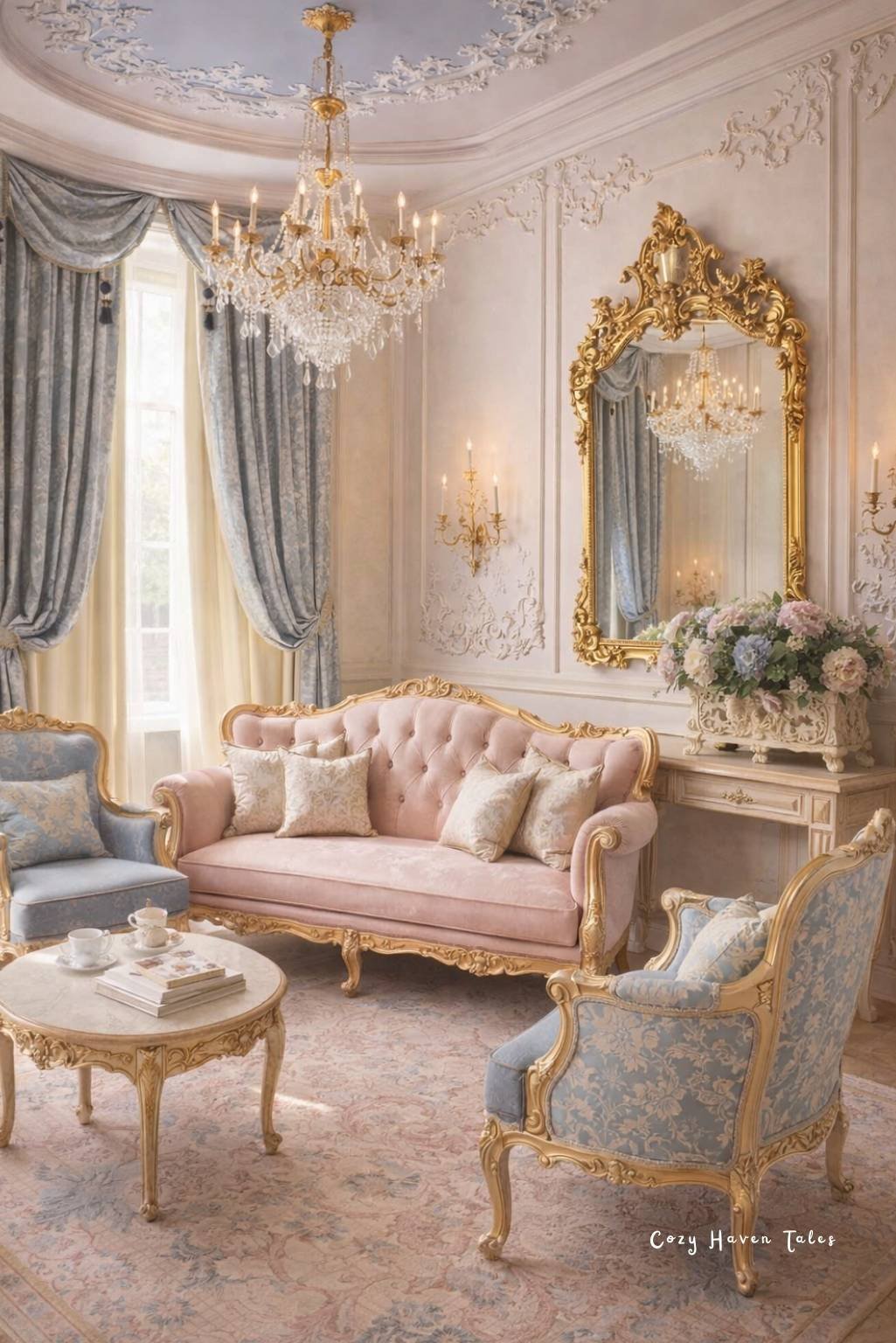
You can incorporate Rococo style gently.
Start small.
Add:
- A gilded mirror
- A curved accent chair
- Floral wallpaper
- A pastel velvet cushion
- A delicate chandelier
Mix these with modern pieces to keep the space balanced.
Too much Rococo can feel theatrical.
A touch of Rococo feels timeless.
Where Rococo Works Best
Rococo style feels especially beautiful in:
- Bedrooms
- Sitting rooms
- Formal living rooms
- Dressing rooms
- Entryways
It thrives in intimate spaces where detail can be appreciated up close.
It’s less about open-concept minimalism — more about curated elegance.
Rococo vs Baroque: Quick Difference
If you’re wondering:
Baroque = Bold. Dramatic. Darker. Symmetrical.
Rococo = Soft. Romantic. Lighter. Asymmetrical. Playful.
Baroque commands attention.
Rococo invites you in.
Why Rococo Still Feels Relevant
In a world full of sharp lines and neutral minimalism, Rococo feels refreshing.
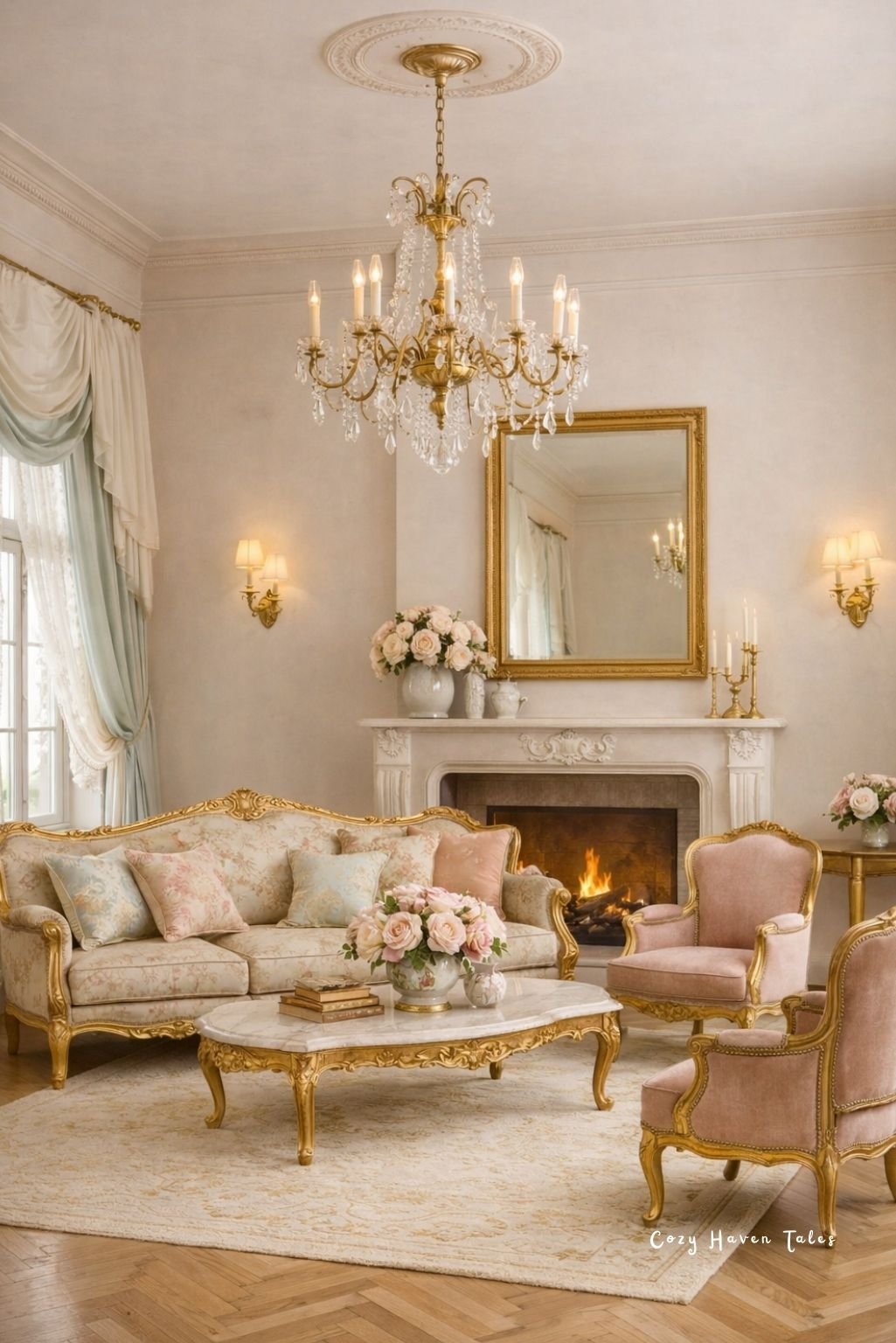
It reminds us that interiors can be:
- Decorative
- Feminine
- Detailed
- Expressive
It celebrates beauty for the sake of beauty.
And sometimes, that’s exactly what a space needs.
Sometimes all a space needs is personality. I share bold ideas in From Drab to Fab: Transform Dull Spaces into Vibrant Interiors.
Final Thoughts on Rococo Interior Design Style
Rococo interior design style isn’t just about gold frames and pastel walls.
It’s about movement. Grace. Lightness.
It’s elegance without heaviness. Ornamentation without oppression. Luxury without intimidation.
Add one curved piece. One gilded detail. One soft floral accent.
And suddenly, your space feels like it stepped gently into another era — but still belongs beautifully in today’s world.
Explore More:
If you’d like to explore this style further, check out this guide on classical French design elements and styling basics.
Planning to try it in a bedroom? This article on the Rococo Revival bedroom trend shares practical ideas for bringing in curved furniture and soft detailing.
Prefer visuals? Watch this video on French Rococo decorating tips to see how vintage elegance can work beautifully in modern spaces.