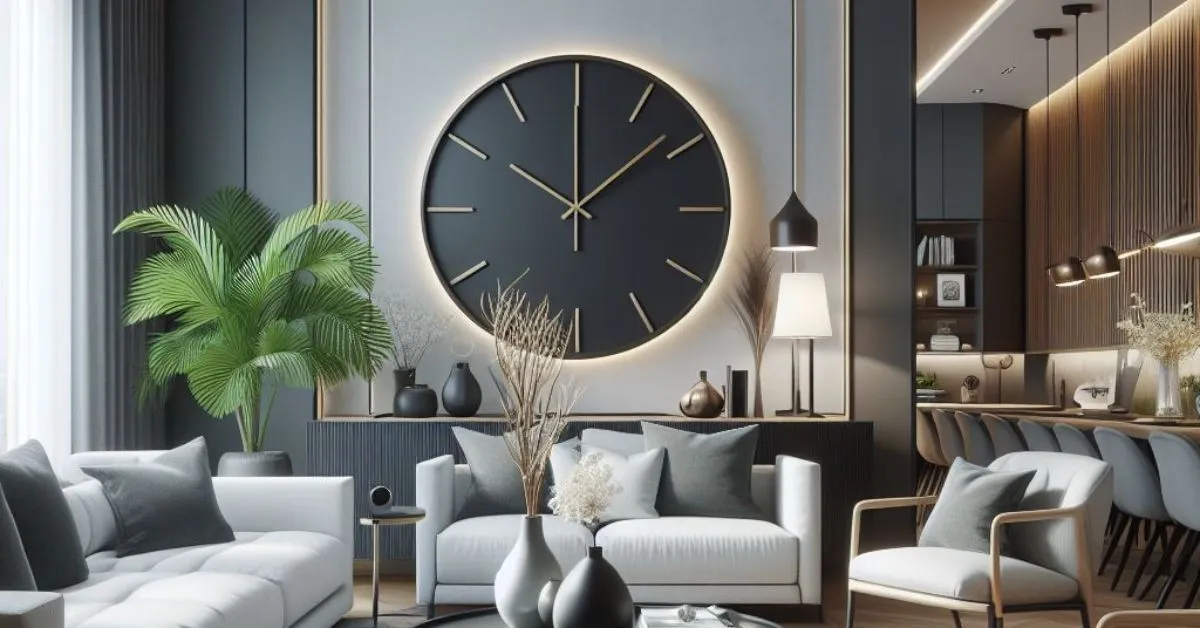
“Choosing the right wall clock for your living room comes down to scale, style, placement, and purpose. Pick a clock that suits your room’s vibe, fits the wall proportionally, is easy to read if needed, and complements your décor without overpowering it.“
This post may contain affiliate links. If you purchase through them, I may earn a small commission at no extra cost to you. Thank you for your support.
Let’s be honest for a second. Do you need a wall clock in your living room just to know what time it is? Probably not. Your phone, your TV, and even your microwave are already yelling the time at you.
Some people even think wall clocks are a bit old-fashioned.
They are wrong.
A great living room clock isn’t really about function anymore; it’s about finishing the space. It’s the accessory that ties the room together, fills that awkward blank wall, and injects a serious dose of personality into your home. It’s practical art.
But picking one out is surprisingly tricky. With thousands of options—from giant industrial gears to sleek minimalist discs—how do you choose?
More From Cozy Haven Tales:
- How to find Your Personal Design Style?
- No Designer? No Problem. 5 Tips to Decorate Your Home Like a Pro!
- How to Decorate Your Blank Walls: Timeless Design Inspirations
If you’re staring at a blank wall wondering what to put there, here is your guide to choosing the perfect living room clock without regretting it later.
1. Scale is Everything (The Goldilocks Rule)
The most common mistake people make? Buying a clock that is way too small for the wall. A tiny clock floating in the middle of a large empty space looks like an afterthought. This is especially common in apartments, where people hesitate to go big—but a larger clock often makes small spaces feel more intentional.
Design Insight :
- Proportion is key. A clock on a large, long wall needs to be a statement piece (think 24 to 30+ inches) to command attention.
- However, if you are placing the clock above a piece of furniture—like a console table or a small bench—it shouldn’t be wider than the furniture below it. It needs to feel balanced with the items around it.
⭐The CHT Expert Tip:: Before buying, cut a circle out of cardboard or butcher paper in the size you are considering and tape it to the wall. Stand back and look. Does it feel dwarfed by the wall, or does it dominate the room just right?
Shiny Rhinestone Sun Style Golden Wall Clock || 3D Wall Art Clock with LED Light || 3D Modern Art Mural Wall Clocks ||

Holiday Window Decals
These Christmas window decals are an Amazon favorite—bright, fun, and effortless to use. They stick cleanly, peel off easily, and bring instant holiday cheer to any room.
2. Define the Room’s “Vibe” First
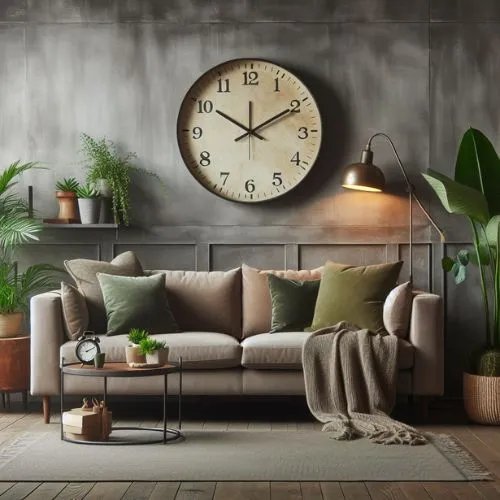
A clock shouldn’t fight your living room’s existing style; it should high-five it. Don’t just buy a clock because you like it in the store; consider what your room needs. Material matters more than you think. Wood feels warm and relaxed, metal feels modern or industrial, and plastic works best for ultra-minimal or budget-friendly spaces. Choose a material that matches your furniture finishes.
Design Insight:
- The Vintage/Farmhouse Look: Look for clocks with distressed wood, exposed moving gears, or wrought iron finishes. These add warmth and nostalgia.
- The Modern/Sleek Look: If your room is contemporary, look for shiny metals, mirrored faces, or super-minimalist designs with clean lines.
- The “Luxury” Touch: Want a conversation starter? Look for designer clocks that feature unique materials like stainless steel inlays, marble, or abstract art shapes.
3. Location Strategy: Where Does It Go?
You want the clock to be visible, but not in a weird spot. The placement changes the clock’s job.
Design Insight:
- The Statement Wall: Hanging a large clock on your longest wall or above the main sofa makes it the focal point of the room—essentially a piece of large-format art.
- The Gallery Blend: If you have a gallery wall of photos or prints, a medium-sized clock can break up the square frames and add visual interest.
- The “Dead Space” Filler: Have a skinny wall between a window and a door, or above a small plant stand? A smaller or vertically oriented clock fits perfectly here to eliminate negative space.
- Avoid placing clocks directly opposite large windows, as glare can make them hard to read during the day.
4. The Shape Game (It’s Not Just Circles)
The shape should either soften the room or reinforce its geometry—never confuse it. While circular clocks are timeless and help soften a room full of rectangular furniture (sofas, TVs, rugs), they aren’t your only option.
Design Insight:
Your clock’s shape affects the visual flow.
- Go Round: If your room feels very “boxy” with lots of hard edges, a round clock introduces a necessary curve and harmony.
- Go Square: Square clocks feel modern and edgy, but they can be trickier to place. They often look best when aligned precisely above a square table or fireplace mantel.
- Go Abstract: Sunbursts or irregular shapes are fantastic, but treat them purely as art decor first, and timekeepers second.
5. Contrast or Camouflage? (Choosing Color)
Should your clock pop off the wall, or blend into it? Colors evoke emotions and change the room’s ambiance.
Design Insight:
This depends on how much attention you want the clock to get. If you want the clock to feel calming, blend it in. If you want it to energize the space, let it stand out.
- The High Contrast Pop: If you have light-colored walls (white, cream, light gray), a dark iron, black, or deep wood clock will draw the eye immediately. This injects energy into the space.
- The Tonal Blend: For a calmer, more tranquil vibe, choose a clock frame that is just a few shades darker or lighter than your paint color. It adds texture without screaming for attention.
6. Readability vs. Artistry
Be honest: are you buying this clock to actually tell the time from across the room, or is it just pretty wall decor? This matters more than you think in open-plan homes, where the living room clock is often checked from the dining or kitchen area.
Design Insight:
- If you have kids learning to tell time, or if you genuinely need to know if it’s 4:55 or 5:05 at a glance, function must come first. Look for clear Arabic numbers (1, 2, 3) and distinct hands that contrast against the clock face.
- If it’s purely a style statement, feel free to go with Roman numerals, tiny markers, or even a face with no numbers at all.
7. The “Ticking” Factor (Crucial!)
This is the practical tip that everyone forgets until they bring the clock home and try to read a book in quiet. Always check reviews for noise complaints before buying online. “Silent” can mean different things to different brands.
Design Insight:
- Traditional mechanical clocks have a charming tick-tock sound, which some people find comforting.
- However, if you use your living room for napping, reading, or you are just sensitive to repetitive noises, a loud rhythmic tick can become torture.
- If you need silence, specifically look for clocks labeled with “Silent Sweep” or continuous movement quartz mechanisms. These move smoothly and silently.
Wrapping Up
Choosing a wall clock isn’t just about filling a space; it’s about elevating your living room’s style. By considering the scale, the vibe, and yes, even the sound it makes, you can find a piece that you’ll love looking at for years.
Measure your wall, define your style, and go find the perfect timepiece to finish your cozy haven!
FAQs: How to Choose a Wall Clock for Your Living Room
A. To choose a wall clock for the living room, focus on scale, style, and placement. The clock should suit the size of your wall, match your décor theme, and feel balanced with nearby furniture. Decide whether you want it mainly for timekeeping or as a decorative statement before buying.
When deciding how to choose a wall clock that matches your décor, start by identifying your interior style. Rustic spaces suit wooden or vintage clocks, modern homes work best with minimal metal designs, and luxury interiors benefit from designer or artistic clocks. The clock should complement, not compete with, your existing décor.
The best wall clock size depends on your wall space. Large walls usually need clocks between 24 and 30 inches to look intentional. Smaller walls or spaces above furniture work better with medium-sized clocks. A clock that is too small can look lost on a large wall.
A wall clock should be placed where it is easily visible but not awkwardly positioned. Popular spots include above the sofa, on the longest wall, within a gallery wall, or in narrow “dead spaces” between doors and windows. Avoid areas with heavy glare or visual clutter.
This depends on your needs. If you often check the time from across the room, choose a clock with clear numbers and high contrast. If the clock is mainly for décor, you can opt for minimalist designs, Roman numerals, or even clocks without numbers.
Ticking wall clocks can work well if you enjoy the classic sound. However, for living rooms used for reading, relaxing, or napping, silent or “sweep movement” clocks are a better choice. Always check product descriptions and reviews for noise levels.



2 Comments