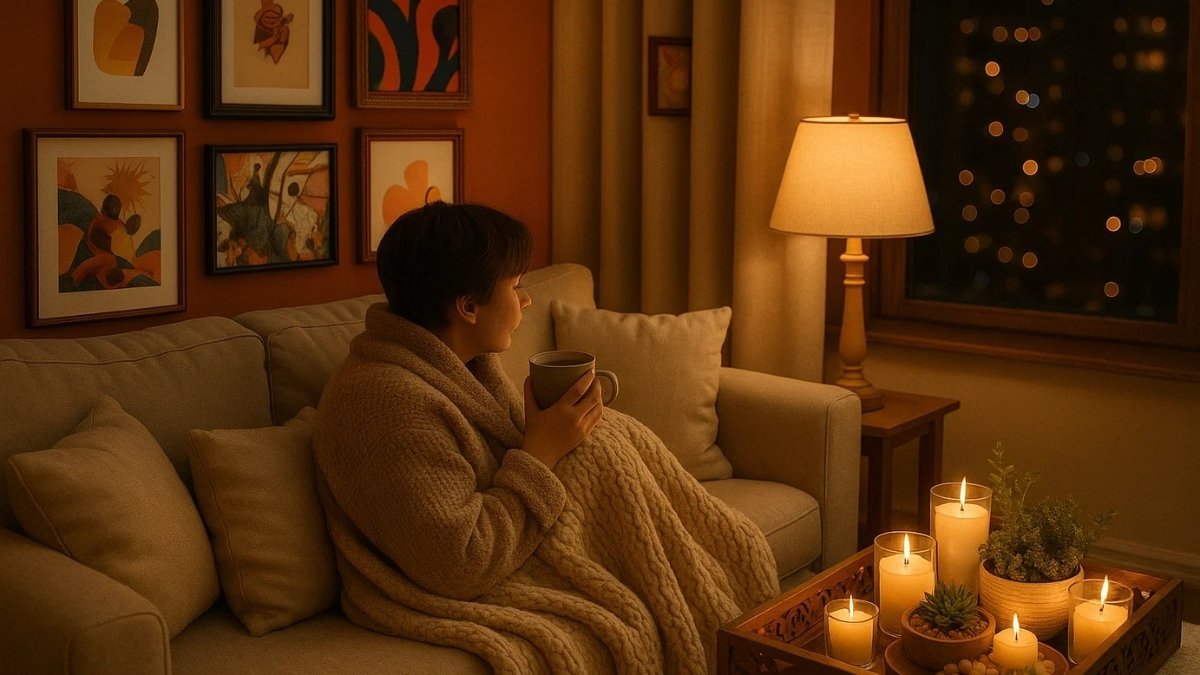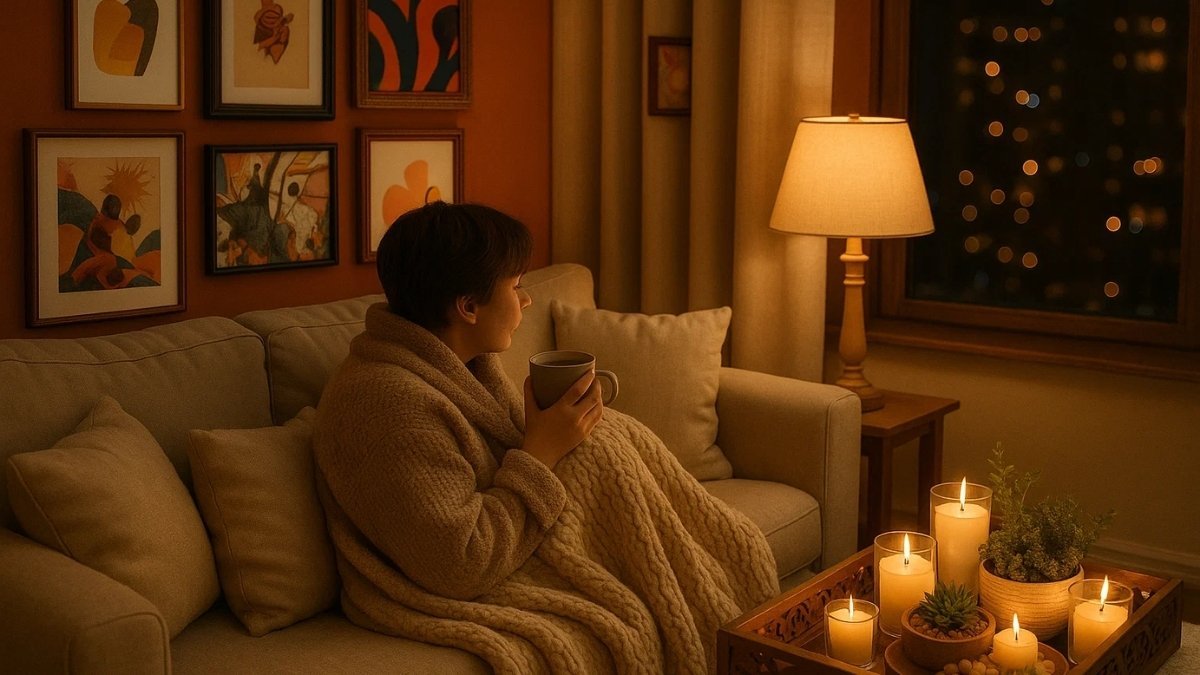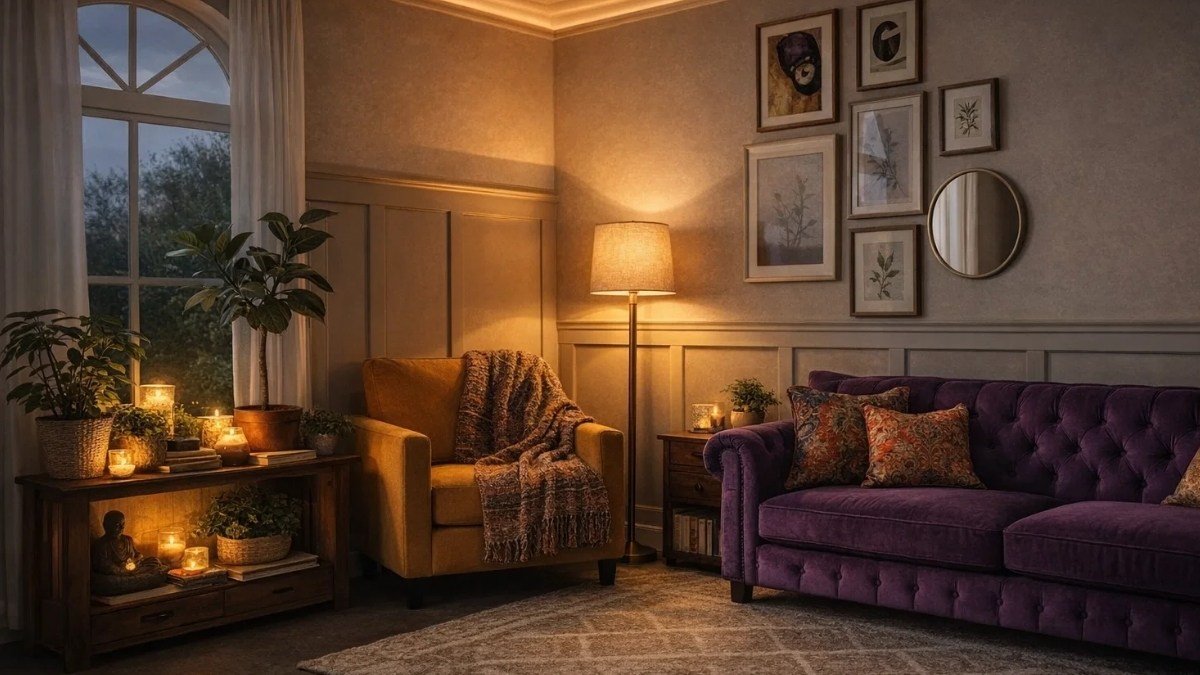
There is a quiet moment each day when the body asks for stillness, and for many people, that pause begins in a small relaxing corner at home. A place away from screens, noise, and the constant pressure to keep going.
At a recent design event, this feeling kept coming up in conversations. Many people shared the same belief—that creating a relaxing corner at home is a luxury, meant only for large houses, spare rooms, or big budgets.
That idea is exactly what needed to be gently challenged.

A relaxing corner at home isn’t about how much space you have or how much you spend. It’s about creating one small place where your body can soften, and your mind can slow down. What follows are the same thoughts and practical tips shared during that conversation—offered here for anyone who wants to bring a little more calm into their home, intentionally and affordably.
You might also enjoy:
- 5 Intentional Morning Rituals & Home Decor to Inspire Calm Starts
- The Healing Power of Cozy Spaces: More Than Just Décor
- 7 Home Styling Tips & Tricks to Shift Your Energy
1. Why a Relaxing Corner Matters
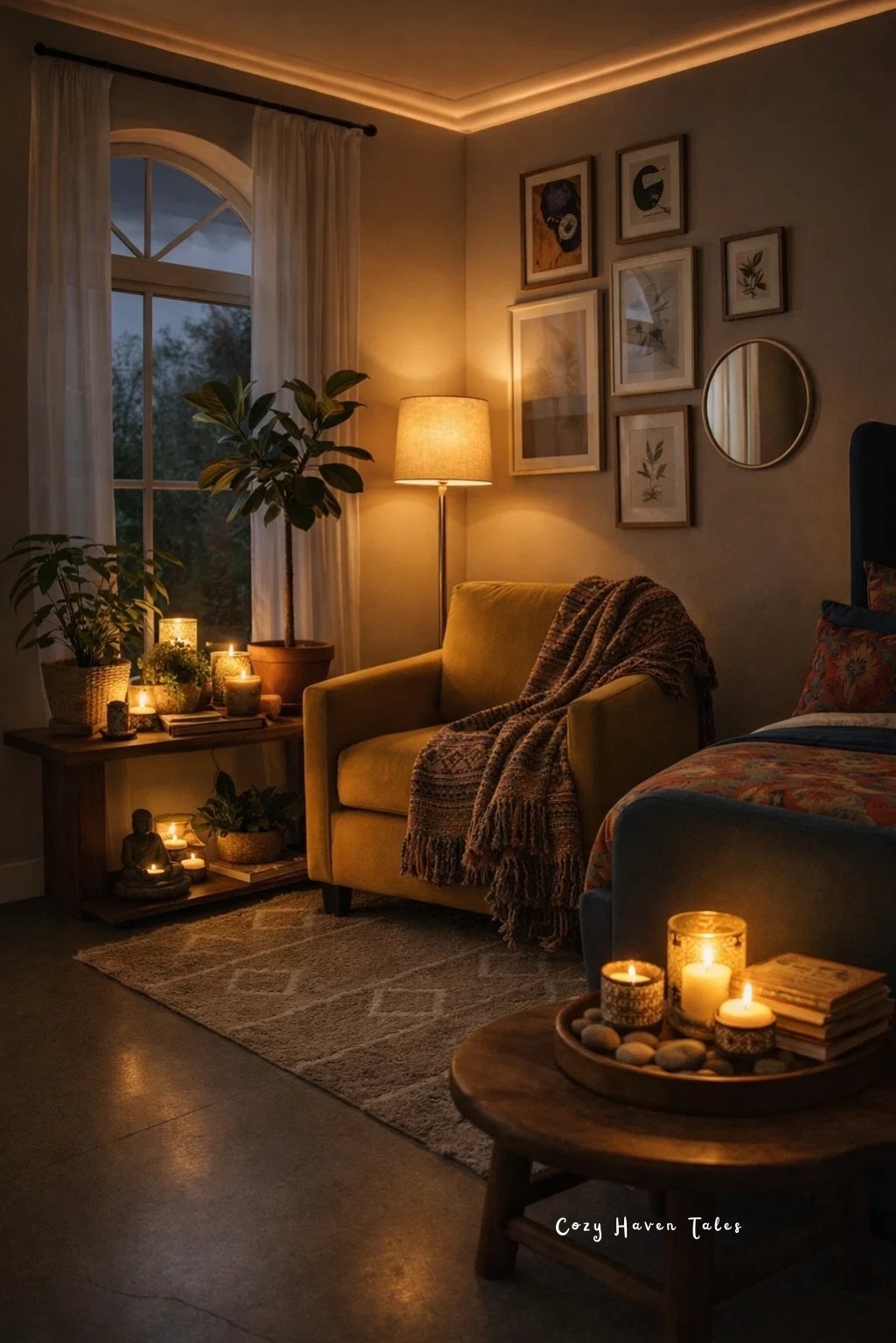
Our homes quietly hold the energy of our days. When spaces feel cluttered, brightly lit, or constantly active, the body stays alert—even when we sit down to rest.
A relaxing corner offers the opposite feeling. It’s a place that signals safety. Somewhere you can stretch, breathe, journal, pray, or simply sit without needing to be productive.
Studies consistently show that our surroundings affect how we feel. Soft lighting, natural textures, and visual simplicity help lower stress and bring the body back into balance.
And the good news is—you don’t need an entire room. One thoughtfully created corner is enough.
Recommended: If You Hate Your Living Room Interior — Here’s How to Start Over
2. Choose the Quietest Place Available
A relaxing corner doesn’t need to be hidden, but it should feel protected.
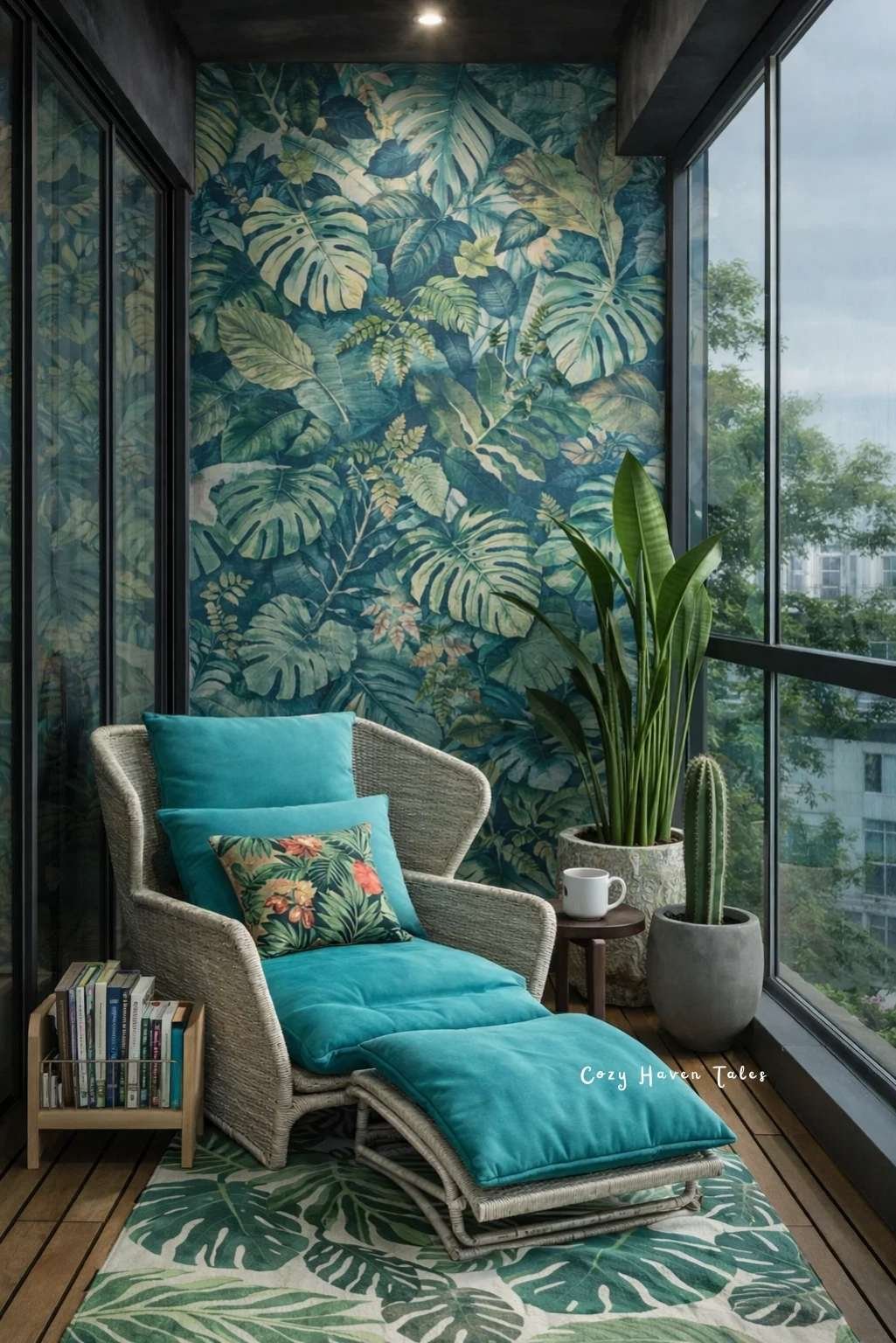
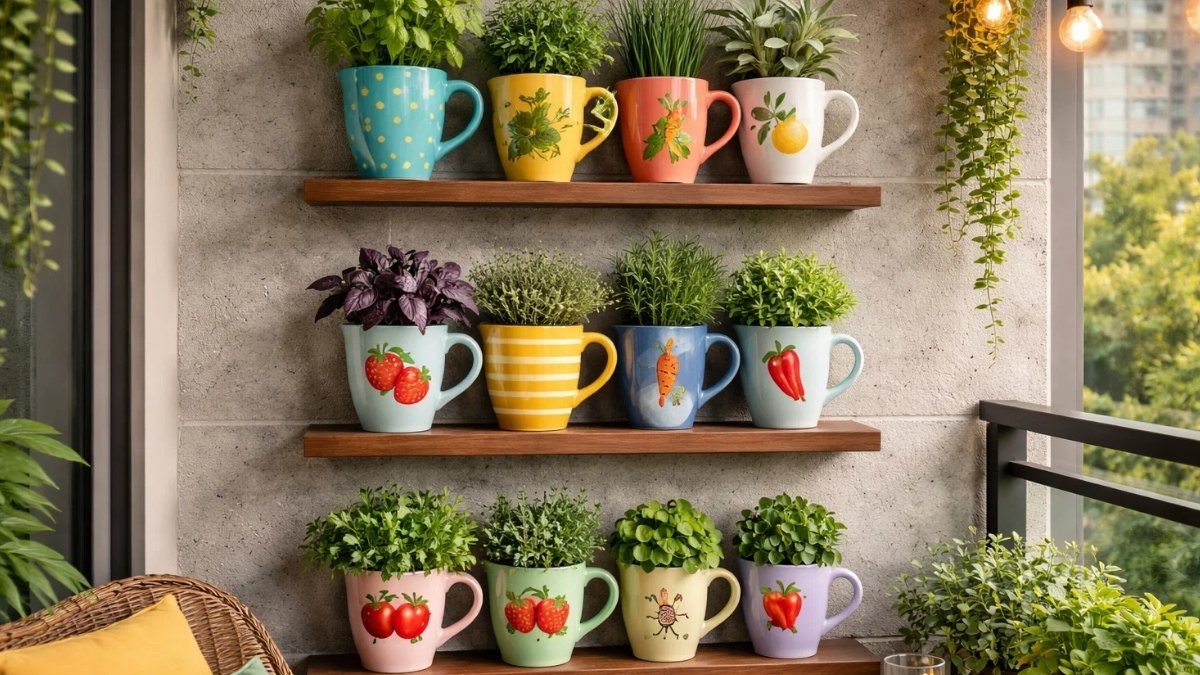
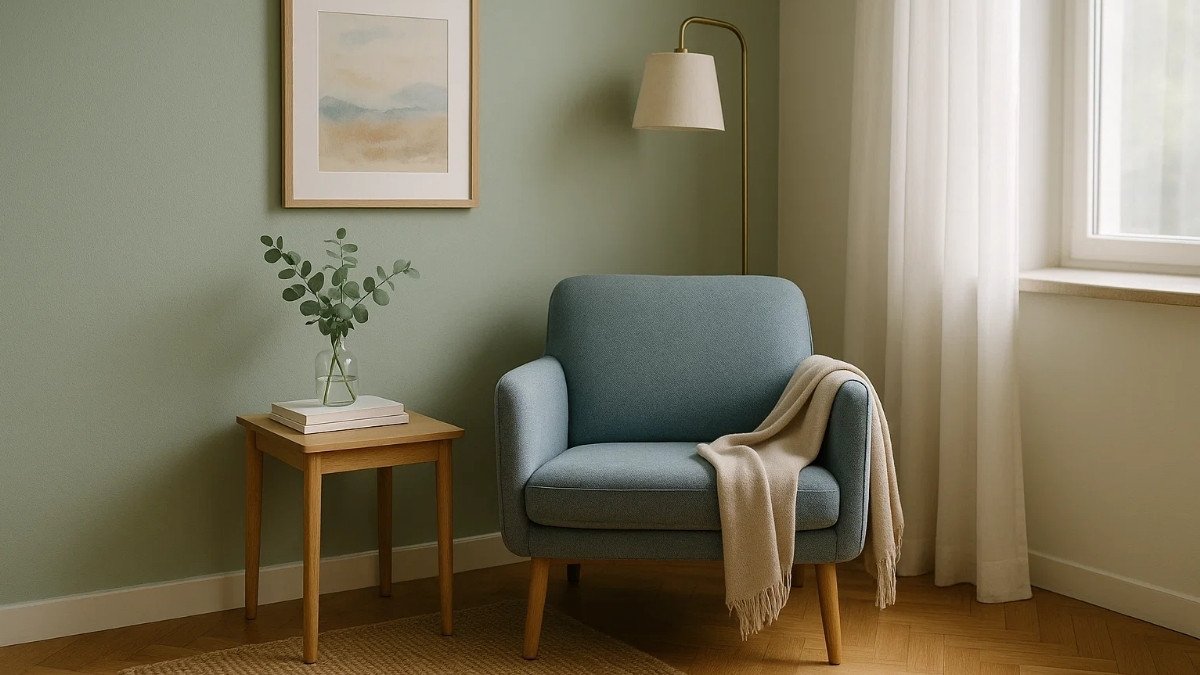
Often, the best spots are the ones we overlook—a corner of the bedroom, a window nook, a small balcony, or even a closet with the door removed. Natural light is lovely if you have it, but it’s not essential. What matters more is a sense of privacy and separation.
A curtain, a folding screen, or even a tall plant can gently signal that this spot exists for rest.
More calming reads: Color Psychology in Interior Design: A Beginner’s Guide
3. Begin With Intention, Not Objects
Before moving furniture or buying anything new, pause for a moment.
The most important step in creating a relaxing corner isn’t adding things—it’s removing what doesn’t belong. If you can, clear the chosen area completely. Take out anything that feels distracting or heavy. Even a little visual quiet can help the body relax almost immediately.
When you bring items back, do it slowly. Keep only what feels comforting, grounding, or supportive. Calm often comes from restraint, not excess.
4. Work With What You Already Own
Creating a relaxing corner on a budget often means looking at your home with fresh eyes.
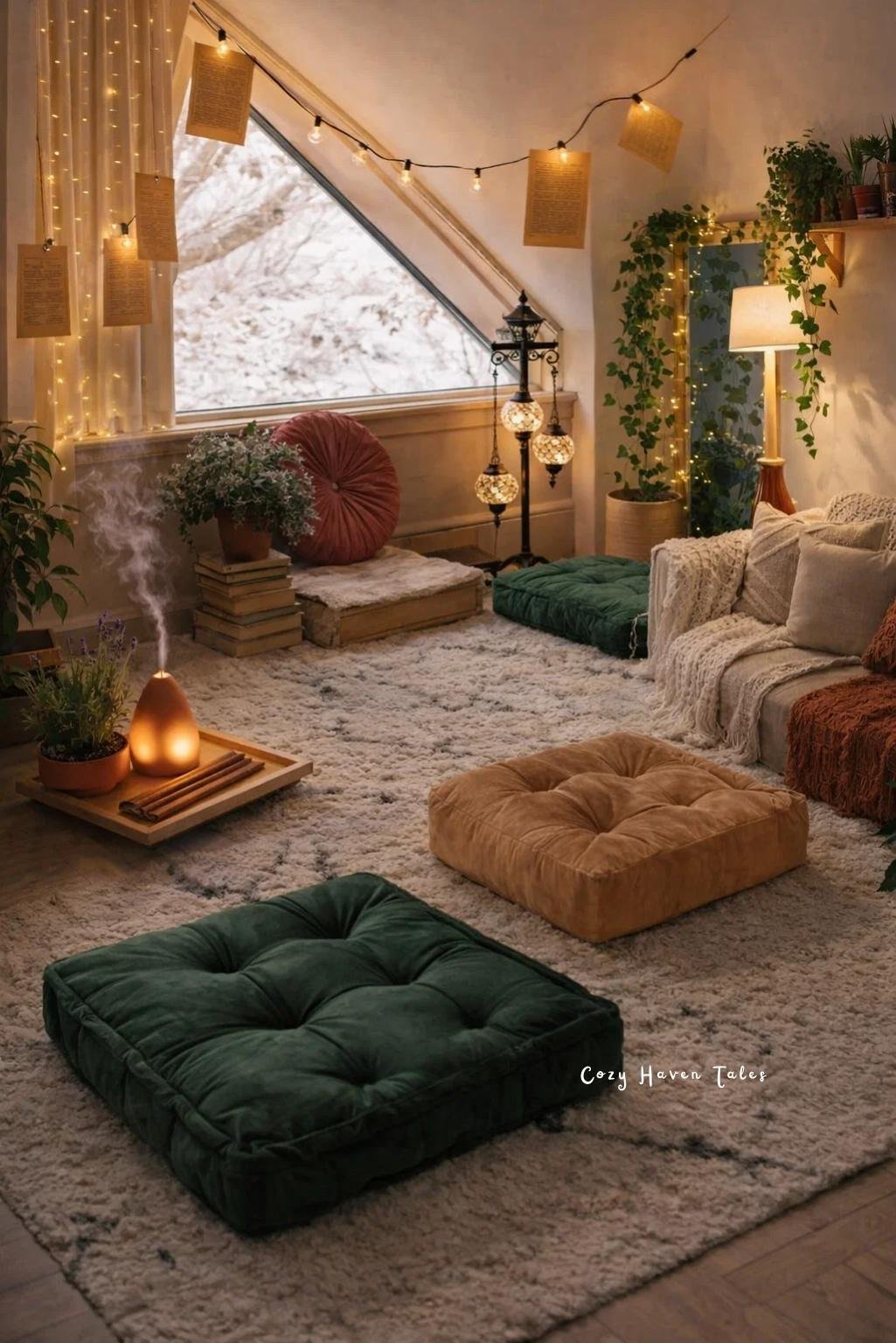
A blanket can become a meditation mat.
A bedside lamp can move into your corner.
An unused stool can hold a cup of tea or a candle.
Scarves can soften walls or windows.
Glass jars can become simple vases or candle holders.
Many times, rearranging what you already have changes the feeling of a space more than buying anything new.
5. Relaxing Corner Essentials (Keep It Simple)
A relaxing corner doesn’t need much. Just a few thoughtful elements can completely shift how a small space feels. The goal isn’t to collect things—it’s to choose pieces that quietly support rest and comfort.
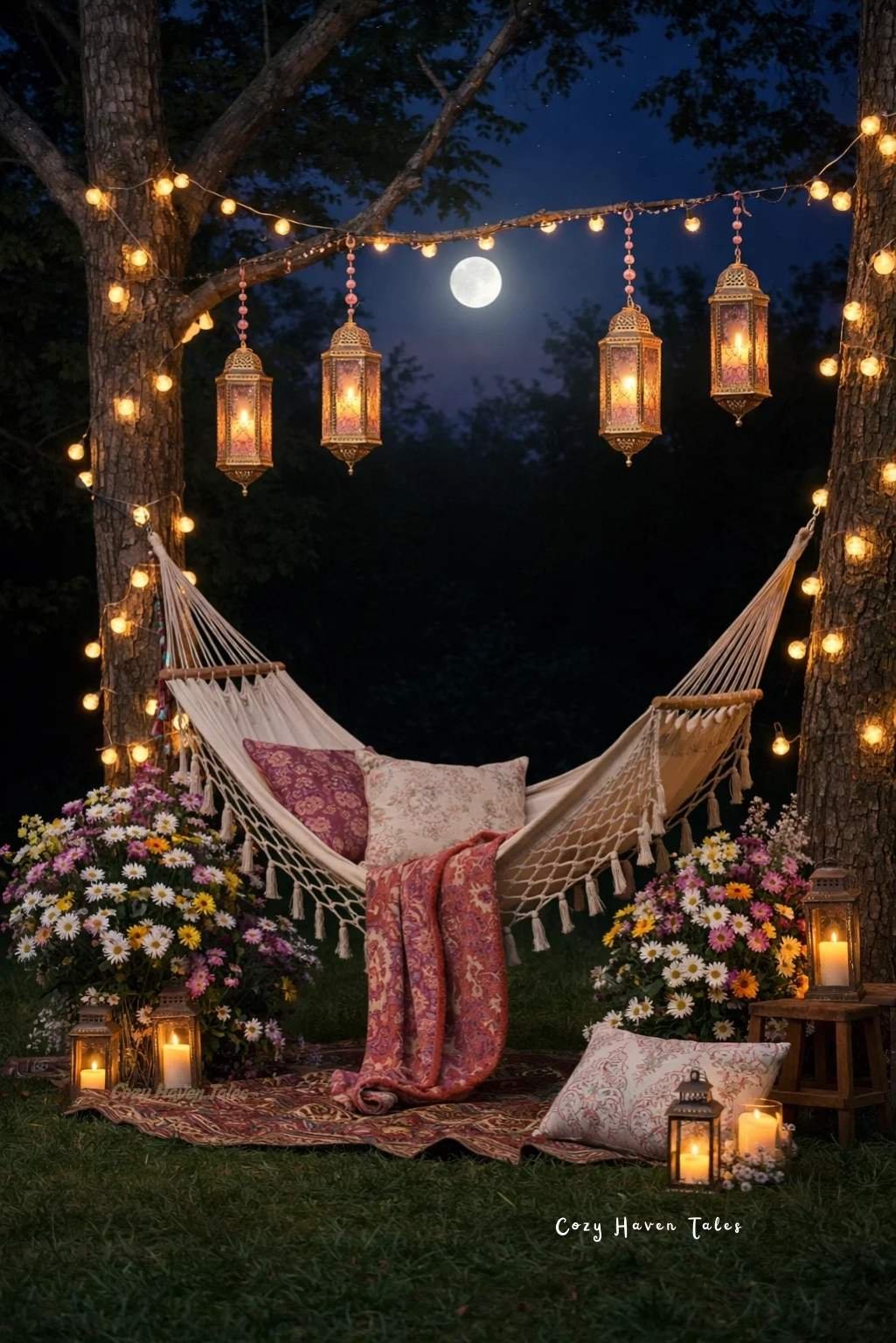
- Soft lighting to signal rest
- One comfortable seat or floor cushion to ground the body
- Textiles such as a throw, rug, or cushion for warmth
- A natural element like a plant, branch, or stone
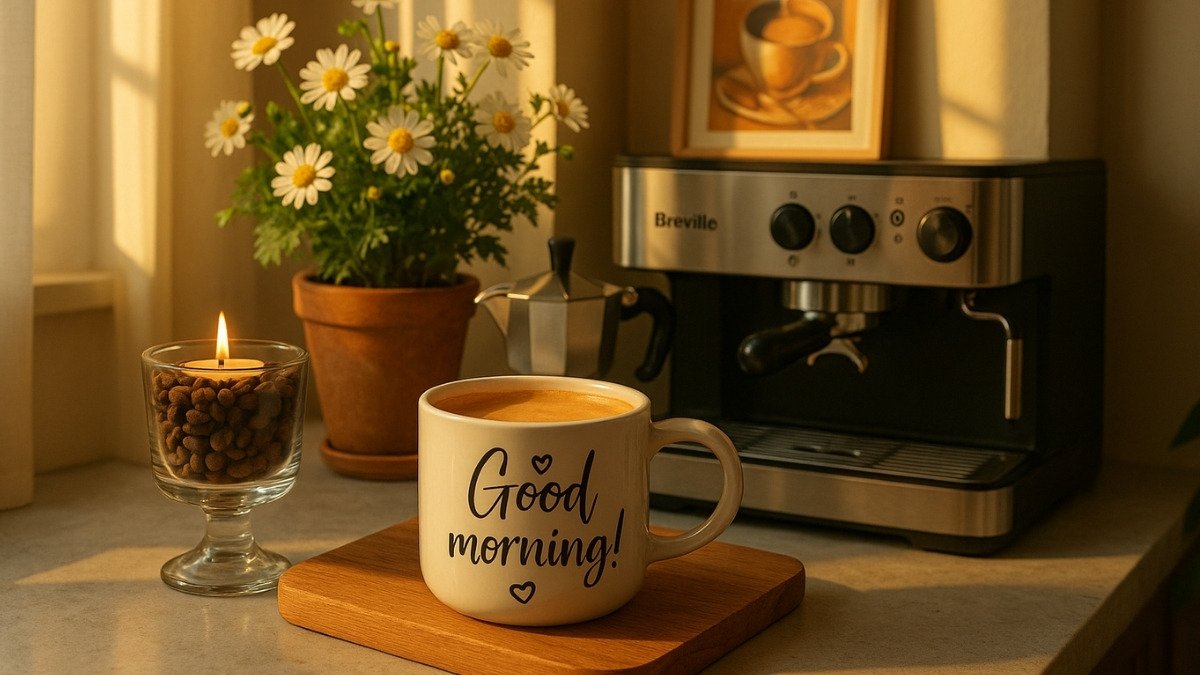
- Scent through a candle, incense, or essential oil
- A personal object that brings focus and meaning
These are not rules—just gentle guides. Choose what supports your sense of calm. The goal is not to collect items, but to choose pieces that quietly support rest, comfort, and regulation.
(5.1) Soft Lighting to Help You Unwind
Lighting sets the mood more than we realize. Warm, gentle light tells the body it’s okay to slow down.

On a budget, you can:
- There’s no need for an expensive lamp. Even a simple hanging LED bulb or tea candles with a warm glow can create a surprisingly calming atmosphere when kept minimal and intentional.
- Use battery-operated candles or fairy lights for a soft glow
- Keep lights low—on the floor or a side table—to reduce harshness
(5.2) One Comfortable Place to Sit or Rest
Every relaxing corner needs one place where the body can fully settle.
Budget-friendly ways to approach this:
- Use a thick floor cushion, folded blanket, or yoga bolster
- Soften an existing chair with a throw and cushion
- Choose something lightweight and easy to move if space is shared
Comfort matters more than how it looks.
(5.3) Textiles for Warmth and Comfort
Texture brings softness and ease into a space.
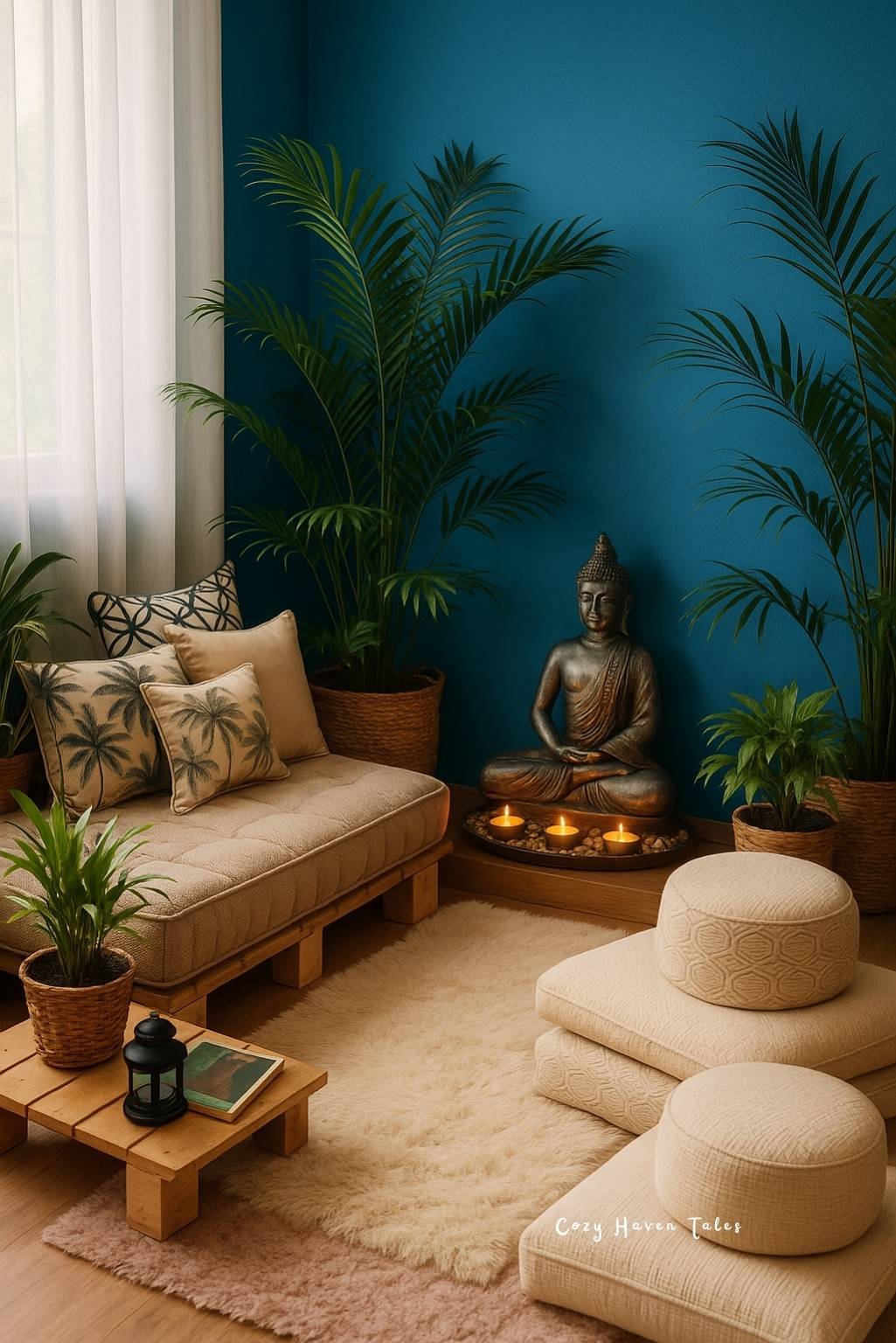
On a budget, you can:
- Layer items you already own—an old rug, scarf, or throw can work beautifully
- Stick to neutral or natural fabrics that feel calming
- Focus on how things feel to the touch, not how trendy they are
(5.4) A Natural Element to Ground the Space
Nature has a calming effect almost instantly. It helps regulate stress and brings quiet life into a space.
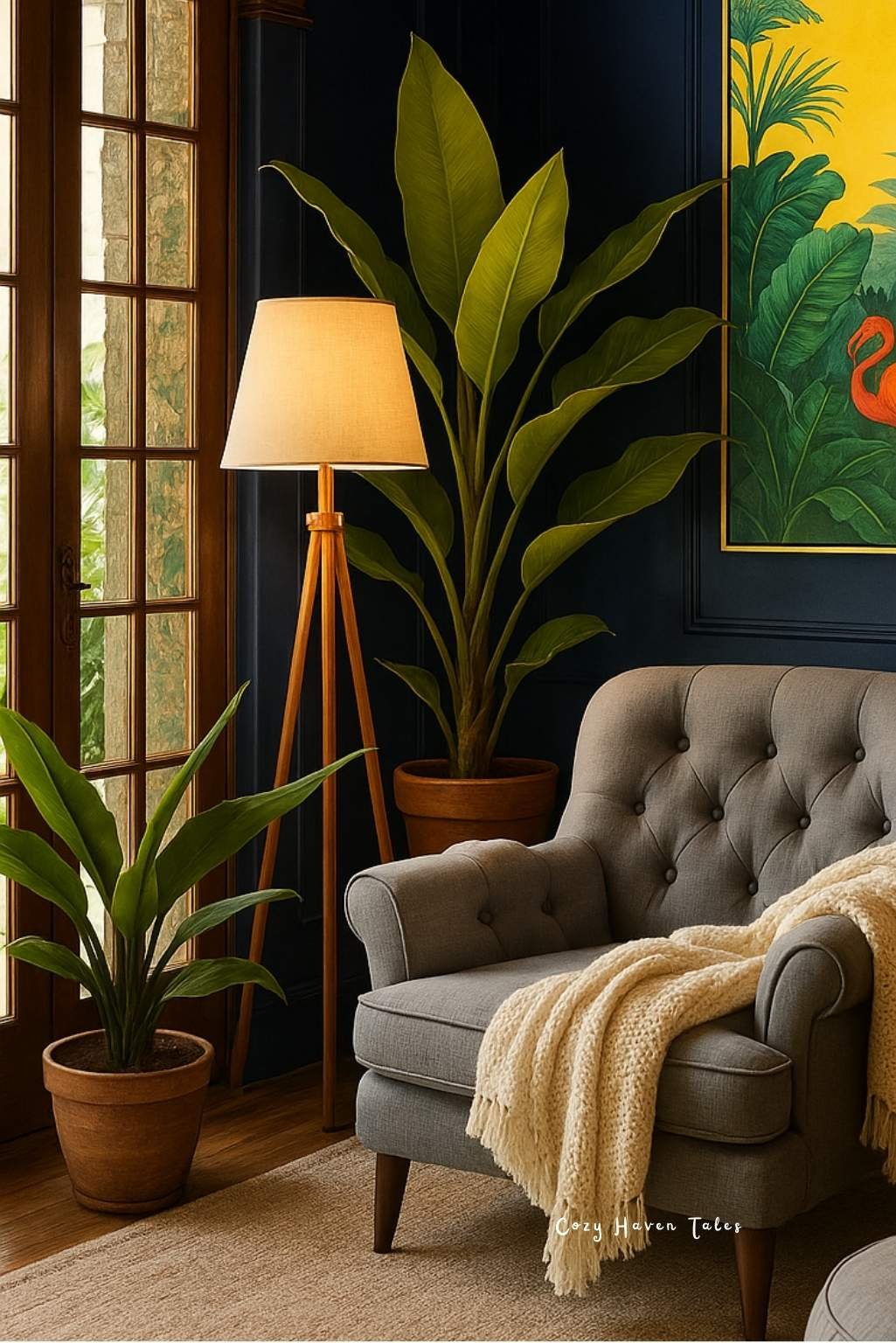
On a budget, you can:
- Choose easy-care plants like pothos or snake plants
- Use stones, branches, or shells collected outdoors
- Try dried grasses or wooden elements if live plants aren’t practical
(5.5) Scent to Support Relaxation
Scent has an immediate effect on mood and memory. A familiar, calming aroma can help signal rest.
On a budget, you can:
- Use essential oil rollers or a single calming oil
- Light candles intentionally rather than all the time
- Keep just one scent in the space so it doesn’t feel overwhelming
(5.6) One Personal Object That Feels Meaningful
This is what makes the space feel yours. One intentional object can ground the entire room emotionally.
On a budget, you can:
- Use something already meaningful—a journal, photo, book, or handwritten note
- Keep it simple; one object is more effective than many
- Rotate this item seasonally to refresh the space without buying more
Choose what feels supportive and let the corner grow slowly over time.
6. Let Ritual Give the Space Meaning
Once your relaxing corner is ready, begin using it gently.
Even five minutes is enough. Sit. Breathe. Stretch. Journal. Do nothing at all. Over time, the body associates this space with restoration.
Small acts of care—folding a blanket, lighting a candle, returning objects to place—build a quiet rhythm of respect.
7. Allow the Space to Stay Flexible
A relaxing corner doesn’t need strict rules.
Some days it might be for meditation. Other days for reading, journaling, or sitting quietly with a cup of tea. Especially in smaller homes, flexibility helps the space stay useful and calm.
Baskets, trays, and lightweight furniture make it easy to adapt without losing the feeling of ease.
8. A Gentle Reminder
A relaxing corner isn’t about perfection or appearances. It’s a refuge from both.
Whether it’s a window ledge with a single cushion or a softly layered nook, what matters most is how it feels—not how it looks.
Creating a relaxing corner at home on a small budget isn’t really about design.
It’s about giving yourself permission—to slow down, to breathe, and to rest.