
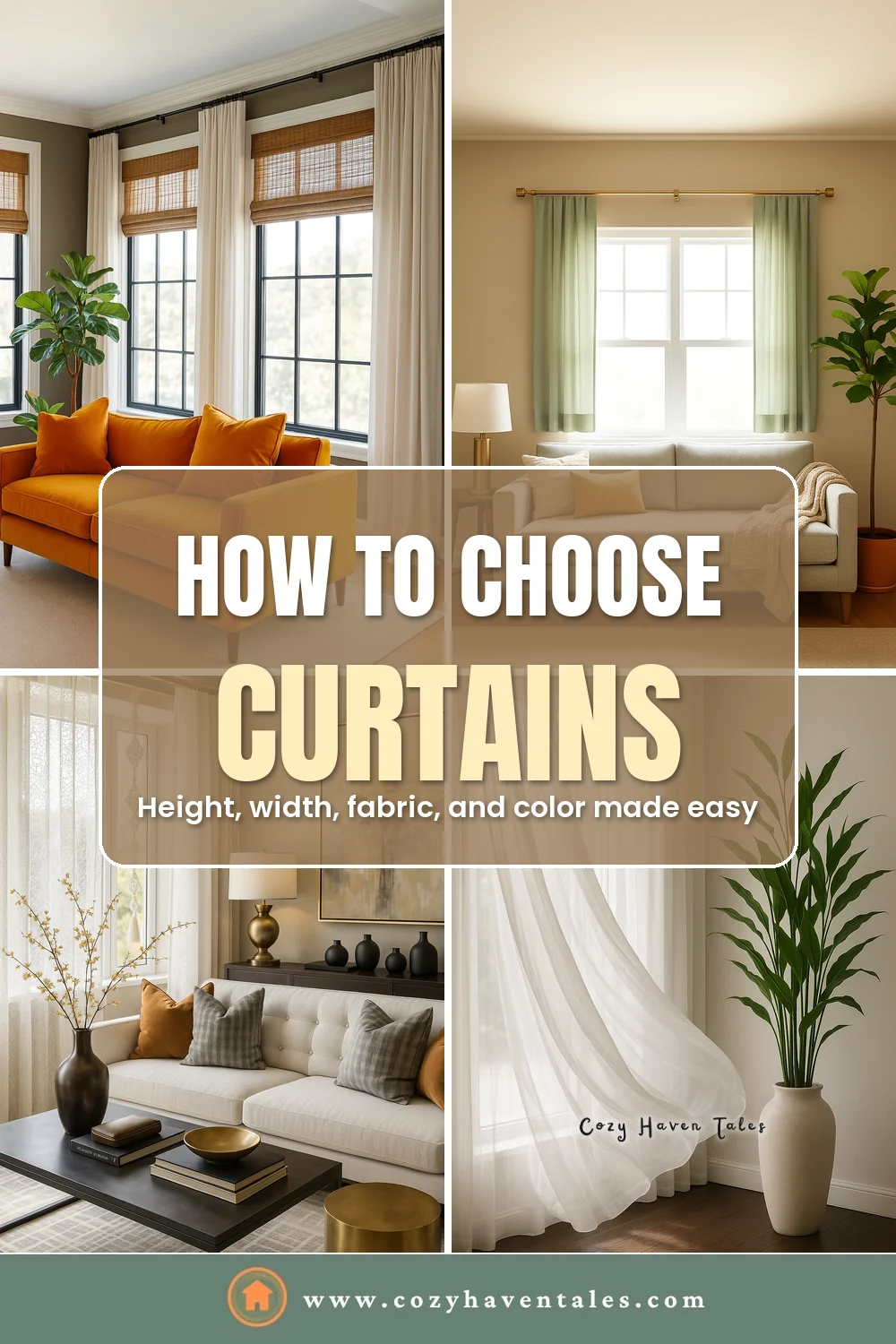
Curtains have always felt like the finishing touch to me, like the earrings that complete an outfit. They soften hard lines, frame the view, and change the mood of a room in an afternoon. But choosing curtains is where a lot of good rooms go wrong. They end up too short, too skimpy, or hung right on top of the window frame. If you’re also working on a small space, my tips to make a small living room look bigger start with curtains too.
So here’s how to choose curtains the way I do it for clients, in the order that actually matters.
Related Posts
- 12+ Cozy Living Room Winter Decor Ideas That Work From December to March
- 13 Easy Ideas to Make Your Bedroom Look Like a Luxury Hotel Room
- How to Add Character to Your Home
How to Choose Curtains: The Short Version
- Decide the job first: light, privacy, darkness, warmth, or just softness.
- Hang the rod high: 4 to 6 inches above the frame, or close to the ceiling.
- Go wide: extend the rod 8 to 10 inches past the frame on each side.
- Buy enough fabric: panels that add up to about 2 times the rod width (2 to 3 times for sheers).
- Pick the length: skim the floor, or let it break by an inch.
- Then choose fabric, color, and hardware to suit the room.
1. Decide What the Curtains Need to Do
Before you look at a single fabric, ask what the window needs. A bedroom that faces a streetlight needs darkness. A living room on the street needs privacy during the day. A drafty old window needs some warmth. And sometimes a room just needs softness, because all those hard walls and floors feel cold.
Write that one job down. It decides almost everything else, from the fabric to the lining to whether you need one rod or two. Most rooms have one main job and one nice-to-have. Choose for the main job.
Cozy Haven Tales Pro Tip: Check the window at night too. A room that feels private at noon can feel like a fishbowl once the lamps are on, and that changes which curtains you need.
2. Hang Them High and Wide
This is the single biggest thing I’d change in most homes. Curtains hung right above the frame make a window look short and the ceiling look low. Hang the rod higher and wider, and the window suddenly looks bigger and the room feels taller.
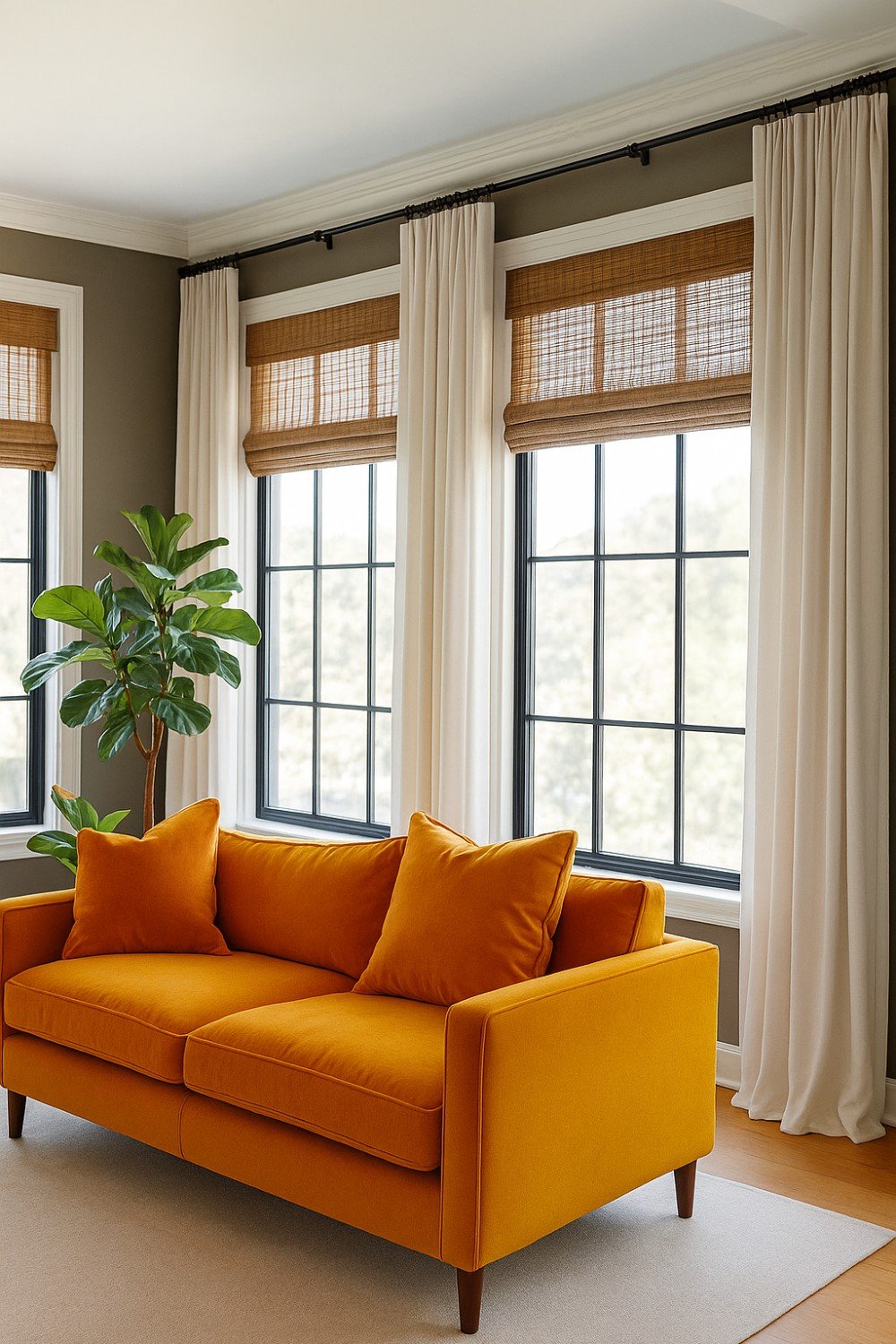
I’ve raised curtain rods close to the ceiling for clients more times than I can count, and I still love watching the room change the moment the panels go back up. Nothing else in the room moved. Mount the rod at least 4 to 6 inches above the frame, or halfway between the frame and the ceiling if you have space. Then let it run 8 to 10 inches past the frame on each side. That way the open panels stack on the wall, not over the glass, and you keep all your daylight.
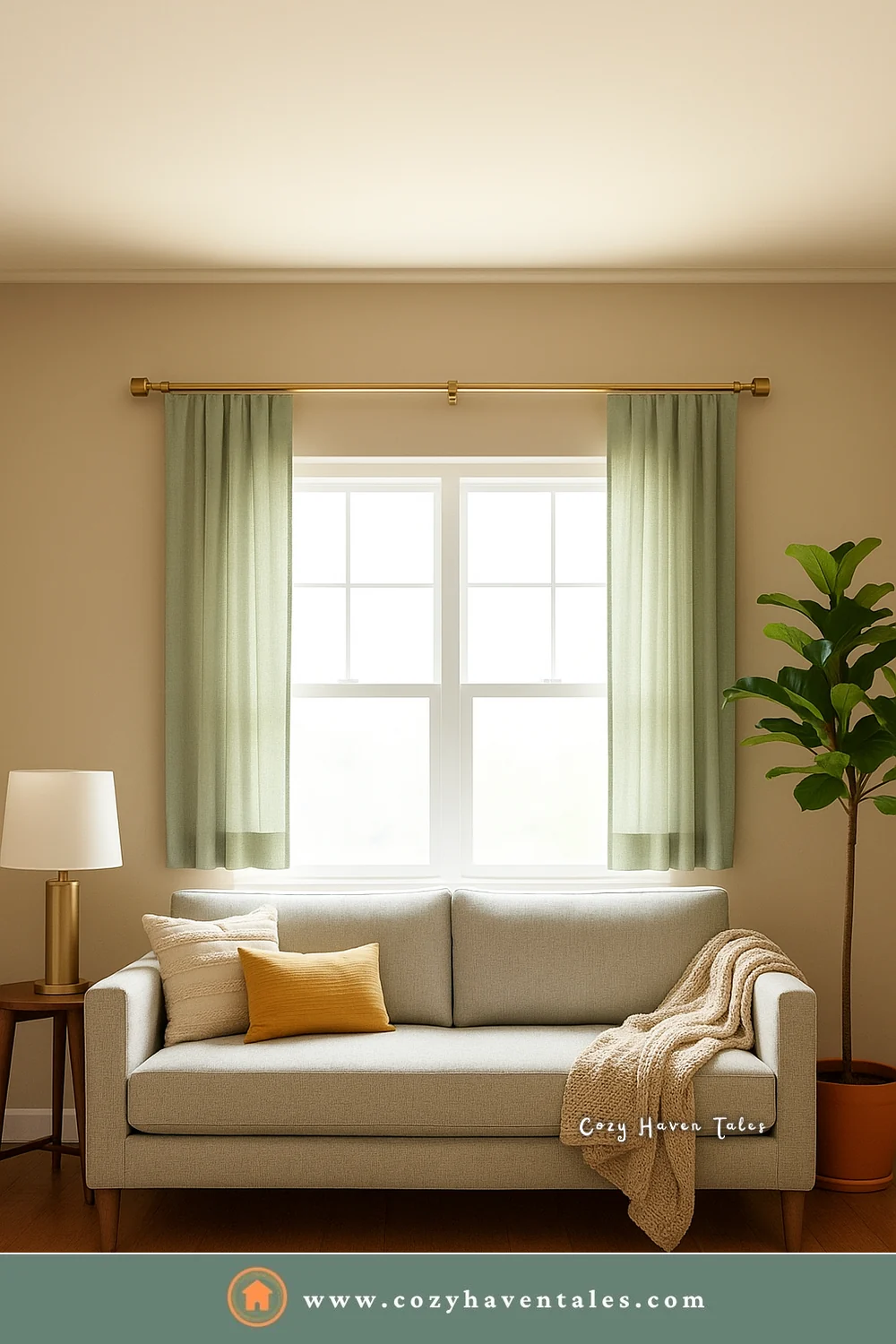
Here’s what happens when they’re hung low and short. The window looks squat, the panels end in midair, and the whole wall feels a little unfinished. Same window, same curtains. The only difference is where the rod went.
Mounting types to consider: – Single rod: best for one layer, like a simple linen panel or a sheer. – Double rod: for layering a sheer behind a heavier or blackout curtain. – Ceiling track: a clean, modern look. Great for small rooms, wide windows, and low ceilings.
Cozy Haven Tales Pro Tip: Measure for your curtains after you’ve decided the rod height, not before. Standard 84-inch panels often end up too short once the rod goes up, so 96 inches is usually the safer buy.
3. Measure Width and Length Properly
Skimpy curtains are the second most common mistake I see. When the panels are only as wide as the window, they look stretched flat when they’re closed and like two thin strips when they’re open.
Width: measure the rod, not the window, and leave the finials out. For most curtains, your panels together should be about 2 times that width. Go for 1.5 times if you want a flatter, tailored look, and 2 to 3 times for sheers, which need extra fabric to look soft. For blackout curtains, buy them a little wider than the rod so light doesn’t leak around the edges.
Length: measure from the rod (or the ring) down to the floor. Then choose your look: – Float: about half an inch above the floor. Tidy and easy to clean. – Kiss: just touching the floor. Polished, but you need an exact measurement. – Break: 1 to 2 inches extra, so the fabric bends a little at the bottom. Relaxed and forgiving. – Puddle: 3 inches or more. Romantic, but it collects dust and isn’t great with pets.
Cozy Haven Tales Pro Tip: Hang the curtains for a day or two before you hem them. Linen and cotton can drop a little once they’re hanging, so you won’t end up with panels that float higher than you planned.
4. Choose the Fabric for the Job
Think of it like picking an outfit for your room. The fabric decides how the curtain hangs, how much light comes through, and how it feels when you pull it closed.
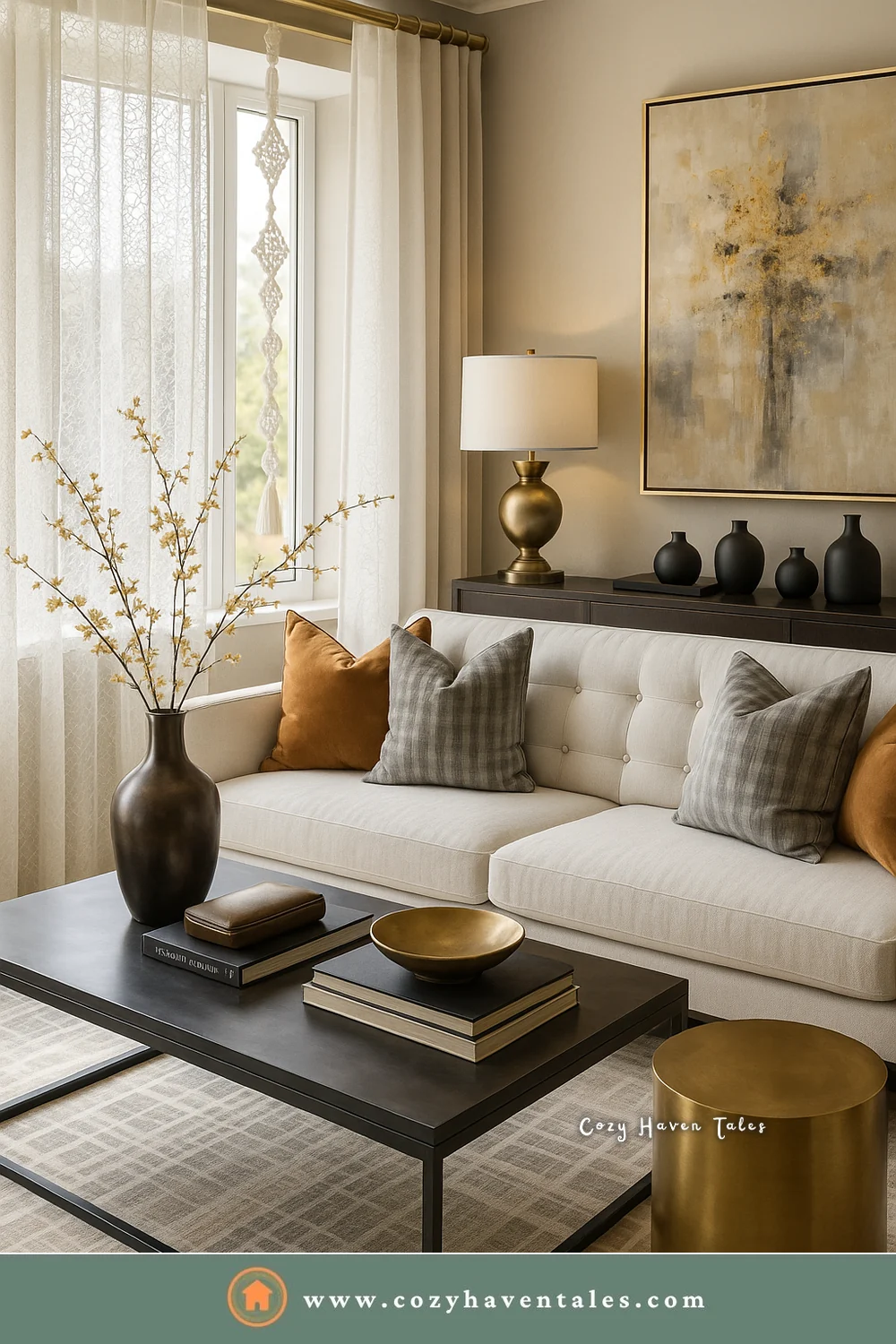
- Cotton or linen: light, airy, and easy for everyday rooms. Linen wrinkles a little, which I actually like.
- Velvet or faux silk: rich and heavy, with deep folds. Lovely in a bedroom or a formal living room.
- Sheers: soft privacy by day while the light still comes in.
- Blackout or lined fabric: for bedrooms, nurseries, and TV rooms. A lining also helps curtains last longer in strong sun.
Your life matters as much as the look. If you have pets or little ones, choose fabric you can wash, or a tight weave that won’t snag. In a sunny room, a lining stops bright colors from fading.
Cozy Haven Tales Pro Tip: Hold a fabric sample up against the window in daylight before you buy. A cream that looks warm in the store can look gray with the sun behind it.
5. Layer Sheers With Heavier Drapes
If you can’t decide between light and privacy, you don’t have to. Layering gives you both. A sheer on the inside rod softens the light all day. A heavier curtain on the outside rod closes at night for privacy, darkness, or warmth.
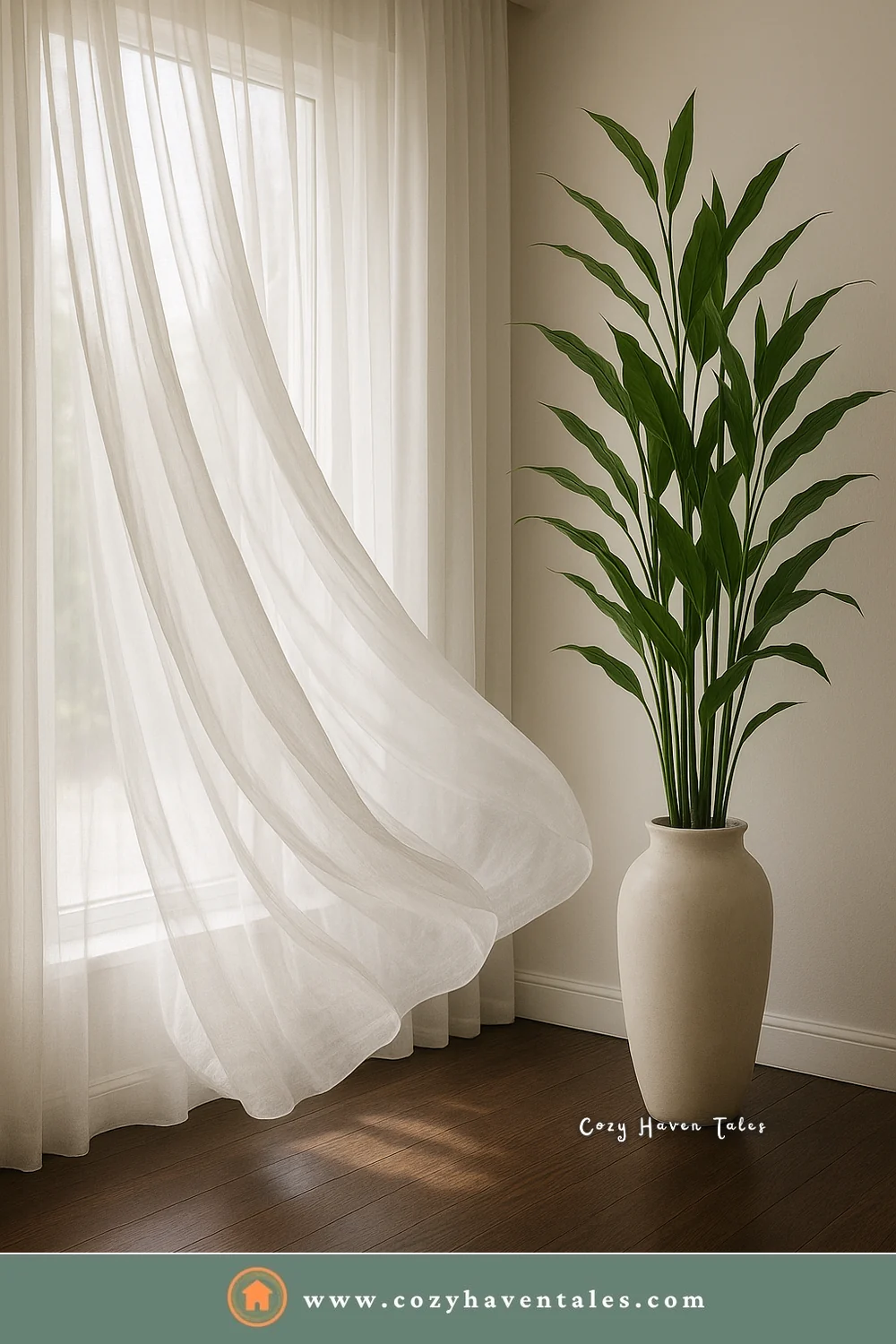
Sheers do a lot more than people think, but they have limits too. I go through both in my post on what sheer curtains can and can’t do. Lined or thermal curtains closed at night can also help hold in a bit of warmth from cold glass. They won’t stop drafts, though, so seal the gaps around the window first.
Cozy Haven Tales Pro Tip: Keep the sheer and the heavier curtain in the same color family, like white with oat or ivory with camel. Then the window looks layered, not busy.
6. Pick the Color and Pattern
Curtains are one of the biggest blocks of color in a room, so they change the mood quickly. Choose the color after the job, the size, and the fabric, not before.
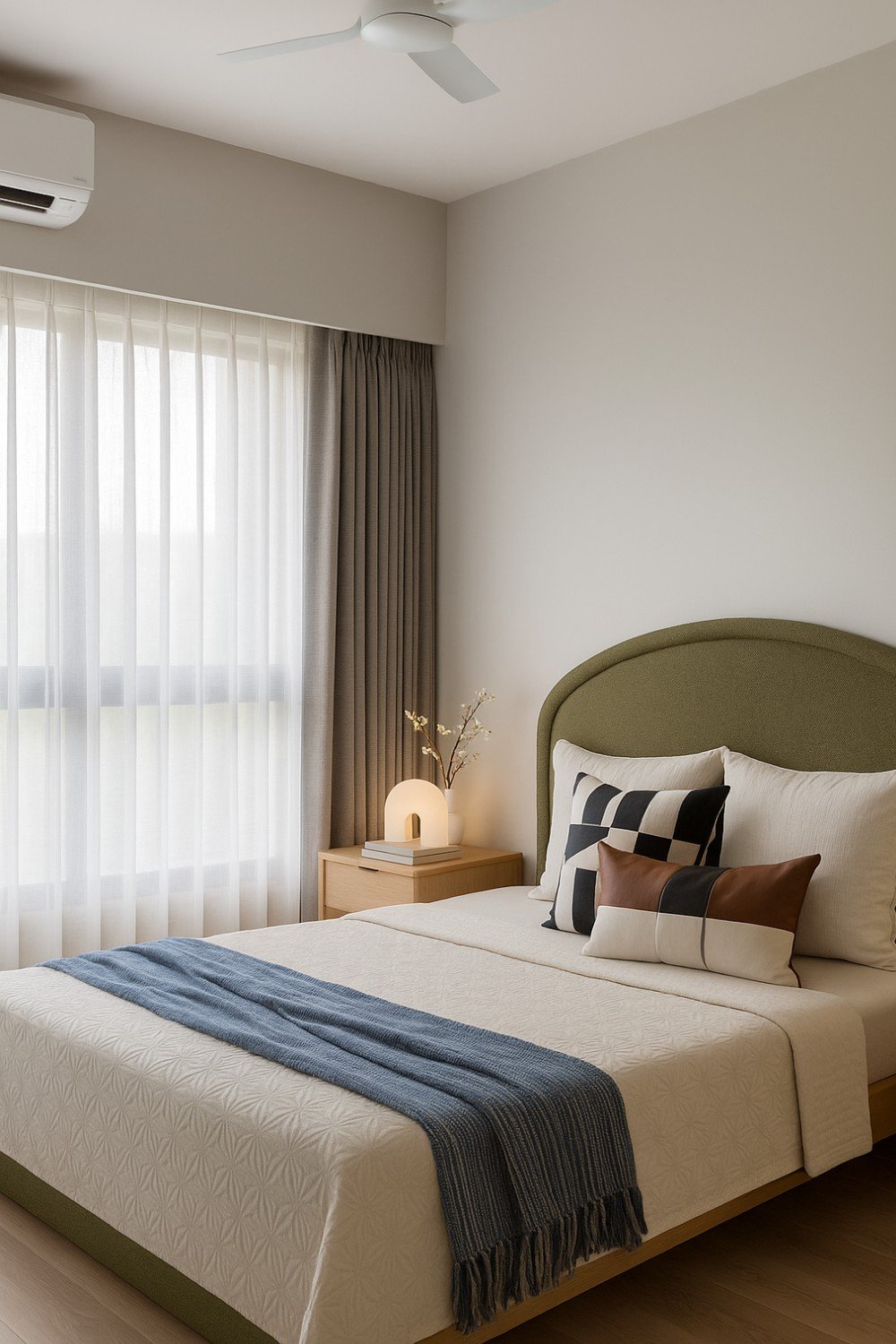
- Neutrals like ivory, oat, and soft gray blend with almost anything, and they let the window and the view do the talking.
- Deep colors like navy, forest green, or rust anchor a room and look rich in lamplight. My dark green living room ideas show how cozy green curtains can feel.
- Soft pastels like sage, blush, and smoky blue keep a bright room calm.
If your walls, rug, or sofa already have a pattern, choose solid curtains. If the room is mostly plain, a subtle stripe, a small floral, or a textured weave adds just enough interest.
Easy color pairings: – Beige sofa: olive green, burnt orange, or earthy prints. – Gray sofa: dusty pink, mustard, or charcoal. – Blue sofa: white, light gray, or prints with a touch of blue.
Cozy Haven Tales Pro Tip: Pull the curtain color from something small that’s already in the room, like a pillow, a vase, or a stripe in the rug. Repeating it at the window makes the whole room look planned.
7. Finish With the Right Hardware
Hardware is often an afterthought, but it’s the part you see every single day. A good rod and rings make inexpensive panels look custom. A flimsy rod makes even lovely curtains look cheap.

- Rods: matte black for modern rooms, brass for warmth, and wood for a classic or rustic room. Choose a rod strong enough for your fabric, with a middle bracket on wide windows.
- Rings or rod pocket: rings slide easily and hang in neat folds. Rod pockets look casual but are hard to open and close every day.
- Finials: simple ones for modern rooms, and something more decorative if the room is traditional.
- Tiebacks and holdbacks: rope, leather, or a simple metal holdback keep panels open and add a nice detail.
- Motorized tracks: handy for tall windows or rooms you open and close on a schedule.
Swapping curtains and hardware is one of the easiest upgrades in my guide to making a builder-grade home look custom, because it changes the room without any construction.
Cozy Haven Tales Pro Tip: Match the rod finish to one other metal in the room, like a lamp base or cabinet pulls. It ties the window into the rest of the space.
Common Mistakes When Choosing Curtains
- Hanging the rod right on top of the frame.
- Buying panels that only cover the width of the window.
- Choosing a length that stops a few inches above the floor.
- Skipping the lining in a sunny or drafty room.
- Picking the color first and the fabric last.
Read next: 9 Easy Bedroom Refresh Ideas That Make Your Room Feel New. New curtains are one of the easiest ways to start.

Choosing Curtains Comes Down to Three Things
Height, width, and the right fabric for the job. Get those right and almost any color will look good. Get them wrong and even expensive curtains look like an afterthought. Curtains are like the eyeliner of a room: subtle, but they finish the whole look.
Take your time, measure twice, and save this as your curtain checklist for the next time you’re ready to dress a window.
How to Choose Curtains: FAQs
At least 4 to 6 inches above the window frame. In most rooms, hanging the rod closer to the ceiling makes the window look taller and the room feel bigger.
Measure the rod without the finials, then choose panels that add up to about 2 times that width. For sheers, go 2 to 3 times the width so they look full.
In most rooms, yes. Let them skim the floor or break by an inch or two. Curtains that stop above the floor look too short unless they’re café curtains or sit over a radiator.
A lined or blackout fabric for darkness, often layered with a sheer for daytime privacy. Cotton, linen, and velvet all work well with a good lining.
Helpful Resources
- Efficient Window Coverings from the Attachments Energy Rating Council, a non-profit window coverings resource with research on how drapes and shades affect heating and cooling.
- Common Curtain Sizes from The Painted Hinge, a home blog with a handy chart of standard panel widths and lengths.